

If you’re sourcing a 5 liter oxygen concentrator or a 10L oxygen concentrator for your product catalog, you’ve probably noticed the market isn’t exactly straightforward. Both types deliver medical-grade oxygen at 93%±3% purity. Both serve patients with chronic respiratory conditions. So what actually makes one a better fit than the other, and more importantly, which one should you be stocking?
Here’s what you should know before placing your next order.
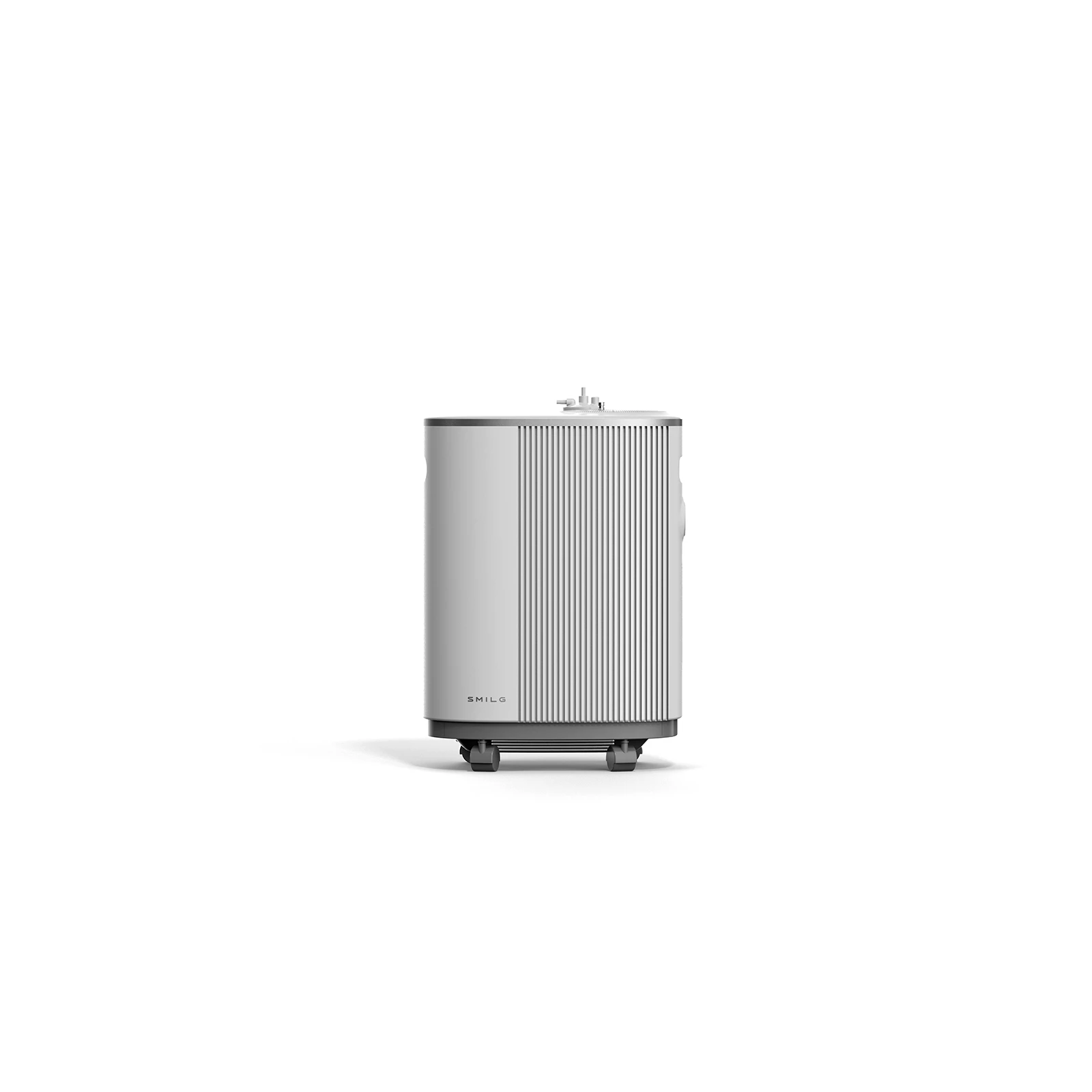
5 Liter vs. 10L Oxygen Concentrator: Key Differences
The “5L” and “10L” labels refer to maximum oxygen flow rate in liters per minute (LPM). A 5 liter oxygen concentrator tops out at 5 LPM, while a 10L oxygen concentrator can push up to 10 LPM. That’s the core difference, but the downstream effects on size, power draw, and patient suitability are where it gets interesting.
Both types use Pressure Swing Adsorption (PSA) technology to pull oxygen from ambient air. Both maintain oxygen purity above 90%. But a 10L unit needs a larger compressor to hit those higher flow rates, which means more watts, more weight, and a slightly different buyer profile.
Browse our full medical oxygen concentrator range to see how these specs play out across different models.
Why Flow Rate Matters More Than Any Other Spec
Flow rate isn’t just a number on a spec sheet. It determines which patients a device can actually serve.
Most home oxygen therapy patients are prescribed 2 LPM or less. A 5L concentrator handles that with plenty of room to spare. But some patients, including those with pulmonary fibrosis or in post-surgical recovery, may need higher flows in the 6–8 LPM range. That’s where a 10L oxygen concentrator becomes the more suitable option.
There’s another angle distributors sometimes miss: headroom. Running a concentrator at its absolute maximum flow rate puts more load on the compressor, and oxygen concentration can drop at higher flows. A 10L unit delivering 6–7 LPM operates well within its designed range, so purity stays more stable, and the compressor isn’t working at full capacity around the clock. A 5L unit running at 5 LPM, by contrast, is operating at its upper limit, where concentration and compressor load deserve closer attention.
5 Liter vs. 10L Oxygen Concentrator: Who Needs Which?
For distributors and healthcare procurement teams, this is the practical breakdown:
5L oxygen concentrator fits best for:
- Mild to moderate COPD
- Emphysema with stable oxygen needs
- General home oxygen therapy (1–4 LPM prescriptions)
- Nighttime supplemental oxygen
- Health facilities serving lower-acuity patients
10L oxygen concentrator fits best for:
- Severe COPD or advanced pulmonary fibrosis
- Pneumoconiosis, silicosis, and post-lung surgery recovery
- ICU-at-home or high-dependency care setups
- Facilities that need integrated oxygen delivery and nebulization in one device
- Patients who desaturate below 88% SpO₂ on lower flows
If you sell into markets with growing elderly populations or rising chronic lung disease rates, stock both gives you the broadest coverage.
YOYI CARE 5 Liter vs. 10L Oxygen Concentrator
We build both. Here’s a direct comparison using our YY-ZY5C 5L oxygen concentrator and YY-ZY10B 10L medical oxygen concentrator:
| Spec | YY-ZY5C (5L) | YY-ZY10B (10L) |
| Flow Rate | 1–5 LPM | 1–10 LPM |
| Oxygen Purity | 93%±3% | 93%±3% |
| Power | 430W | 580W |
| Noise | ≤60 dB | ≤60 dB |
| Net Weight | 17 kg | 27 kg |
| Control | Touch screen + Remote | Touch screen + Remote |
| Nebulization | Yes | Yes |
| Real-time O₂ Monitoring | Yes | Yes |
| CBM | 0.115 m³ | 0.172 m³ |
| Voltage & Socket | Customized | Customized |
Power, Noise, and Size: What 10L Costs You Over 5L
Let’s be honest. A 10L unit will always be bigger, heavier, and draw more power than a 5L. That’s physics, not a design flaw.
But for your customers, these trade-offs matter. A 5L concentrator at 17 kg is movable around a home. A 27 kg unit, though, is a stationary device in practice. Power consumption affects operating cost, especially in regions with expensive electricity. And noise level affects patient compliance. If a machine is too loud, patients won’t run it through the night, even though nighttime oxygen therapy is often when it matters most.
Our engineering team designed both the YY-ZY5C and YY-ZY10B with these real-world factors in mind. Voice broadcast, fault alarms, and low oxygen concentration alerts are built into both, so end users aren’t left guessing whether the device is working properly.

What Distributors Should Think About
If you’re deciding what to stock, don’t just think about which model sells more units. Think about:
- Market mix. What conditions are most common in your target region? Markets with mostly mild COPD tend to lean toward 5L units. High-acuity or hospital-supply markets need 10L capacity.
- Shipping economics. A 5L unit typically takes up less carton space than a 10L unit, which means more units per container and a lower landed cost per unit. Run the math before you assume the cheaper unit price wins.
- Certification requirements. Check that the models you plan to import carry the certifications your market requires, such as ISO 13485, CE, FDA, or UKCA. Missing paperwork can stall a shipment longer than a price negotiation.
- Customization needs. If you sell under your own brand, confirm what the manufacturer can customize: voltage, socket type, color, logo placement, and control interfaces. That flexibility is what lets you sell the same platform across multiple countries.
There’s no universally “better” option between a 5-liter oxygen concentrator and a 10L oxygen concentrator. The right choice depends on patient flow rate needs, your market’s disease profile, and your logistics. For most distributors, carrying both capacities is the smartest play because it covers mild-to-severe cases and gives your sales team more flexibility.
If you’re weighing your options or want spec sheets and OEM pricing, get in touch with our team.
Frequently Asked Questions
Is a 10L concentrator always better?
No, higher maximum flow does not automatically improve treatment. Choose equipment that meets the prescription and verified operating requirements.
Does 10L mean higher oxygen concentration?
No, liters per minute describe flow rather than concentration. Check the model’s concentration specification at the required flow.
Can a 5 liter oxygen concentrator be used for severe COPD?
In most cases, no. Severe COPD patients often need 6–8 LPM or higher. A 5L unit maxes out at 5 LPM, which won’t provide enough oxygen flow for advanced respiratory conditions. A 10L concentrator is the safer, more appropriate choice for these patients.
How loud is a 10L oxygen concentrator compared to a 5L?
It varies by manufacturer. Many 10L units run between 48–55 dB. Both the YOYI CARE YY-ZY5C and YY-ZY10B are rated at ≤60 dB, which is comparable to a normal conversation and suitable for overnight use in home or clinical settings.
What certifications should I look for when importing oxygen concentrators?
At a minimum, you’ll want ISO 13485 for medical device quality management, CE for European markets, and FDA registration for the U.S. YOYI CARE products also carry UKCA and UL certifications, which simplifies clearance in the UK and North American markets.


