

If you have ever searched for “oxygen concentrator near me” after a prescription change, you may have wondered why these machines never seem to need a refill. Unlike oxygen tanks, which run out and require replacement, a concentrator keeps producing oxygen as long as it has power. The trick is not a bigger tank. It is a clever separation process that runs continuously without consuming the material that does the work.
Oxygen concentrators work by pulling in room air, removing most of its nitrogen, and sending oxygen-enriched gas through a nasal cannula or mask. A compressor and two zeolite sieve beds repeat the same separation cycle while the machine has power.
The details matter when you compare flow settings, portable models, noise, and backup power. Start with what the machine actually is.
What Is an Oxygen Concentrator?
An oxygen concentrator is an electrically powered medical device that separates oxygen from the air around it. Room air contains about 21% oxygen and 78% nitrogen, with small amounts of other gases. The machine removes most of the nitrogen, which leaves an oxygen-rich gas for prescribed oxygen therapy.
It does not manufacture oxygen or store a large supply like a cylinder. It processes fresh room air every few seconds, so it can keep running without cylinder deliveries while power and airflow remain available.
There are two common designs:
| Type | Power source | Typical delivery | Best fit |
|---|---|---|---|
| Stationary concentrator | Wall outlet | Usually continuous flow | Regular home use and higher output needs |
| Portable oxygen concentrator | Rechargeable battery or AC/DC power | Often pulse dose; some models offer continuous flow | Mobility, errands, and approved travel |
Both types use a similar separation process. A stationary unit can use a larger compressor, while a portable unit must balance output against weight and battery time. For more detail, our home oxygen concentrator overview explains placement, power, tubing, and basic care.
An oxygen concentrator is not a ventilator. A ventilator supports breathing by moving air into and out of the lungs. A concentrator supplies oxygen-rich gas, but the user still breathes on their own unless another prescribed device provides breathing support.
How Does an Oxygen Concentrator Work?
An oxygen concentrator draws room air through a filter, compresses it, and pushes it into zeolite-filled sieve beds. Zeolite adsorbs nitrogen under pressure. Two beds alternate between filtering and releasing nitrogen, while a small reservoir smooths the oxygen-rich output before it reaches the user.
Here is what happens inside the machine:
- Room air enters through a filter. A fan draws air into the cabinet. The inlet filter catches dust and larger particles before they reach the compressor and sieve material.
- The compressor raises the pressure. Pressure helps the machine separate the gases in a controlled cycle. Compression also creates heat, so the unit needs a cooling fan and open space around its vents.
- Zeolite traps nitrogen. The pressurized air enters a molecular sieve bed filled with zeolite pellets. Nitrogen sticks to the zeolite surface more readily than oxygen, so oxygen-enriched gas moves forward.
- A second sieve bed takes over. The first bed cannot hold nitrogen forever. Before it becomes saturated, switching valves direct incoming air to the second bed.
- The first bed regenerates. Its pressure drops, and the captured nitrogen leaves through an exhaust port. A short puff or hiss often comes from this normal pressure change.
- Oxygen-rich gas reaches the outlet. A small product tank evens out the flow between cycles. The gas then passes through a flow control and tubing to a nasal cannula or mask.
This repeating action is called pressure swing adsorption, or PSA. The “swing” is the change between a higher-pressure filtering phase and a lower-pressure cleaning phase. The World Health Organization technical specifications cover the selection, use, and maintenance of PSA oxygen concentrators for medical settings.
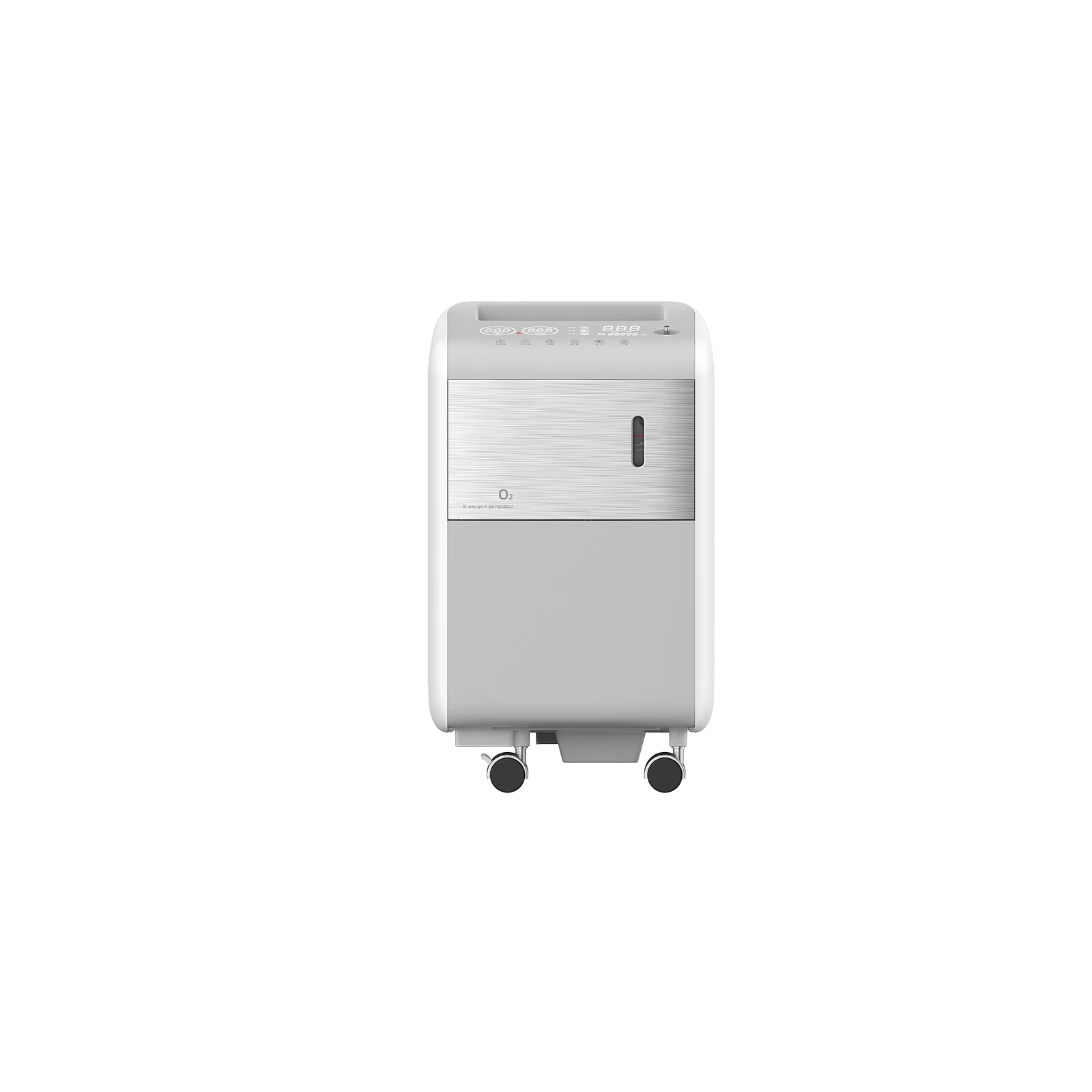
Why are two sieve beds needed? One captures nitrogen while the other releases it. Then they switch jobs, keeping the output moving while each bed regenerates.
The delivery method comes after separation. Continuous-flow models send gas at a steady rate, usually stated in liters per minute. Pulse-dose models detect the start of inhalation and release a measured burst. A pulse setting of “2” is not automatically equal to 2 L/min of continuous flow. Each model has its own pulse volume and trigger behavior.
How do oxygen concentrators work for hours without running out? The machine keeps recycling its sieve beds rather than consuming them during each cycle. Zeolite does age, though. Moisture, dust, heat, and long service hours can reduce performance, which is why filters, alarms, and maintenance support matter.
Advantages of Oxygen Concentrators
The main advantage is a steady oxygen source without routine cylinder refills. This reduces the storage and delivery work linked to compressed gas, although a backup supply is still needed.
| Advantage | What it means in practice |
|---|---|
| No regular refilling | The unit draws from room air instead of emptying a stored tank |
| Long operating time | A stationary model can run while power is available and the unit is working correctly |
| Home and portable choices | Buyers can match output, mobility, battery time, and delivery mode to the prescription |
| Built-in monitoring | Many medical models check pressure, temperature, and oxygen concentration and alert the user to faults |
Concentrators avoid handling high-pressure cylinders during normal use. Portable models can support mobility when the prescribed needs fit the device.

There are tradeoffs. Every concentrator depends on power. Compressors make heat and noise, filters need care, and portable units have limited battery time. Output also varies by model. A concentrator that is convenient for one prescription may be unsuitable for someone who needs a higher continuous flow.
Key Factors to Choose an Oxygen Concentrator
Start with the oxygen prescription, not the product brochure. The required flow, delivery mode, and hours of use set the boundary for every other choice. A lighter machine is not helpful if it cannot maintain the prescribed oxygen delivery during walking or sleep.
| Factor | What to check |
|---|---|
| Delivery mode | Continuous flow, pulse dose, or both |
| Rated output | The available L/min or pulse settings under stated operating conditions |
| Oxygen concentration | Performance across the full rated flow range, not only at the lowest setting |
| Power plan | AC input, DC charging, battery runtime, recharge time, and outage backup |
| Daily use | Weight, wheels, handle design, noise, heat, display, and tubing setup |
| Alarms | Power failure, low oxygen concentration, overheating, blocked flow, and other model-specific warnings |
| Maintenance | Filter schedule, sieve-bed life, spare parts, service access, and warranty terms |
| Compliance | Labels, instructions, test reports, and approvals required in the destination market |
Continuous flow and pulse dose deserve special attention. Pulse delivery can save battery, but breath detection may change during sleep or activity. The American Thoracic Society guideline notes that pulse settings are model-specific and recommends testing the selected device during real exertion. Our portable versus stationary concentrator comparison covers the choice in more detail.
Compare oxygen concentration at the maximum rated flow. A large flow number does not help if concentration falls outside the device specification. Test conditions, blocked vents, and worn sieve beds can affect output too.
Power planning is part of the choice. Ask what happens during an outage, and compare portable battery time at the prescribed setting. Extra batteries add weight and cost, but too little reserve weakens the travel plan.
Service matters as much as the specification. A distributor should confirm replacement filters, sieve beds, compressor parts, manuals, and response times before ordering. For users, our oxygen concentrator safety guide explains ventilation, fire precautions, tubing placement, and backup planning.
Before comparing models, write down four things: prescribed delivery mode, required setting, daily use time, and backup-power needs. YOYI CARE can then help distributors and equipment buyers match those requirements with the right product documents, service plan, and oxygen concentrator configuration.
FAQ
Do oxygen concentrators run out?
They do not empty like cylinders because they draw oxygen from the surrounding air. They stop delivering oxygen if power fails, the battery runs down, airflow is blocked, or the unit develops a fault.
Do concentrators produce pure oxygen?
Medical concentrators usually deliver oxygen-enriched gas rather than 100% oxygen. The actual concentration depends on the model, rated flow, environmental conditions, and condition of the filters and sieve beds.
Can concentrators work without electricity?
No concentrator separates oxygen without electrical power. Stationary units use a wall outlet, while portable models may use charged batteries or supported AC/DC sources, so users who depend on oxygen need an approved backup plan.
Why does a concentrator make noise?
The compressor produces a steady hum, while fans and switching valves can make regular clicks or soft puffs. A sudden grinding sound, a persistent alarm, or an unusual rise in heat should be checked against the device manual.
Can I change the oxygen setting?
Only change the flow or pulse setting when the prescribing healthcare professional tells you to do so. A higher number does not automatically mean safer therapy, and pulse settings cannot be treated as equal to continuous-flow liters per minute.


