

This blog explores the pros and cons of both materials, provides a breakdown by user type (elderly, athlete, bariatric, etc.), and outlines purchasing guidance for institutions like hospitals, clinics, and long-term care facilities. Whether you’re outfitting a health center or selecting a chair for personal use, this guide will help you make the right call.
Which is Better Carbon Fiber or Aluminum Wheelchairs
Carbon Fiber Wheelchairs – Pros & Cons
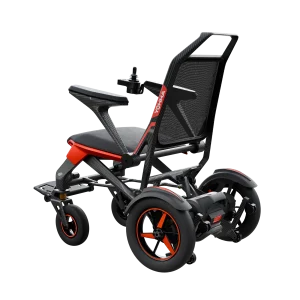 Carbon Fiber Electric Wheelchair
Pros:
-
Ultra lightweight (30–40% lighter than aluminum)
-
High strength-to-weight ratio (rigid yet strong)
-
Absorbs vibration well – smoother ride
-
Futuristic look – often favored in sports and premium designs
-
Rust-free
Cons:
-
Very expensive
-
Less forgiving on impact – can crack if hit hard
-
Harder to repair – damage often needs replacement
Ideal For:
-
Active users
-
Athletes
-
Frequent travelers
-
Those who self-propel or load chair into a car often
Read more: What is Carbon Fiber Electric Wheelchairs: A Complete Buying Guide
Aluminum Wheelchairs – Pros & Cons
 Aluminum Electric Wheelchair
Pros:
-
Lightweight, but heavier than carbon fiber
-
Affordable – middle-ground price
-
Corrosion-resistant
-
Easier to repair or modify
-
Widely available in various designs
Cons:
-
Less shock-absorbing than carbon fiber
-
Might flex slightly under stress
-
More weight means more strain on batteries (for electric models)
Ideal For:
-
Daily users
-
Institutional or home care
-
Moderate mobility needs
-
Budget-conscious buyers
Read more: What Is an Aluminum Electric Wheelchair? Is Aluminum the Best Material?
Which Is Better? Final Verdict
| If your top priority is… | Better Choice |
|---|---|
| Maximum weight reduction | Carbon fiber |
| Budget/value for money | Aluminum |
| Frequent folding & transporting | Carbon fiber |
| Durability & easy maintenance | Aluminum |
| Sports or high-performance use | Carbon fiber |
| General daily use | Aluminum |
How to Choose: Carbon Fiber vs. Aluminum Wheelchair — By Users
Let’s break down carbon fiber vs. aluminum wheelchairs by user profile and usage scenario so you can make a truly informed decision. This is where most real-world buyers and care facilities make costly mistakes—by skipping the “fit-for-purpose” analysis.
1. For Elderly Users at Home or in Care Facilities

-
Recommended: Aluminum Wheelchair
-
Why:
-
More affordable for long-term use
-
Easily serviced by caregivers or facility staff
-
Heavier than carbon fiber, which can offer a more grounded and stable feeling
-
Not as delicate — bumping into walls or doorways won’t easily damage the frame
-
-
Electric Option? Ideal. Aluminum frames support power modules while remaining cost-efficient.
Tip: Opt for aluminum wheelchairs with padded seats and armrests, swing-away footrests, and a reclining back for elderly comfort.
2. For Active, Independent Users or Frequent Travelers
-
Recommended: Carbon Fiber Wheelchair
-
Why:
-
Extremely lightweight (5–7 kg in manual models)
-
Easier to lift into a car trunk or carry onto public transport
-
Rigid frame = better propulsion efficiency
-
Often has integrated high-performance wheels and minimal design
-
-
Electric Option? Yes, but consider whether battery capacity offsets the light frame advantage.
3. For Athletes and Performance-Oriented Users
-
Recommended: Carbon Fiber Wheelchair (Always)
-
Why:
-
Tailored to competitive sports (basketball, tennis, racing)
-
Custom-molded to body for ergonomics and power transfer
-
Allows fine-tuning of center-of-gravity and camber angles
-
Note: High-end sport models can exceed $5,000, but performance is unmatched.
4. For Bariatric Users (Higher Weight Capacity)
-
Recommended: Aluminum or Reinforced Steel
(Carbon fiber is generally not suitable here) -
Why:
-
Standard carbon fiber frames usually have weight limits under 120 kg
-
Aluminum or steel frames can be built with reinforcements to support 150–250+ kg
-
Still offers mobility support and flexibility without fragility
-
Look for aluminum chairs rated “bariatric” with double crossbars or reinforced sidewalls.
5. For Pediatric Users
-
Recommended: Either – depending on priority
-
Why:
-
Carbon fiber for ultralight, low-resistance options
-
Aluminum for cost efficiency and room to grow (adjustable sizing)
-
Pediatric chairs must be very ergonomic and responsive
-
6. For Long-Term Disability Users Who Need High Customization

-
Recommended: Both – depending on budget and handling needs
-
Why:
-
Carbon fiber offers better comfort for long use and high independence
-
Aluminum allows more extensive structural customization (e.g., powered recline, tilt-in-space, advanced controls)
-
For powered mobility users with neurological conditions, aluminum frames often provide better compatibility with programmable control modules and assistive tech.
Summary Comparison Table
| Use Case | Best Material | Notes |
|---|---|---|
| Elderly in home or care facility | Aluminum | Stable, cost-efficient, caregiver-friendly |
| Frequent travelers or young adults | Carbon Fiber | Ultra-light, easy to lift, sleek design |
| Competitive sports | Carbon Fiber | Best-in-class for weight and agility |
| Hospitals and clinics | Aluminum | Easy to sanitize and service |
| Bariatric users | Aluminum / Steel | Higher weight support than carbon fiber |
| Pediatric use | Either | Carbon fiber for weight, aluminum for growth/adjustment |
| Long-term disability with tech use | Either | Aluminum supports more accessories and upgrades |
How to Choose: Carbon Fiber vs. Aluminum Wheelchair — By Institutional Buying Demands
Here’s a targeted procurement guide from the perspective of different institutions like clinics, hospitals, rehab centers, and elderly care facilities. The focus is on choosing the right type of wheelchair (carbon fiber vs. aluminum) based on their daily use case, maintenance capacity, and budget constraints.
1. Hospitals (General & Emergency Departments)
Best Choice: Aluminum Wheelchairs
-
Why?
-
Easy to sanitize and disinfect
-
Cost-effective for bulk procurement
-
Durable under frequent transfers and short-term use
-
Can be folded for storage or transportation between departments
-
Optional Features:
-
Swing-away footrests
-
Folding backrest
-
IV pole holder attachment
-
Transport-grade safety belts
Carbon fiber is not cost-effective here and may not survive hospital-grade wear and tear.

2. Elderly Care Centers / Nursing Homes
Best Choice: Electric Aluminum Wheelchairs
-
Why?
-
Stable and heavy enough for residents with balance issues
-
Caregivers can easily assist or control
-
Offers more comfort and reduced strain for elderly residents
-
Mid-range pricing keeps OPEX manageable
-
Consider:
-
Electric recline, tilt-in-space
-
Wider seats for comfort
-
Battery safety and charging policies
Avoid carbon fiber unless you’re offering premium VIP care — the lightweight build isn’t needed and adds unnecessary cost.
3. Rehabilitation Centers (Stroke, Ortho, Neuro Patients)
Best Choice: Manual or Electric Aluminum Wheelchairs
-
Why?
-
High adaptability: rehab needs evolve, and aluminum frames are easier to modify
-
Compatible with add-ons like pressure-relief cushions, headrests, or foot positioners
-
Easier to service or refit for new patients
-
Special Use:
-
Some carbon fiber active chairs may be used during mobility training or independent movement reconditioning, especially for younger patients.
Foldable aluminum models with detachable arms are preferred for transfer and therapy sessions.
4. Community Clinics / Primary Care Facilities
Best Choice: Manual Aluminum Wheelchairs
-
Why?
-
Occasional use only — need a reliable but budget option
-
Low maintenance, easy to store, and serviceable by basic staff
-
Less worry about theft or rough use
-
Avoid complex electric systems unless specific departments (e.g., ortho or geriatric) require them.
5. Airports / Transit Hubs / Public Institutions
Best Choice: Heavy-Duty Aluminum or Steel Wheelchairs
-
Why?
-
High volume and rough usage
-
Must accommodate different user sizes (bariatric options preferred)
-
Minimal electronics = less failure and easier inspection
-
Reinforced aluminum with anti-rust coating performs best in high-turnover areas like arrival gates and terminals.
6. Home Healthcare Agencies / Insurance Providers
Best Choice: Aluminum for general users, Carbon Fiber for active clients
-
Why:
-
Aluminum: adaptable and reliable for average use cases
-
Carbon fiber: for young adults, disabled professionals, or frequent travelers who value performance and portability
-
Summary: Procurement Matrix
| Institution Type | Best Frame Material | Recommended Type | Notes |
|---|---|---|---|
| Hospitals | Aluminum | Manual or electric | Bulk use, easy to sanitize |
| Elderly Care Centers | Aluminum | Electric | Stable, comfortable |
| Rehabilitation Centers | Aluminum / Carbon | Manual or electric | Adjustable, therapeutic use |
| Clinics / Primary Care | Aluminum | Manual | Low frequency use |
| Airports / Public Services | Aluminum / Steel | Manual (heavy-duty) | Large weight range, durable |
| Home Health / Insurance | Aluminum / Carbon | Varies by user | Based on individual need |
Summary
Choosing the right wheelchair frame material isn’t just a matter of weight or price—it’s about matching user needs, usage environments, and long-term goals. Aluminum and carbon fiber, two of the most popular materials in today’s market, each bring distinct advantages.
Aluminum wheelchairs offer a practical balance of durability, cost-efficiency, and customizability. They are ideal for hospitals, elderly care centers, rehabilitation facilities, and general users who value serviceability and stability.
On the other hand, carbon fiber wheelchairs are ultralight and performance-focused—suited for active users, frequent travelers, or athletes who prioritize mobility, efficiency, and a premium feel.


