

How do you choose the best OEM partner for medical devices? It comes down to regulatory fit, technical capacity, and real-world reliability rather than just brand name.
Look for a partner who aligns with your production volume, compliance goals, and target markets. A strong OEM team simplifies design transfers, streamlines change control, and keeps your post-launch operations running smoothly.
This 2026 shortlist covers seven companies with different strengths, from global contract manufacturing and precision implantable components to mobility and home-care equipment. It is an editorial comparison based on publicly stated capabilities, not a universal ranking or certification. Buyers should verify the facility, certificate scope, and proposed quality agreement for their exact device before awarding business.

How We Selected the Best Medical Device Companies for OEM
OEM Manufacturing Scope and Technical Fit
We looked for companies that publicly describe contract manufacturing, custom development, private-label production, or direct support for medical-device OEMs. The list deliberately mixes broad and specialized providers. A company that excels at high-volume electronics may not be the right source for an implantable catheter, while a precision CDMO may be excessive for a standard home-care product.
Quality Systems and Market Readiness
Quality claims were considered alongside design, engineering, manufacturing, testing, cleanroom, assembly, packaging, or supply-chain capabilities. In 2026, U.S. buyers should also account for the FDA Quality Management System Regulation, which became effective on February 2, 2026 and incorporates ISO 13485:2016 by reference. A certificate alone is not enough: its legal entity, site, expiry date, activities, and device scope must match the proposed project.
7 Best Medical Device Companies for OEM Partnerships
1. Jabil Healthcare
Jabil Healthcare supports medical devices, surgical instruments, capital equipment, patient monitoring, chronic-disease management, and digital health products. Its vertically integrated engineering and manufacturing model makes it a credible candidate for complex programs that need design support, electronics, plastics, assembly, supply-chain management, and production in multiple regions.
Best fit: established OEMs planning high-volume or technically complex products across several markets. Buyers should confirm which Jabil site will own design transfer, validation, regulatory records, and business-continuity planning.
2. Flex
Flex Healthcare describes more than 35 years of experience across medical equipment, devices, and drug delivery. Its strengths include user-centered design, advanced manufacturing, vertically integrated capabilities, and a broad supply-chain network. That combination is relevant for connected equipment combining enclosures, electronics, sensors, software-enabled functions, and final assembly.
Best fit: OEMs that need engineering-to-scale support for connected devices or medical equipment. Clarify cybersecurity ownership, component lifecycle management, software configuration control, and repair strategy during the RFQ.
3. Phillips-Medisize
Phillips-Medisize, a Molex company, operates as a contract development and manufacturing organization serving pharmaceutical, medtech, and in-vitro diagnostic customers. It offers product design and manufacturing, with capabilities relevant to injection molding, connected drug-delivery systems, diagnostics, medical wearables, and finished devices.
Best fit: programs requiring human-centered development, precision molding, connectivity, and structured commercialization. Buyers should define whether the engagement covers components, subassemblies, a finished device, or a combination-product workstream.
4. Integer
Integer focuses on medical-device outsourcing across cardiac rhythm management, cardiovascular applications, neuromodulation, and custom medical batteries. Its public capabilities span research and development, precision components, assemblies, testing, packaging, and finished-device systems, including work on Class II and Class III products.
Best fit: OEMs developing implantable, catheter-based, battery-powered, or high-precision devices. Project reviews should address design history documentation, special-process validation, material traceability, sterilization interfaces, and long-term component availability.
5. Viant
Viant presents itself as a single-source medical-device contract manufacturer, covering design and development, precision manufacturing, medical-grade plastics, metals, tooling, automation, assembly, and finished-device services. Its vertically integrated approach can reduce the number of transfers between suppliers.
Best fit: surgical, orthopedic, interventional, or other device programs that benefit from combined metal, polymer, assembly, and packaging expertise. Buyers should still compare the proposed location, capacity, validated processes, and subcontracted operations.
6. Sanmina
Sanmina provides medical design and engineering services alongside contract electronics manufacturing. Its published capabilities include system engineering, design for manufacturability, design for test, test-system development, supply-chain support, and manufacturing for complex medical products.
Best fit: diagnostic, monitoring, imaging-support, laboratory, and other equipment with demanding electronics or system integration. The quality agreement should assign responsibility for approved vendor lists, firmware loading, calibration, test records, obsolescence, and field-return analysis.
7. YOYI CARE
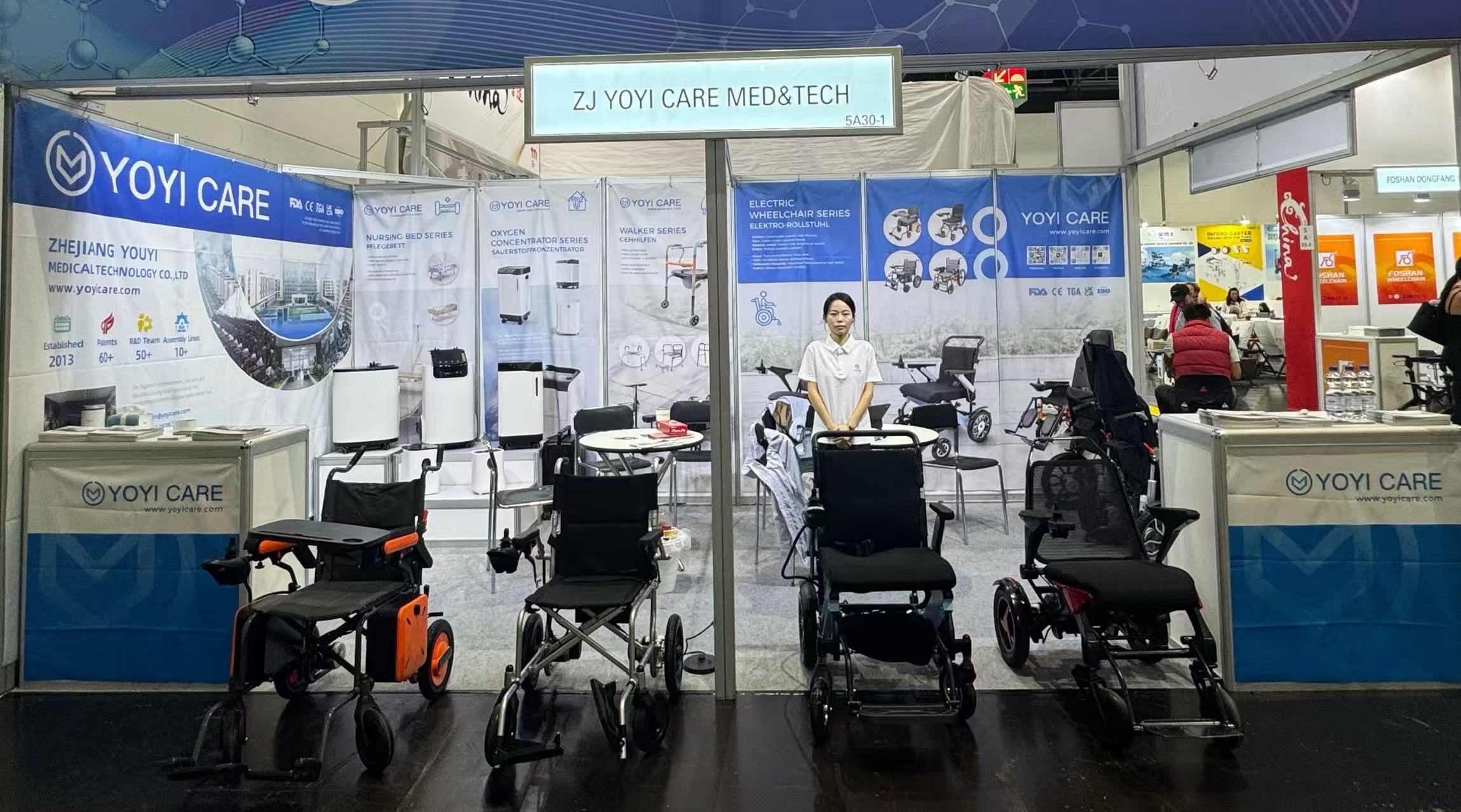
YOYI CARE develops and manufactures electric wheelchairs, oxygen concentrators, medical beds, and related home-care equipment. Its customization services cover product functions, comfort features, materials, appearance, and packaging, giving distributors and private-label brands a more focused alternative to large multinational contract manufacturers.
Best fit: buyers sourcing mobility, respiratory, nursing-bed, and elderly-care product lines with OEM or ODM requirements. Before ordering, connect the intended model, label, manual, test reports, registration route, spare-parts plan, and warranty terms to the destination market.
Best Medical Device Companies Comparison Table
| Company | Notable OEM focus | Best suited to |
|---|---|---|
| Jabil Healthcare | Global, vertically integrated manufacturing | Large, complex programs |
| Flex | Connected equipment and supply-chain scale | Electronics-rich products |
| Phillips-Medisize | Drug delivery, diagnostics, molding | Combination and medtech devices |
| Integer | Precision components and implantables | Class II and III technologies |
| Viant | Metals, polymers, assembly, finished devices | Surgical and interventional products |
| Sanmina | Medical electronics and system engineering | Complex powered equipment |
| YOYI CARE | Mobility and home-care equipment | Distributors and private labels |
How to Choose a Medical Device OEM Company
Match the Company to Your Device and Regulatory Role
Start with the device specification, intended use, risk classification, forecast volume, target countries, and required launch date. Then define who is the legal manufacturer and who owns design controls, technical documentation, registrations, complaint handling, vigilance, and recalls. The largest company is not automatically the best partner; the right one has relevant processes at the facility that will actually build your product.
Audit Evidence Before Price Negotiations
Request the current ISO 13485 certificate, audit history, relevant inspection information, process-validation examples, traceability approach, change-control procedure, and recent quality metrics. Review a representative device history or batch record under confidentiality.
Protect Design Transfer, IP, and Supply Continuity
Use a quality agreement and manufacturing agreement that cover intellectual property, tooling ownership, approved changes, nonconforming material, CAPA, audit access, record retention, forecast commitments, disaster recovery, and exit assistance. Run a pilot build before volume production, and avoid relying on a single unqualified source for critical parts. Total cost should include validation, tooling, testing, scrap, freight, inventory, service parts, and change management, not only unit price.
Choosing Among the Best Medical Device Companies
The best medical device companies are not interchangeable. Jabil and Flex bring broad global scale; Phillips-Medisize, Integer, and Viant offer deep device-development and manufacturing specialization; Sanmina is strong in complex electronics; and YOYI CARE is focused on mobility and home-care OEM programs. Build a shortlist around the exact device, verify evidence at site level, and contractually define responsibilities before comparing final price.
FAQ
What does OEM mean in medical devices?
OEM commonly refers to a company that owns or markets a device while using another organization for some design or manufacturing activities. The precise regulatory responsibility depends on the market, contract, labeling, and legal-manufacturer arrangement; outsourcing production does not automatically outsource accountability.
Which certifications should medical device OEM buyers check?
ISO 13485 is a central quality-system standard, but buyers must also verify product- and market-specific requirements. Depending on the device and destination, this can include FDA establishment and device obligations, EU MDR documentation, electrical safety, EMC, biocompatibility, software, cybersecurity, sterilization, or transport testing.
Should startups choose a large or specialized OEM manufacturer?
A specialized manufacturer may offer better technical attention and lower program complexity, while a large CDMO may provide broader engineering, supply-chain, and scaling resources. Startups should compare minimum volumes, development fees, design ownership, responsiveness, funding milestones, and the manufacturer’s willingness to support controlled scale-up.
How many medical device companies should buyers shortlist?
Three to five qualified candidates is usually enough for a structured comparison. Use the same RFQ, specification, forecast, quality questionnaire, and scoring model for each. Advance the strongest two to deeper audits, technical reviews, and sample or pilot-build discussions.


