

Why should the battery be your first priority when choosing a portable electric wheelchair? Simple: it controls how heavy the chair is, how fast it charges, and how easily you can travel with it.
Choosing between lithium-ion and lead-acid sets the stage for your entire ownership experience. Lithium-ion gives you lightweight power for busy days on the go, while lead-acid stays budget-friendly for simple daily routines. Pick the right power source first, and everything else falls right into place.
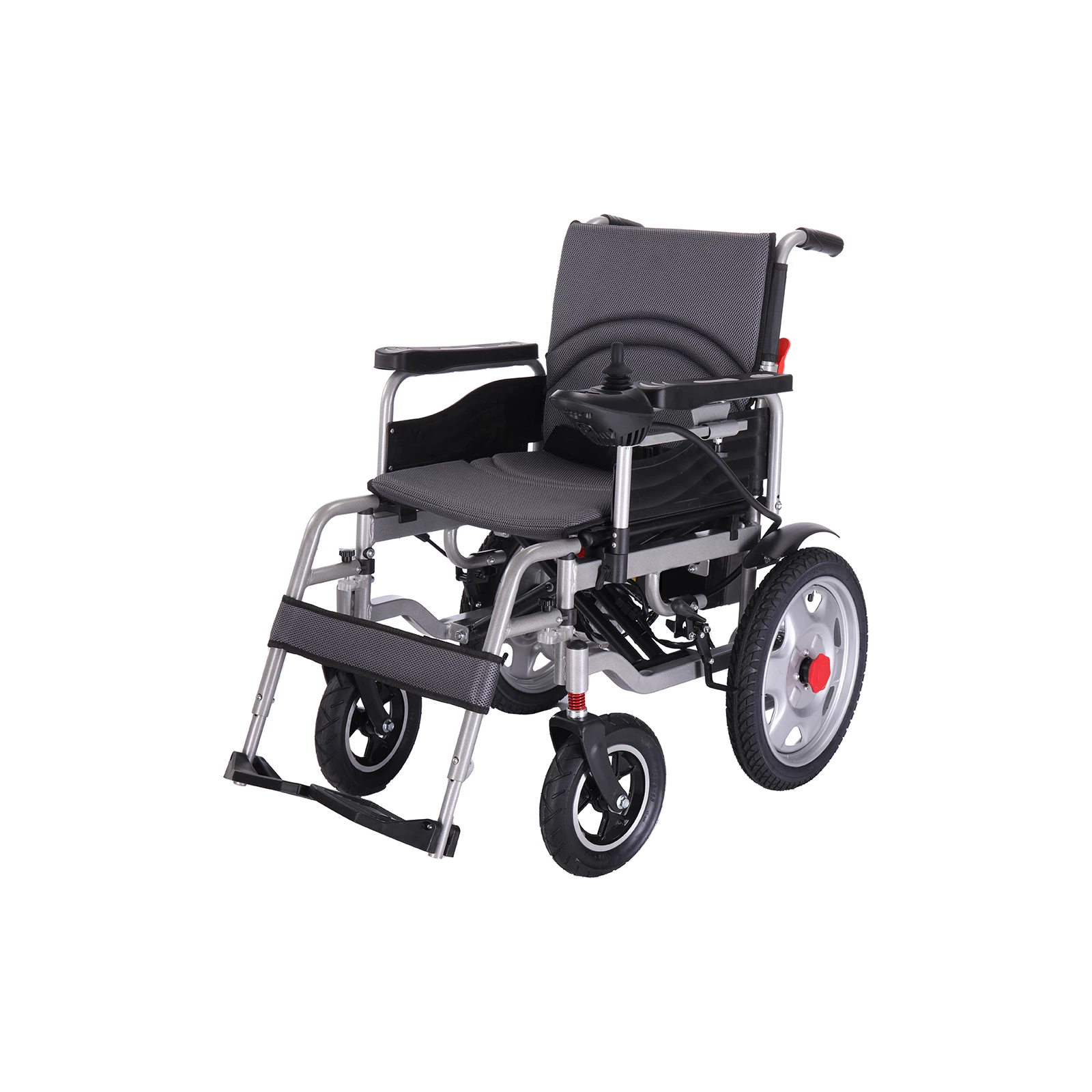
Lithium vs. Lead-Acid: A Quick Comparison
Lithium-ion and lead-acid are families of battery technology, not single standardized products. Lithium packs may use different cell chemistries, battery management systems, cases, and connectors. Wheelchair lead-acid batteries are commonly sealed and may use AGM or gel construction. Compare the exact pack supplied with the chair rather than assuming every battery in one family performs the same way.
Battery capacity should be compared in watt-hours, calculated from nominal voltage multiplied by amp-hours. A 24V 12Ah pack contains 288Wh of nominal energy. Two 12V 12Ah batteries connected in series also form a 24V 12Ah system, not 24Ah. Equal nominal watt-hours do not guarantee equal range because weight, voltage sag, controller cutoff, temperature, terrain, tire pressure, and usable depth of discharge all affect the result.
Portable Wheelchair Battery Comparison at a Glance
| Buying factor | Lithium-ion | Sealed lead-acid |
|---|---|---|
| Weight | Usually lighter for similar nominal energy | Usually heavier |
| Upfront cost | Generally higher | Generally lower |
| Portable chair fit | Strong for folding, lifting, and travel use | Better when weight is less important |
| Charging | Requires the correct lithium charger and BMS | Requires the correct lead-acid charge profile |
| Storage | Follow specified charge level and temperature | Keep charged to reduce damage from prolonged discharge |
| Air travel | Watt-hours and removal or protection method matter | Battery construction, secure attachment, and protection matter |
| End of life | Use a specialist battery recycler | Established collection networks exist in many markets |
Advantages of Lithium-Ion Portable Electric Wheelchair
Lower Battery Weight Improves Portability
The main benefit is energy density. A lithium pack can normally deliver comparable nominal energy at a lower battery weight than a lead-acid set. That reduction matters when loading a folding wheelchair into a car, moving it up a step, or separating the heaviest component before transport. Always ask for both total chair weight and battery-removed weight; a light battery does not automatically make the complete chair easy to lift.
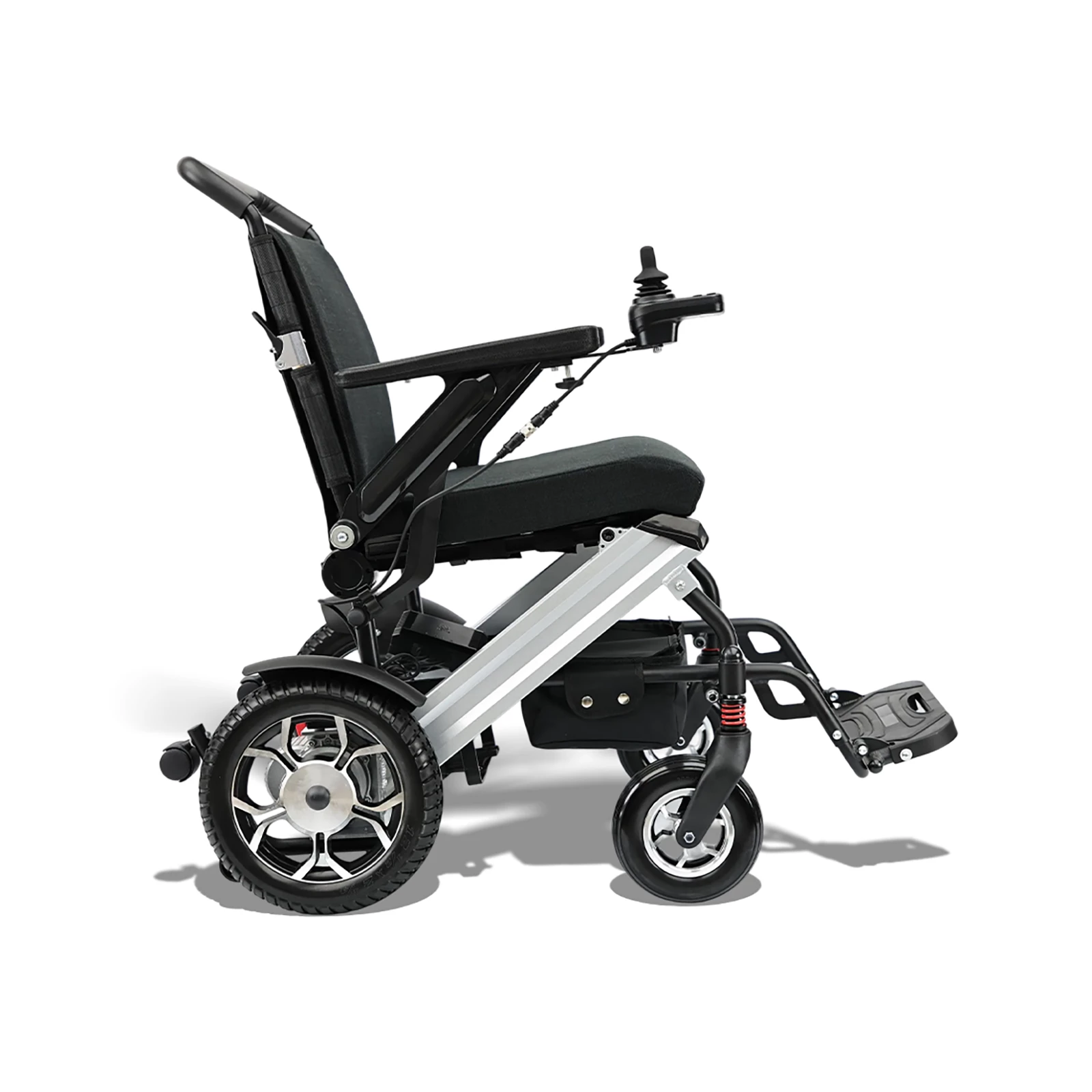
For example, the YHWL-003 portable electric wheelchair is specified with a 24V 13Ah lithium battery, folding aluminum frame, and a listed range of up to 13 km. Buyers should confirm measured chair weight, folded dimensions, battery watt-hours, and range test conditions for the exact production version.
Stable Output and Practical Daily Charging
A correctly designed lithium system can maintain voltage more consistently through much of its usable charge. It also avoids the regular watering associated with traditional flooded lead-acid batteries, although most portable wheelchair lead-acid packs are sealed as well. Lithium still requires care: the battery management system, cells, charger, wiring, connector, and controller must work as a matched system.
Do not use an unapproved charger because the plug fits. Charging voltage, current, termination logic, temperature protection, and communication requirements can differ. Stop using a pack that is swollen, unusually hot, physically damaged, leaking, or producing an unfamiliar odor, and follow the manufacturer or service provider’s isolation instructions.
Lithium Battery Limits and Higher Initial Cost
Lithium usually costs more at purchase, and replacement quality can vary widely. A cheap pack with unknown cells or an unsupported BMS can create downtime and safety risk. Ask for the cell chemistry, rated voltage, rated amp-hours and watt-hours, cycle-life test conditions, ingress protection, BMS protections, production date, warranty, replacement lead time, and model-specific compatibility statement.
Cold temperatures can reduce available performance, while heat accelerates aging. Never leave the battery in a hot vehicle or charge it outside the limits stated in the manual. Long-term storage instructions vary, so use the pack maker’s recommended charge level and inspection interval.
Advantages of Lead-Acid Portable Electric Wheelchair
Lower Purchase Cost and Familiar Service
Sealed lead-acid batteries often have a lower initial price and are familiar to many mobility-equipment workshops. Standardized physical formats may make replacements easier to source in some regions. Lead-acid can therefore be sensible for a wheelchair used mostly at home, in a care facility, or near a dependable charging point where frequent lifting is not required.
Its biggest portability disadvantage is mass. A pair of batteries can make a compact-looking chair difficult for one caregiver to load safely. Check the heaviest removable part, not only the advertised net weight, and practice removal without pulling on cables or lifting from a weak handle.
Lead-Acid Charging and Storage Needs
Lead-acid performance is sensitive to charge state and storage practice. Repeatedly leaving the pack discharged can reduce usable capacity. Use the approved charger after use as directed, keep terminals clean and protected, and inspect the case for swelling, cracks, or corrosion. Do not mix an old battery with a new one or combine different capacities, brands, or constructions in the same series set.
Lead-acid is not automatically interchangeable with lithium. Even if voltage and connector shape appear identical, the charger profile, controller cutoff, cable rating, fuse, battery enclosure, mounting, total weight, and chair certification may differ. A conversion should have written approval from the wheelchair manufacturer or a qualified service provider.
Lead-Acid Recycling Is Well Established
Lead-acid batteries have mature collection systems in many countries. The U.S. EPA describes the lead-acid collection network as a strong example of circularity, while also warning that recycling must be properly controlled to protect workers and communities. Return used packs through an authorized dealer or hazardous-waste program rather than placing them in household waste.
Which Portable Electric Wheelchair Battery Should You Choose?
Choose Lithium-Ion for Frequent Folding and Transport
Lithium is usually the stronger choice when the chair enters a car several times per week, the user travels, storage space is limited, or a caregiver must remove the battery before lifting. It is also attractive when maximum usable mobility must be obtained from a compact package. Budget for an approved replacement pack and verify that it will remain available throughout the expected chair life.
Choose Lead-Acid for Budget and Stationary Use
Lead-acid may be appropriate when the chair stays assembled, charging is readily available, local technicians stock compatible batteries, and the extra mass does not interfere with transport or handling. Compare lifetime cost, not just purchase price: include replacement frequency, technician time, charger replacement, shipping, and the consequences of downtime.
Key Takeaways
For most buyers who genuinely need a portable electric wheelchair, lithium-ion provides the clearest advantage because reducing battery weight improves the entire transport experience. Lead-acid remains relevant for cost-sensitive, mostly stationary use. Whichever technology you choose, buy a documented, model-approved system and plan charging, travel, service, and recycling before the chair enters daily use.
FAQ
Is lithium-ion better than lead-acid for a portable electric wheelchair?
Usually yes when low lifting weight, compact transport, and travel convenience are priorities. Lead-acid can still be a practical lower-cost choice when the chair stays assembled and local replacements are easy to obtain.
Can I replace a lead-acid wheelchair battery with lithium-ion?
Not without written compatibility approval. Voltage alone is insufficient; charger profile, controller cutoff, current limits, connectors, mounting, weight distribution, protection systems, and regulatory documentation must all be checked.
How do I compare wheelchair battery capacity?
Compare nominal watt-hours by multiplying volts by amp-hours, then review usable capacity and range test conditions. Do not compare amp-hours alone when pack voltages differ.
How should wheelchair batteries be recycled?
Use an authorized battery retailer, mobility-equipment dealer, specialist recycler, or local hazardous-waste program. The EPA states that lithium-ion batteries should not go into household garbage or ordinary recycling bins because damaged or mishandled packs can start fires.


