

If you’re sourcing mobility equipment for distributors, clinics, or care facilities, the electric wheelchair vs. mobility scooter question comes up a lot. Both run on batteries. Both help people with limited mobility get around. But they’re built for very different bodies, very different environments, and very different daily routines. Stock the wrong one for your market, and you’re looking at returns, complaints, and lost accounts.
Here’s what actually separates these two devices, and how to decide which belongs in your product lineup.
What Is an Electric Wheelchair?
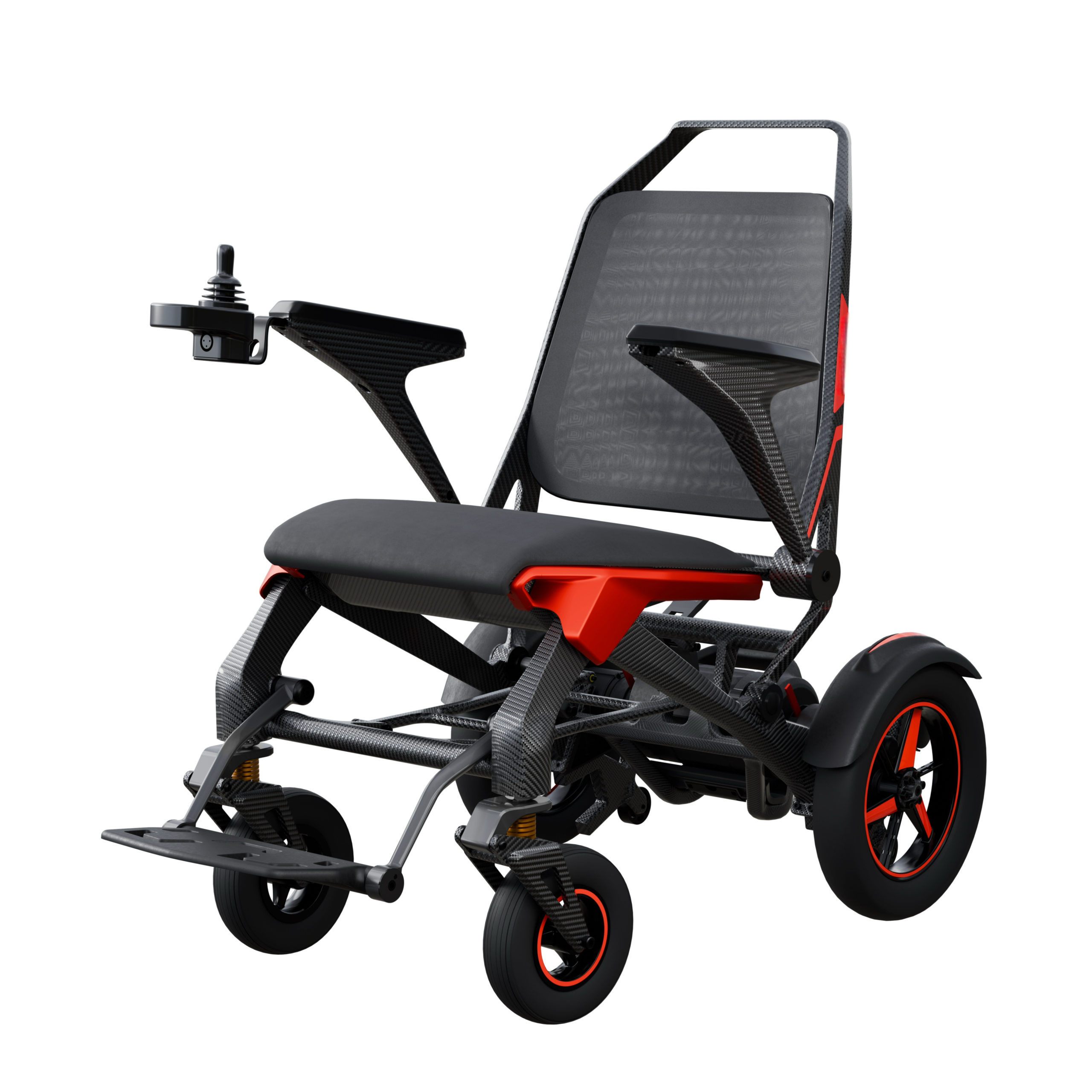
An electric wheelchair (also called a power wheelchair or motorized wheelchair) is controlled by a joystick mounted near the armrest. It’s designed for people who need powered mobility most or all of the day, especially indoors. The seating is highly adjustable: tilt, recline, leg elevation, headrest angle. Mid-wheel-drive models can turn in as little as 19–23 inches, which means a full U-turn in a narrow hallway. Typical top speed sits around 4–6 mph, and battery range can reach 25–30 km on a single charge.
The short version: power wheelchairs go where space is tight, and the user’s upper-body strength is limited.

What Is a Mobility Scooter?
A mobility scooter steers with a tiller, which is basically a set of handlebars in front of the rider. It comes in three-wheel or four-wheel setups and is aimed at people who can still walk short distances but fatigue quickly. Scooters are faster outdoors (4–8 mph on most models, some reaching 15 mph), and they handle paved surfaces, parks, and sidewalks well. But they need a turning radius of 40–70 inches. That makes them awkward or even useless in a small apartment or a hospital corridor.
The user also needs decent grip strength, trunk control, and the ability to climb on and off the seat independently.
Electric Wheelchair vs Mobility Scooter: Side-by-Side Comparison
| Feature | Electric Wheelchair | Mobility Scooter |
| Steering | Joystick (minimal hand effort) | Tiller/handlebars (requires arm & grip strength) |
| Turning Radius | 19–25 inches | 40–70 inches |
| Best Environment | Indoors, tight spaces | Outdoors, paved surfaces |
| Top Speed | 4–6 mph | 4–15 mph |
| Seating | Fully adjustable, clinical-grade | Basic swivel seat, limited adjustability |
| User Requirement | Minimal upper-body strength | Good trunk control, ability to mount/dismount |
| Typical Price Range | $2,000–$15,000+ | $1,500–$4,000 |
| All-Day Use | Yes | Occasional / errand-based |
Steering and Controls: Joystick vs. Tiller
This is the single biggest functional split. A joystick needs almost no force. Some models respond to just a few ounces of pressure from a single finger. That makes power wheelchairs the go-to for users with arthritis, neurological conditions, or post-stroke weakness.
A tiller requires both hands, extended arm reach, and enough coordination to steer while managing speed with a thumb lever. It’s intuitive for someone who’s fairly mobile, but it’s a non-starter for anyone with limited hand function. For B2B buyers, knowing your end customer’s physical profile determines which device you should be recommending. It also determines what you should be importing.
Indoor Maneuverability vs. Outdoor Range
Here’s the thing: roughly 8.5 million adults in the U.S. alone use some form of mobility aid, and their needs split pretty clearly by environment.
- Electric wheelchairs win indoors. They slip through standard doorways (most are under 26 inches wide), turn on the spot, and pull up close to tables and desks. For hospitals, rehab centers, and nursing homes, this matters a lot.
- Mobility scooters win outdoors. Their larger wheels handle uneven pavement better, and their higher speed and longer straight-line range make them ideal for community errands, campus transport, and park-path cruising. But try to navigate a furniture-filled living room with one, and you’ll see the problem.
Physical Requirements: Who Uses What?
B2B purchasing decisions should start with the end user’s body, not the device’s spec sheet.
- Power wheelchair users typically have limited arm and trunk strength, progressive conditions (MS, ALS, Parkinson’s), or chronic pain that rules out the physical effort a scooter demands. The joystick and customized seating handle the rest.
- Mobility scooter users usually have some walking ability but can’t cover long distances. They can sit upright without external support, grip the tiller comfortably, and transfer on and off the seat on their own.
If your target market serves aging populations or long-term care facilities, electric wheelchairs will likely make up the bulk of demand. If you’re selling into active-senior retail or outdoor recreation channels, scooters are the bigger opportunity.
Why OEM Customization Matters Here
At YOYI CARE, we’ve spent over 10 years manufacturing electric wheelchairs, and one thing we’ve seen is this: no two distributors need the exact same chair. Motor controller settings, battery capacity, cushion materials, frame colors, logo placement, and more. These details drive brand loyalty in ways that a generic import simply can’t.
We hold ISO 13485, CE, and FDA certifications, and we offer full OEM/ODM services. Whether you need a custom joystick program or branded packaging for a hospital chain, that’s what our lines are built to deliver.
Explore Electric Wheelchairs for Your Market
Building a wheelchair range? Browse YOYI CARE’s electric wheelchair collection, then contact our team with your destination market, intended users, quantity, and transport needs. Ask for model-specific documents and a quotation so you can compare options on the same basis.
FAQs
Can an electric wheelchair be used outdoors?
Yes. Most modern power wheelchairs handle paved outdoor surfaces, and some models come with suspension and larger wheels for light off-road use. But their lower top speed (4–6 mph) and shorter range compared to scooters mean they’re not the best pick for long community trips.
Do mobility scooters work indoors?
Three-wheel scooters can manage larger indoor spaces like shopping malls or airport terminals. But with a turning radius of 30–70 inches, they struggle in standard homes, narrow hospital corridors, and rooms with furniture. For tight indoor use, a power wheelchair is the safer bet.
Which device sells better in the European and American B2B market?
It depends on the channel. Distributors supplying rehab centers and nursing homes lean heavily toward electric wheelchairs because of clinical seating needs and indoor maneuverability. Retailers targeting active seniors and home-use customers often stock more scooters. Many distributors carry both to cover the full spectrum.
What certifications should a B2B buyer look for when sourcing from China?
At a minimum, look for ISO 13485 (medical device quality management), CE marking (required for European markets), and FDA registration (required for U.S. sales). YOYI CARE holds all three, along with Chinese Medical Device Production Licenses and multiple design patents.


