

Finding an oxygen concentrator supplier looks easy at first. Then the questions start. Does the company make portable units or only stationary models? Can it support 10 LPM systems? Are parts available locally? And who handles service after the sale?
This guide compares ten oxygen concentrator manufacturers worth knowing in 2026. Some are portable-oxygen specialists. Others offer broad home-care ranges or OEM programs. There is no single winner for every buyer, so we focus on where each company fits best.
The list is an editorial shortlist based on current public product information, manufacturing focus, service resources, and buyer fit. It is not a market-share ranking. Always verify the exact factory, model, registration, and certificate scope before placing an order.
How We Selected the Top Oxygen Concentrator Manufacturers
Product Range and Oxygen Technology
We looked for active product lines in portable, stationary, transportable, or high-flow oxygen. A broad range helps distributors serve more prescriptions. A focused range can be just as valuable when the engineering is deep. We also considered alarms, oxygen monitoring, connected fleet tools, power options, and service-friendly design.
Quality Systems and Buyer Support
Medical devices need more than attractive brochures. Buyers should review ISO 13485 certificates, site scope, regulatory records, validation, complaint handling, and change control. For the U.S., the FDA Quality Management System Regulation became effective on February 2, 2026. It incorporates ISO 13485:2016 by reference. This makes supplier quality evidence even more important.
10 Top Oxygen Concentrator Manufacturers in 2026
1. Inogen
Inogen is one of the best-known names in portable oxygen. Its current Rove systems focus on light weight, pulse-dose delivery, battery operation, and travel. The company also distributes the Voxi 5 stationary unit in the U.S. Inogen is a practical shortlist choice for HME providers and distributors that want a strong portable category with direct patient recognition.
Best fit: portable oxygen programs, home medical equipment providers, and mobility-focused respiratory care.
2. CAIRE
CAIRE has more than 50 years of oxygen experience. Its portfolio includes portable and stationary concentrators under names such as CAIRE, AirSep, and SeQual. Models range from the light FreeStyle Comfort to the continuous-flow Eclipse 5 and higher-flow stationary systems. CAIRE also offers provider training, technical resources, and connected-care options.
Best fit: distributors that want portable, home, facility, and specialty oxygen from one supplier.
3. Drive Medical and DeVilbiss
Drive Medical offers 5 LPM and 10 LPM stationary concentrators plus the iGo2 portable system. In 2026, the company introduced the new DeVilbiss 555 compact 5 LPM platform. Its respiratory history, parts support, provider resources, and exchange-service programs make it especially relevant to DME fleets.
Best fit: North American providers that value familiar service channels and a mix of stationary and portable units.
4. Yuwell
Yuwell is a large medical equipment company with respiratory, monitoring, diabetes, and home-care product lines. Its oxygen concentrators include multiple stationary configurations for international markets. The company reports business coverage across more than 100 countries and regions. Buyers should confirm the exact regional model because specifications and registrations vary.
Best fit: distributors building a broad home healthcare catalog, not just a single oxygen SKU.
5. Nidek Medical
Nidek Medical is known for the Nuvo family of stationary concentrators. Its product documentation emphasizes straightforward operation, oxygen concentration monitoring, alarms, and accessible servicing. Regional versions and model numbers differ, so a distributor should match the electrical configuration and flow range to the destination market.
Best fit: home oxygen providers that prefer proven continuous-flow platforms and field serviceability.
6. GCE Healthcare
GCE Healthcare makes the Zen-O and Zen-O lite portable concentrators. Zen-O provides pulse and continuous-flow modes, while field-replaceable sieve beds can simplify provider maintenance. GCE also supports connected fleet monitoring through its Clarity platform and has a wider medical gas equipment business.
Best fit: European and global providers seeking durable portable systems with serviceable components.
7. O2 Concepts
O2 Concepts engineers and assembles portable concentrators in the United States. Its Oxlife products combine continuous-flow and pulse-dose options in transportable or wearable formats. The company’s DNA Technology platform gives providers device, usage, alarm, and location data. That can help with fleet management and hospital-to-home programs.
Best fit: DME businesses that want connected assets and a non-delivery oxygen model.
8. React Health
React Health serves sleep, oxygen, and ventilation markets. Its current oxygen resources include the Phoenix 5L stationary concentrator, Platinum 10L, and HomeFill system. The company also provides technical service information and supports independent repair-center training.
Best fit: respiratory providers that want oxygen products alongside PAP and ventilation categories.
9. Longfian
Longfian focuses heavily on oxygen technology. Its portfolio spans portable units, home oxygen, hospital applications, veterinary systems, and higher-output equipment. At WHX 2026, the company highlighted portable models as well as 5 LPM, 10 LPM, and 20 LPM systems. This range gives international buyers several volume and application options.
Best fit: distributors sourcing multiple flow capacities or specialized oxygen applications.
10. YOYI CARE
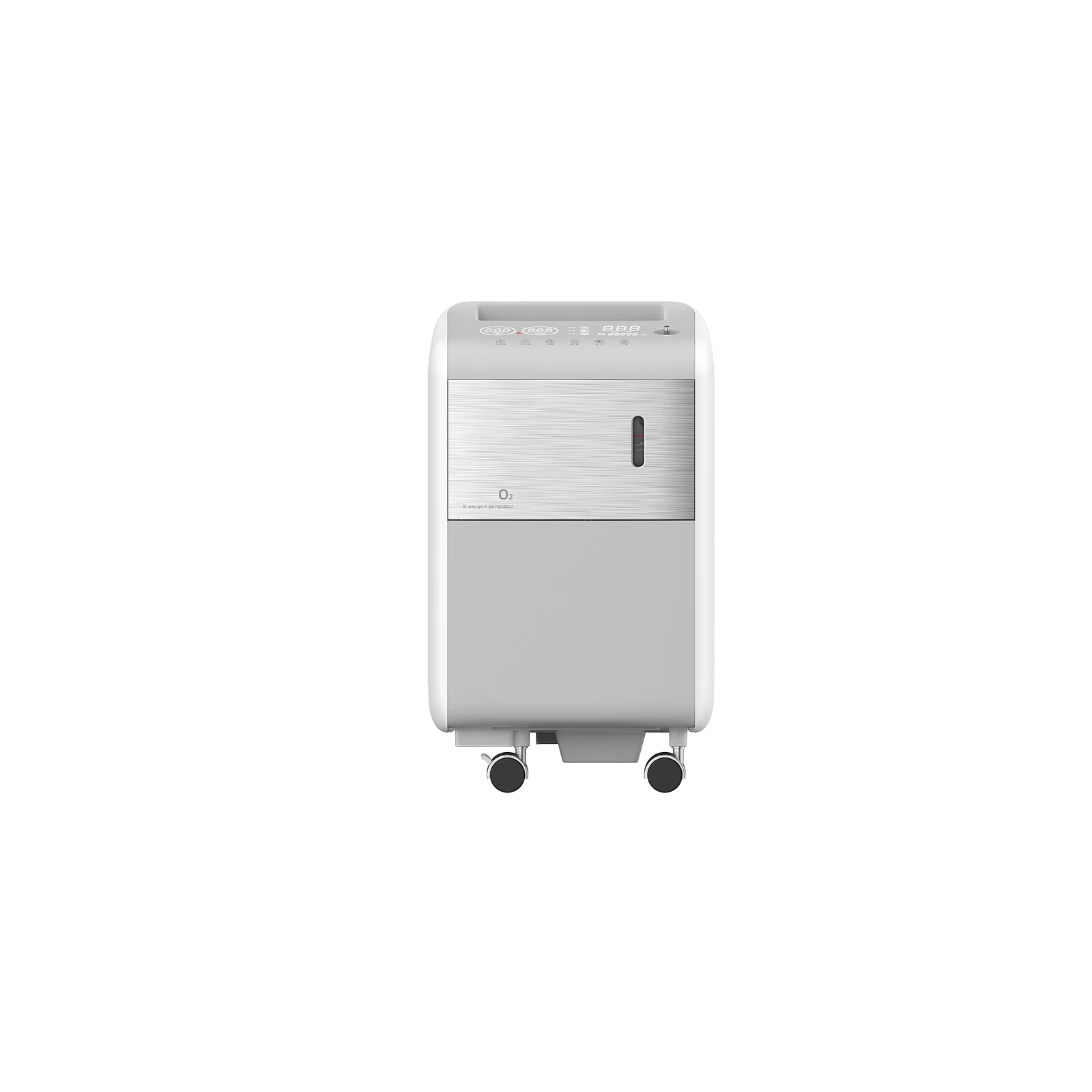
YOYI CARE manufactures medical and home oxygen concentrators alongside wheelchairs and nursing beds. Available oxygen models cover common 3 LPM, 5 LPM, and 10 LPM requirements. Selected units include touch controls, remote operation, voice prompts, oxygen monitoring, alarms, and nebulization. The company also supports OEM and ODM customization for distributors.
Best fit: private-label buyers, elderly-care distributors, and projects needing product, voltage, interface, or packaging customization.
Oxygen Concentrator Manufacturer Comparison
| Manufacturer | Main strength | Typical buyer fit |
|---|---|---|
| Inogen | Light portable systems | HME and mobility programs |
| CAIRE | Broad oxygen portfolio | Full-range distributors |
| Drive/DeVilbiss | DME service ecosystem | North American providers |
| Yuwell | Large home-care catalog | Multi-category distributors |
| Nidek Medical | Serviceable stationary units | Home oxygen fleets |
| GCE Healthcare | Dual-mode portable oxygen | Global respiratory providers |
| O2 Concepts | Connected POC fleets | DME asset management |
| React Health | Oxygen, sleep, ventilation | Respiratory suppliers |
| Longfian | Wide output range | International distributors |
| YOYI CARE | OEM and ODM flexibility | Private-label buyers |
How to Choose an Oxygen Concentrator Manufacturer
Verify the Exact Factory and Certificate Scope
Do not stop at a logo or certificate number. Confirm the legal manufacturer, production address, current certificate, covered activities, and product family. Ask who owns the registration in each market. A distributor should also understand labeling, importer, vigilance, and recall responsibilities before launch.
Compare Real Ownership Cost
Unit price is only the beginning. Compare filters, sieve beds, batteries, compressors, warranty labor, replacement units, freight, and expected service time. For a provider fleet, downtime can cost more than a small price difference. Connected monitoring may save service visits, but only when the platform works in your country and fits your workflow.
Test Samples Before a Bulk Order
Run the sample at the required flow and local voltage. Check oxygen concentration after warm-up, noise, temperature rise, alarms, accessories, packaging, and instructions. For portable units, test battery duration at realistic settings. Record the approved sample and use it as the reference for pre-shipment inspection.
Final Thoughts on Oxygen Concentrator Manufacturers in 2026
The strongest oxygen concentrator manufacturers do more than ship machines. They support documents, service, spare parts, training, and controlled product changes. Start with the oxygen range and target market. Then verify the site and test the sample. That simple sequence makes the shortlist much easier to trust.
FAQ
Who is the best oxygen concentrator manufacturer?
There is no universal best choice. Inogen is strong in lightweight portable devices. CAIRE offers a broad oxygen portfolio. Drive/DeVilbiss has established DME support. YOYI CARE and Longfian can suit international or OEM projects. The right supplier depends on flow, market, volume, and service needs.
Do oxygen concentrator manufacturers offer OEM service?
Some do, while others sell mainly under their own brands. OEM scope may include logos, packaging, voltage, accessories, interface language, or product changes. Ask which modifications are already validated and whether a change requires new testing or registration.
What documents should a distributor request?
Request a current ISO 13485 certificate, product registration evidence, declarations, applicable test reports, labeling, instructions, risk and usability summaries where available, warranty terms, and quality agreements. Document needs vary by market and device configuration.
Should buyers choose one manufacturer or several?
One supplier simplifies training and parts. Two qualified sources can reduce supply risk. Many distributors use one main partner and one backup for critical categories. Keep specifications and inspection standards consistent so products do not drift apart.


