

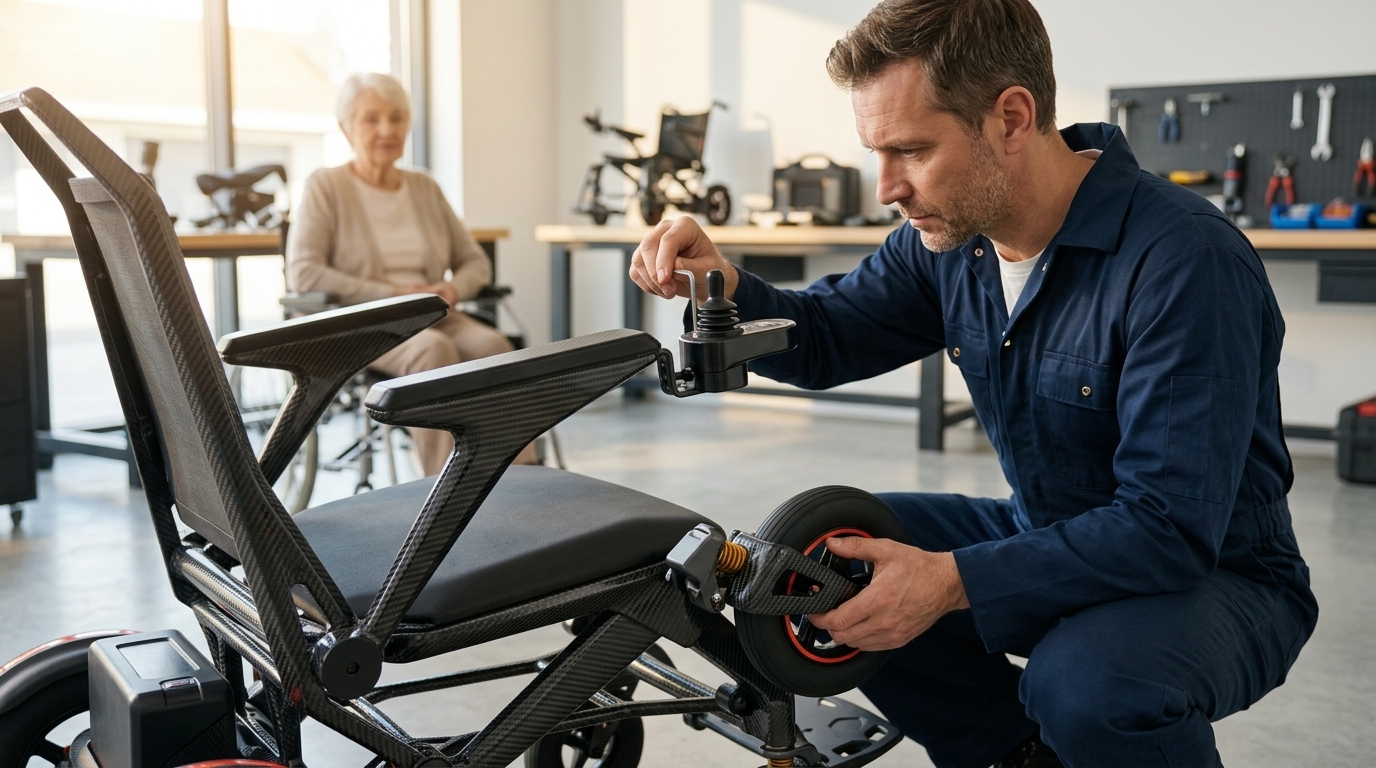
A carbon fiber electric wheelchair makes sense for wholesale when your channel needs low carry weight, premium positioning, easier sampling, and a real spec story buyers can compare. The sourcing risk usually comes from thin documentation, vague range claims, weak battery files, and factories that treat OEM labels as decoration. YOYI CARE’s YHWT-001 gives you a concrete benchmark: 24V20Ah lithium battery, 40 KM stated range, carbon fiber frame, and 22 KG chair weight without battery.
Carbon Fiber Electric Wheelchair Specs
A wholesale carbon fiber electric wheelchair should be evaluated by frame weight, battery capacity, tested range, turning radius, controller quality, brake response, and certification file depth. YOYI CARE’s YHWT-001 reference model pairs a carbon fiber frame with a 24V20Ah lithium battery, 40 KM stated range, and 22 KG chair weight without battery.
| Spec item | YHWT-001 buyer benchmark | What you should verify |
|---|---|---|
| Frame | Carbon fiber | Frame layup consistency, surface finish, joint quality |
| Battery | 24V20Ah lithium | Cell supplier, UN38.3 file, MSDS, battery label |
| Stated range | 40 KM | User weight, speed, terrain, test conditions |
| Chair weight | 22 KG without battery | Battery weight, carton weight, loaded container plan |
| Market file | ISO13485/CE/FDA references | Valid scope, model match, label and manual consistency |
The 24V20Ah battery equals 480Wh by simple math: voltage multiplied by amp-hours. That matters because range is only one part of the buyer decision. A distributor also has to plan battery handling, after-sales replacement, air-travel messaging, and local compliance checks.
Carbon fiber works best when portability is a sales point. If your customers compare every quote by lowest purchase cost, aluminum or steel may be easier to sell. If your dealers sell premium home-care mobility, travel chairs, and private-label mobility devices, carbon fiber gives the product a cleaner story: lighter chair, better perceived value, and less staff strain during demos.
Wholesale Buyer Benefits
The first benefit is handling. A 22 KG chair without battery is easier for a showroom team to lift, easier for an importer to sample, and easier for a care-facility buyer to move into storage. That sounds basic until a dealer tries to load six chairs after a trade show.
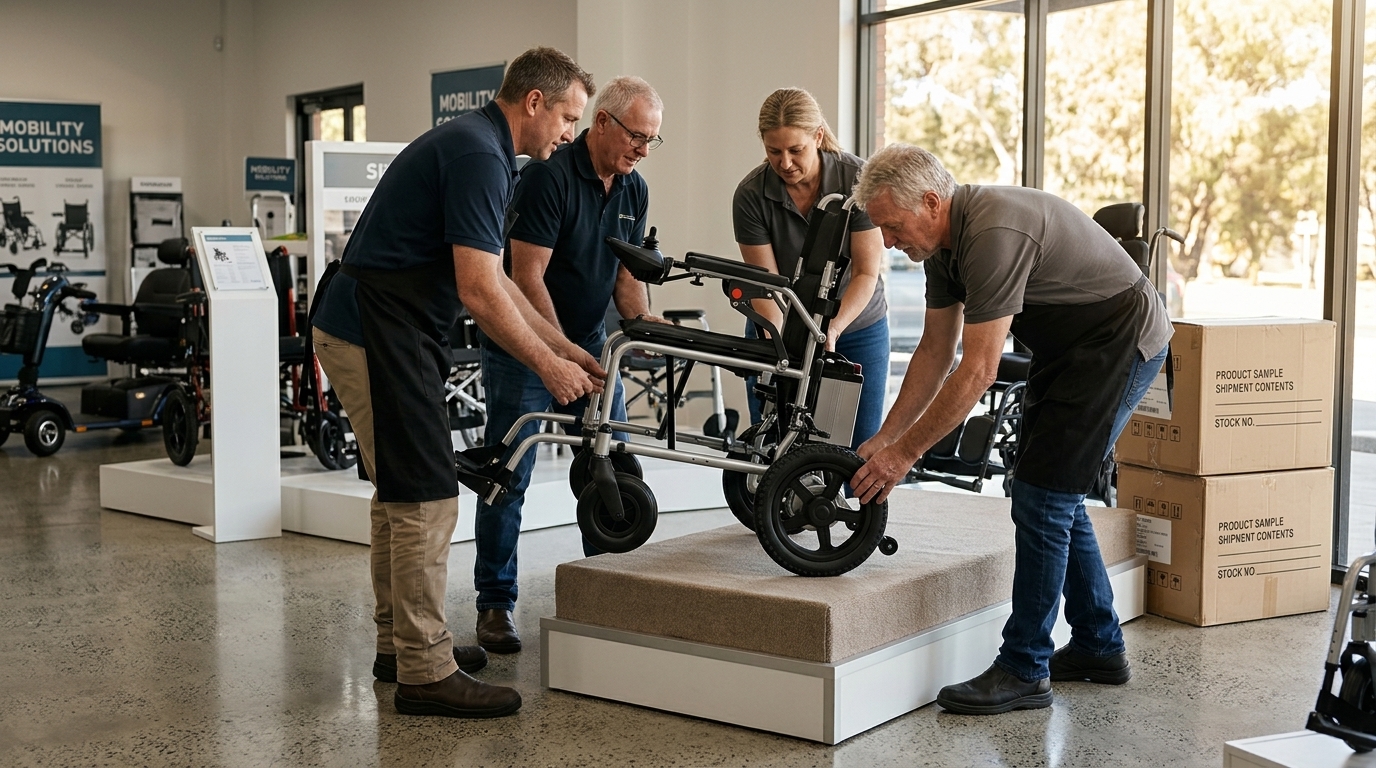
For private-label brands, carbon fiber also gives stronger shelf separation. A black carbon fiber frame looks and feels different from a painted steel chair. Your product manager doesn’t need to over-explain it. The material does some of the work.
| Buyer type | Carbon fiber advantage | Watch point |
|---|---|---|
| Distributor | Premium SKU above aluminum models | Needs sales training, not only a spec sheet |
| Importer | Lower unit handling weight | Battery files must be clean before shipment |
| OEM/ODM brand | Easier high-end positioning | Logo, manual, carton, and label must match |
| Hospital buyer | Easier movement between departments | Confirm service access and spare parts plan |
YOYI CARE was founded in 2013, and we build electric mobility products for buyers who care about OEM/ODM control, QC records, certification references, warranty handling, and after-sales support. If you’re comparing categories before a bulk order, a broader wholesale electric wheelchair manufacturer page can help you weigh carbon fiber against aluminum and steel models.
Carbon Fiber Sourcing Risks
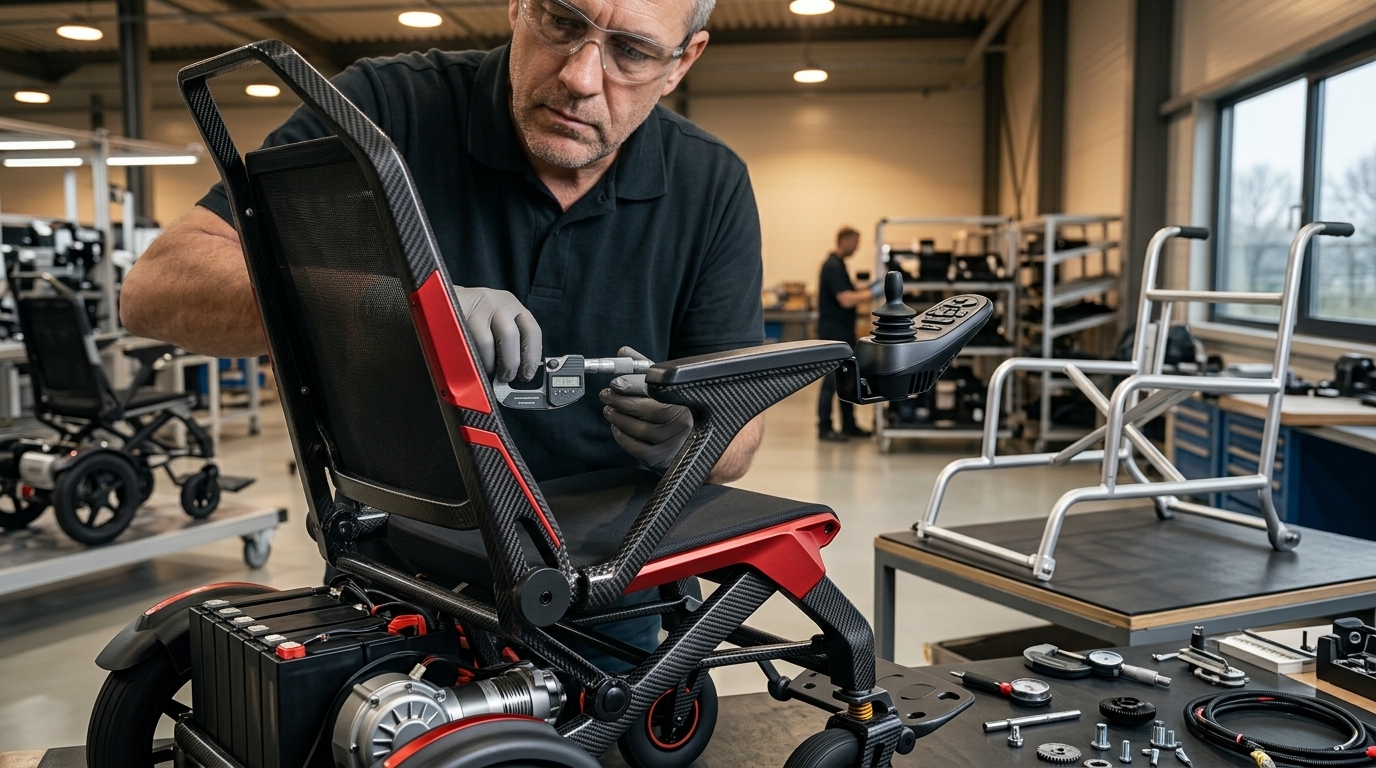
Carbon fiber isn’t automatically better. A poorly made carbon fiber frame can create more problems than a well-made aluminum frame. The red flags are usually easy to spot: no fatigue test discussion, unclear frame repair policy, generic battery paperwork, no spare-parts list, or a supplier that can’t explain how the sample differs from mass production.
For U.S. planning, the FDA product classification database lists powered wheelchair product code ITI as Class II, with 510(k) submission type and regulation number 890.3860, updated June 22, 2026. That doesn’t mean every imported chair is ready for your market. It means your regulatory file needs to match the model, label, intended use, and importer role.
Battery risk needs special attention. Under 49 CFR 175.10, lithium-ion battery-powered mobility aids have specific passenger-aircraft conditions, including UN38.3 testing and short-circuit protection. If a removable battery isn’t adequately protected and must be carried in the cabin, the rule references a 300Wh limit. YHWT-001’s 24V20Ah pack calculates to 480Wh, so you should never copy a generic “airline approved” claim without checking the exact battery setup, airline policy, and destination rules.
Use this risk filter before you request samples:
- Ask whether the quoted carbon fiber frame is the same frame used in batch production.
- Request battery documents before you pay for samples, not after the carton is packed.
- Check whether the supplier can provide spare controllers, joysticks, chargers, tires, and brake parts.
- Confirm which claims are supported by test data and which are sales copy.
Factory Vetting Checklist
A good factory conversation gets specific fast. Ask who owns the tooling. Ask how carbon fiber defects are inspected. Ask what happens when a controller fails after the buyer has already sold 200 units into a dealer network. If the answer is only “we have QC,” keep pushing.
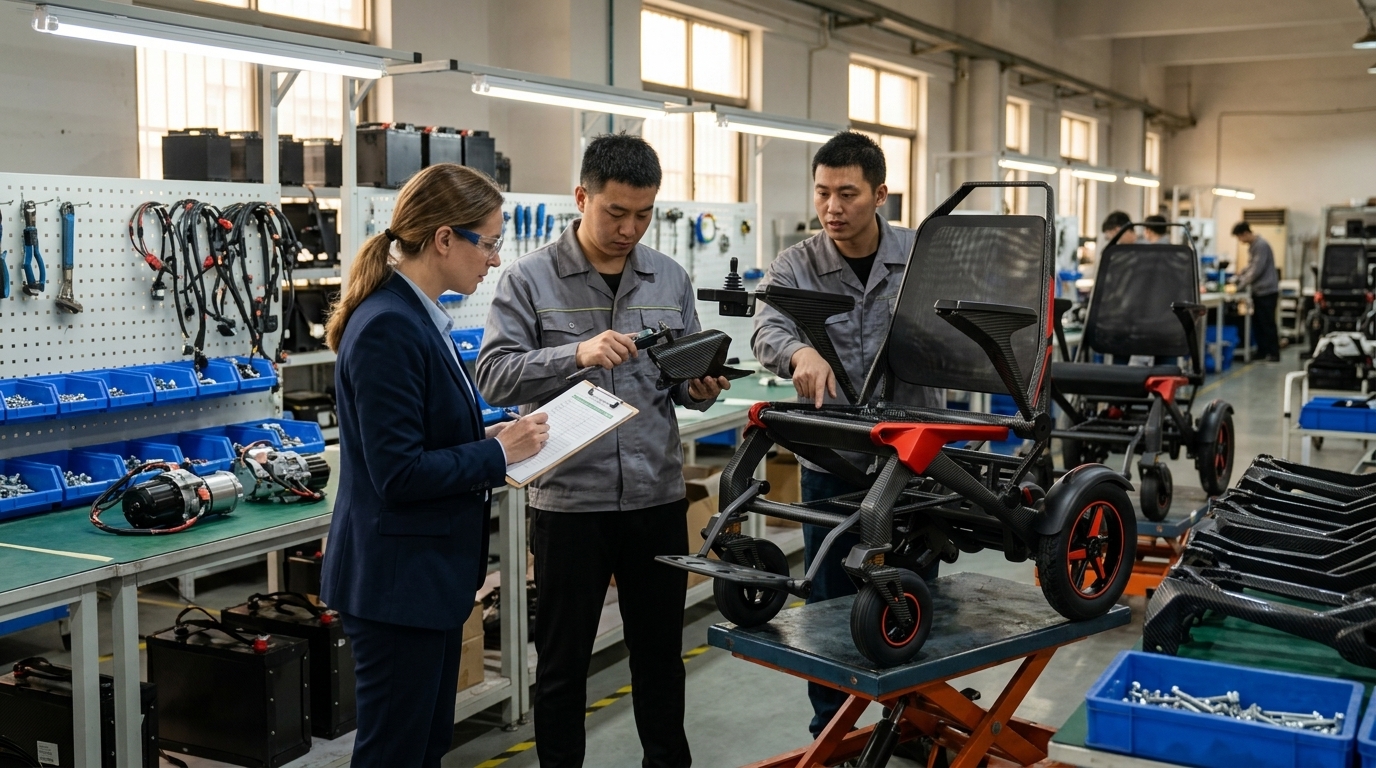
When you compare an electric wheelchair supplier with a direct factory, focus on control points: engineering drawings, incoming material checks, assembly inspection, finished-product testing, packaging drop checks, and spare-parts response. A trading company can still be useful, but you need to know who signs off when a batch fails inspection.
A practical factory audit should include these documents:
| Document | Why it matters |
|---|---|
| Product specification sheet | Stops quiet changes to battery, motor, controller, and frame details |
| QC inspection record | Shows whether checks happen per unit or only by batch |
| Certification references | Helps your compliance team check model and scope fit |
| After-sales parts list | Protects your distributor margin after the first sale |
| OEM approval sample | Locks color, logo, label, carton, and manual before mass production |
If you’re building a private-label line, ask for a golden sample and keep it. That one chair becomes the reference when a later batch has a different joystick feel, loose folding joint, changed charger, or carton label mismatch.
OEM/ODM Details That Matter
OEM/ODM on an electric wheelchair isn’t just a logo on the frame. For a B2B buyer, the useful customization work sits in the details: joystick side, battery label, carton printing, manual language, warning labels, upholstery color, frame accent, barcode format, and spare-parts packaging.
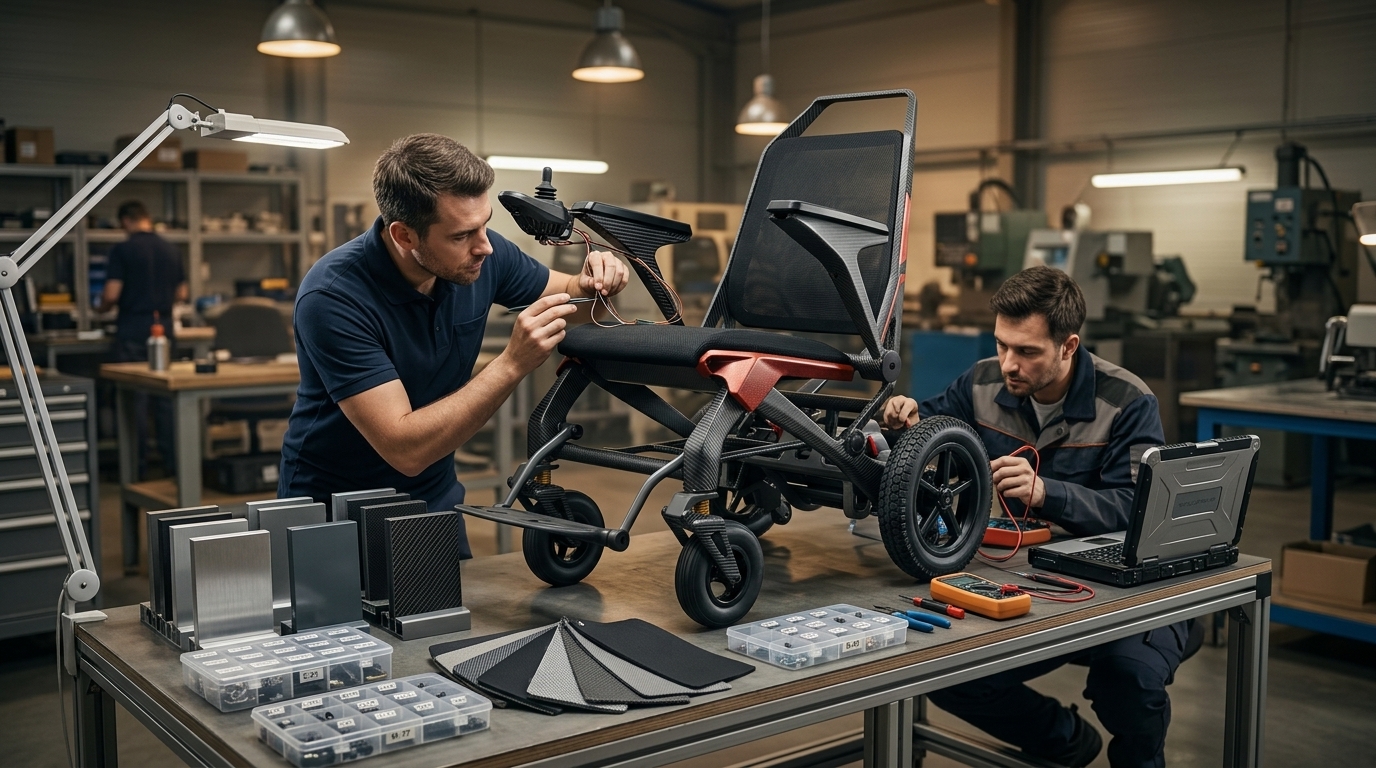
YOYI CARE’s 60+ patents are useful because they sit behind actual product development, but patents alone don’t protect your order. The stronger buyer move is to connect each customization point to a controlled file. A carton artwork file. A manual revision. A label drawing. A signed sample photo set. Boring paperwork saves real money.
For YHWT-001, use the carbon fiber electric wheelchair page as a product starting point, then ask which parts can be customized without changing compliance documents or delaying your launch plan. Some changes are easy. Others touch labels, testing, or local registration. Better to know that before your sales team prints a catalog.
Channel Fit And Margin
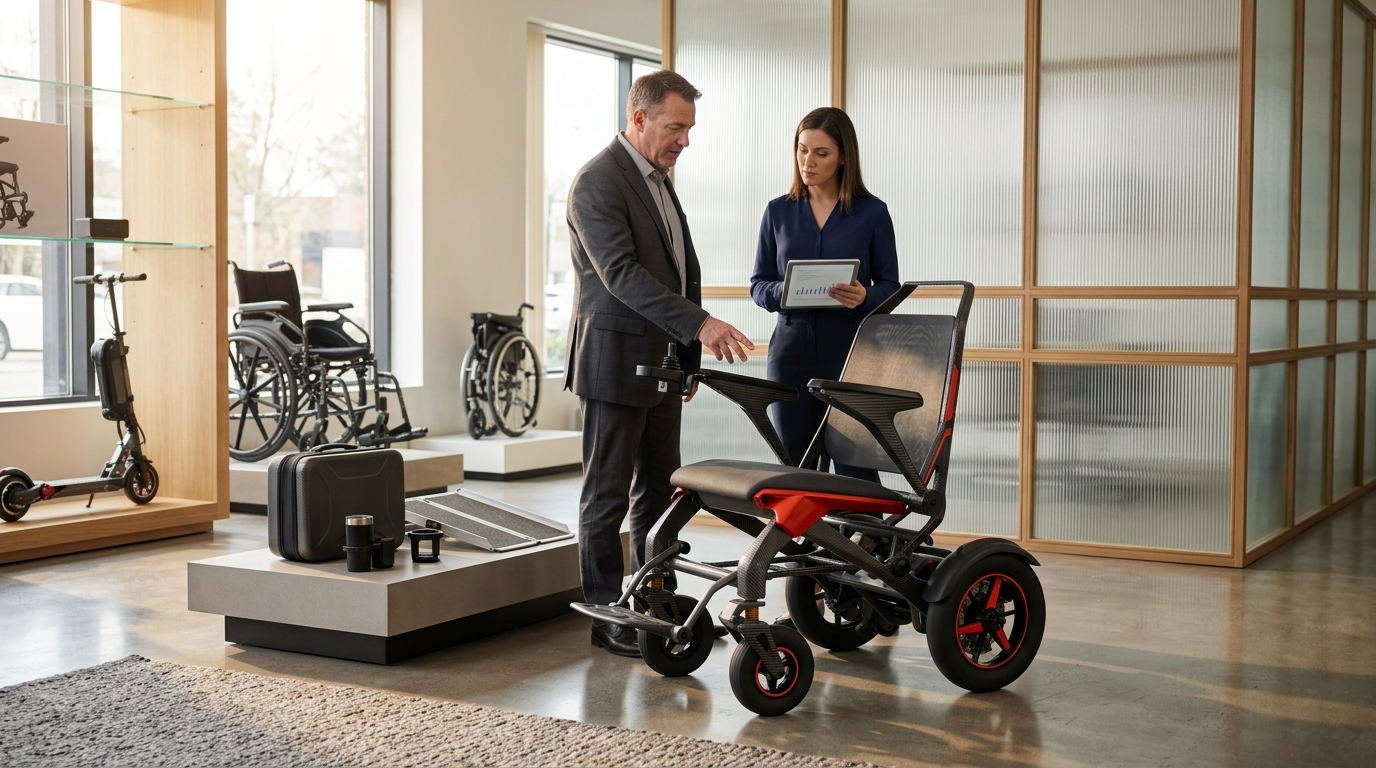
Carbon fiber fits premium home-care dealers, travel mobility retailers, rehab equipment distributors, and private-label healthcare brands. It fits less well when a tender only rewards the lowest landed price. In that case, a steel or aluminum power chair may protect your margin better.
| Sales channel | Best fit? | Reason |
|---|---|---|
| Premium distributor | Yes | Carbon fiber gives a clear upgrade story |
| Online DTC brand | Yes | Low weight helps demos, photos, and shipping claims |
| Public tender | Mixed | Price pressure can erase the material advantage |
| Hospital fleet | Mixed | Service access and parts speed matter more than frame story |
If you’re still building your vendor shortlist, compare YOYI CARE against the best electric wheelchair manufacturers by asking the same questions to every factory: What is the tested range? What is the real weight? Which battery file matches this model? Who handles after-sales parts? What changes when the order moves from sample to bulk?
The best carbon fiber order is boring by the time it ships. Every label matches. Every carton is approved. Every battery file is ready. Every spare part has a code.
FAQ
Is carbon fiber worth wholesale?
Yes, when your buyers value portability, premium positioning, and lower handling weight. It works less well for price-only tenders, rough institutional use, or channels where spare-parts support is weak.
What battery documents should buyers request?
Request UN38.3, MSDS, battery specification sheet, charger details, battery label artwork, and packing information. Match every document to the exact battery used in the sample and bulk order.
Does FDA registration prove product quality?
No. FDA-related status helps with U.S. regulatory planning, but it doesn’t replace factory QC, model-specific documents, labeling review, or importer due diligence.
Can carbon fiber wheelchairs be private label?
Yes. Common OEM/ODM items include logo placement, carton artwork, manual language, label design, upholstery color, and accessory packaging. Confirm which changes affect compliance files.
What range should distributors advertise?
Advertise the range your supplier can support with test conditions. For YHWT-001, YOYI CARE lists 40 KM, but your local sales copy should state the conditions behind that number.
For wholesale carbon fiber electric wheelchair sourcing, YOYI CARE can help you compare YHWT-001 specs, OEM/ODM options, certification references, QC steps, warranty handling, and after-sales parts planning before you commit to bulk orders.


