

If you’re shortlisting an OEM electric wheelchair factory, confirm model fit, customization control, compliance scope, and repeatable QC before you compare unit price. A low cost won’t help if the logo rubs off, battery paperwork doesn’t match your import market, the controller setting feels wrong in a hospital corridor, or warranty spare parts are unclear.
OEM Electric Wheelchair Fit
An OEM electric wheelchair factory should help you define the model, frame material, branding, battery capacity, cushion, color, electronic control system, packaging, QC documents, and after-sales support before production. The best supplier for private label buyers is the one that can protect your spec, repeat it, and prove it with records.
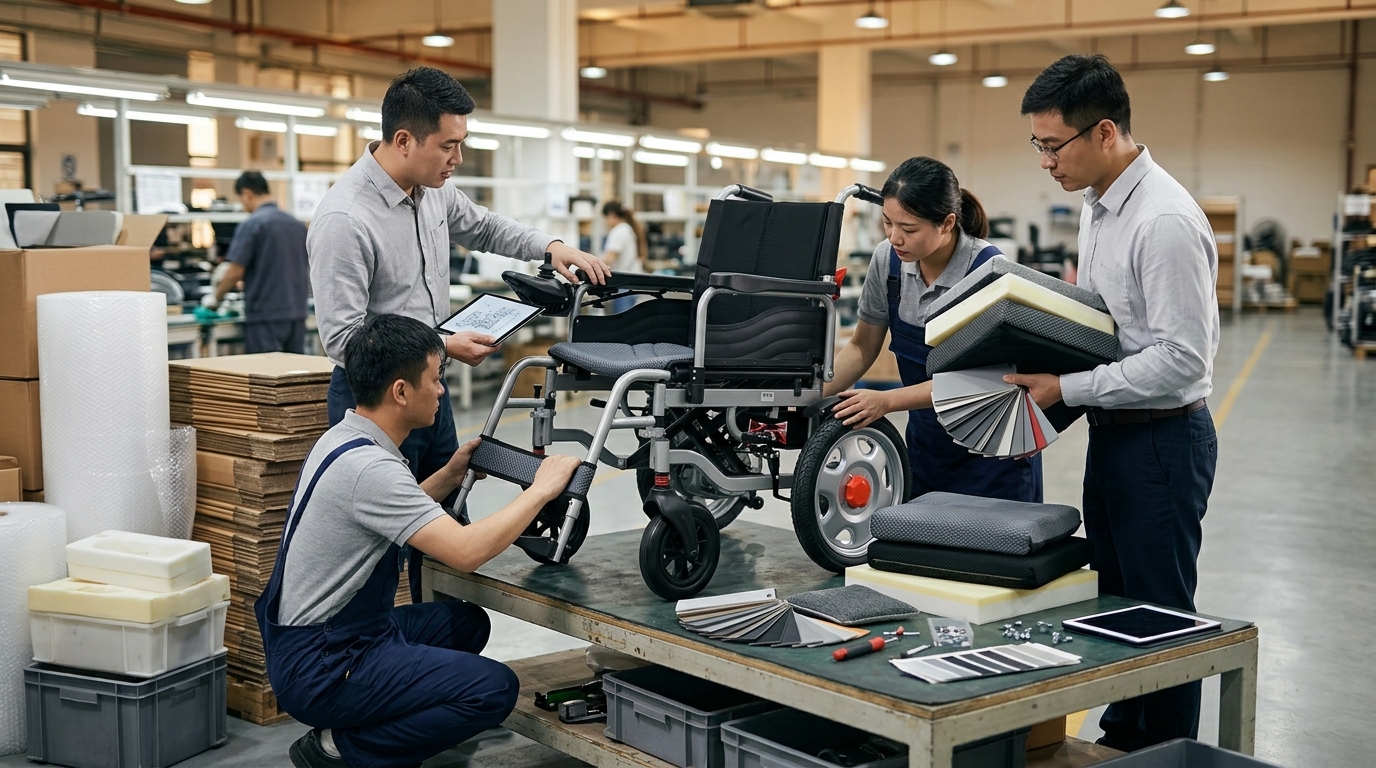
At YOYI CARE, we look at OEM/ODM wheelchair projects as a set of decisions. Which frame material fits your channel? Which battery documentation does your importer need? Will the cushion be used in a care facility for 8 hours a day, or sold through retail to families who care more about folding weight?
Model proof matters early. YOYI CARE’s YHW001 steel electric wheelchair series gives buyers practical export baselines: YHW001-F uses a steel frame, dual 24V/250W brush motors, a 24V12Ah lithium battery, a listed 10-15 km range, 21 kg weight without battery, and a 70 x 38.5 x 71 cm folded size. YHW001-A1 is a larger steel model with 10 inch front wheels, 16 inch rear wheels, a 45 cm seat width, a listed 15-20 km range, and 32 kg weight without battery.
That sounds basic. It isn’t.
A distributor may ask for a black frame, a private logo, and a carton redesign. An OEM manager may need a changed joystick position, a different seat cushion, a battery option, a signed rated-load spec, and a warranty parts plan for 12 countries. Those are different projects, even if the product photo looks similar.
If your team is still comparing sourcing regions, the China electric wheelchair factory guide is a better starting point for supplier screening. Once China is on your shortlist, this checklist helps you judge whether one factory can carry your private-label program past the sample stage.
Electric Wheelchair Customization
Start with the parts the user touches first: cushion, controller, armrest, footrest, and folding action. Buyers often spend too much time on the logo and too little time on the sitting experience. In care facilities, a poor cushion becomes a complaint. In retail, a confusing controller becomes a return.
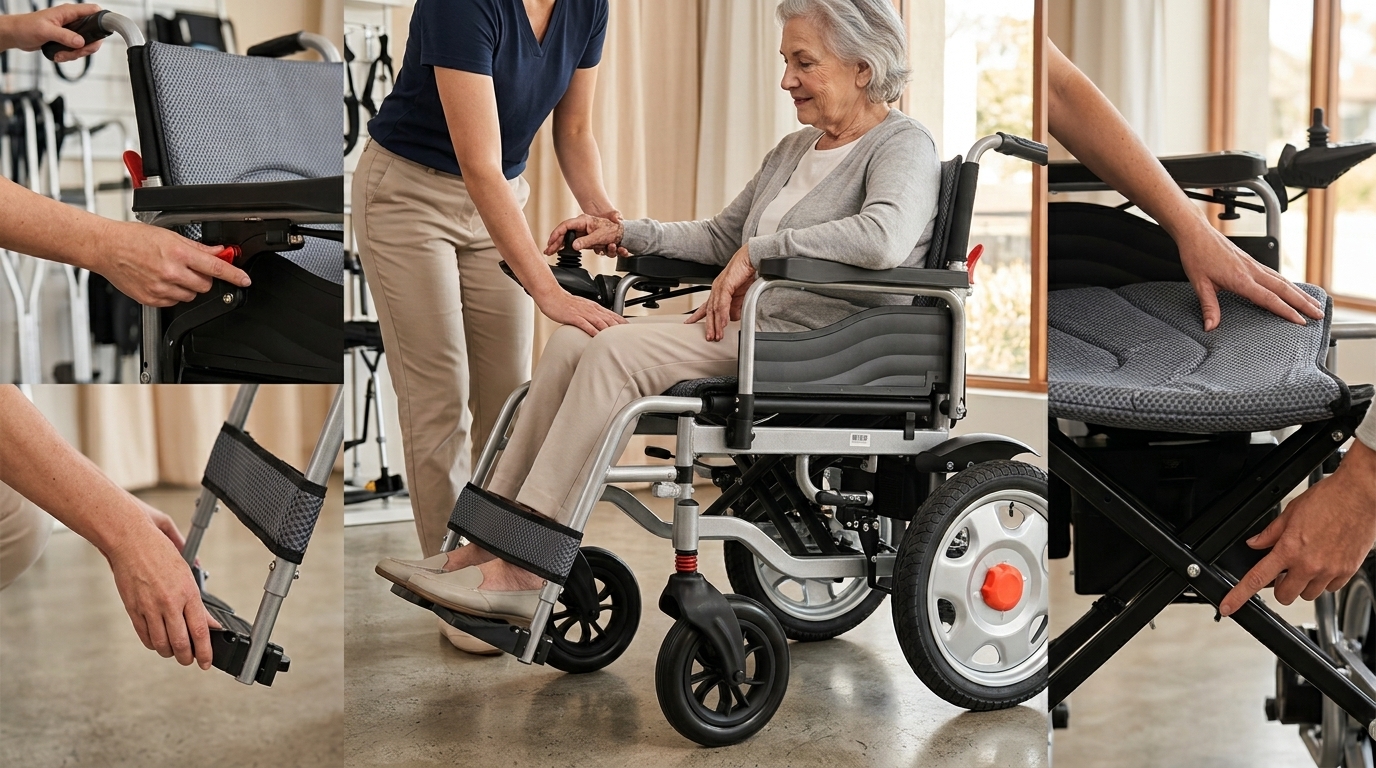
Use this electric wheelchair customization checklist during your first supplier call:
| Custom item | What to confirm | Buyer decision rule |
|---|---|---|
| Cushion | Thickness, cover material, stitching, cleaning needs, replacement cushion SKU | Match the cushion to the use case, not only the catalog photo |
| Logo | Position, method, color, abrasion resistance | Approve the logo on the real surface: cushion, frame, or packaging |
| Battery | Capacity option, chemistry, charger, MSDS, UN38.3 if required | Do not change battery capacity until paperwork, charger label, and service plan are checked |
| Frame | Steel, aluminum, or carbon fiber option by model | Choose steel for durability and cost, aluminum for portability, carbon fiber for premium lightweight programs |
| Rated load | Signed model data sheet, not generic sales copy | Do not quote load capacity in your market until the exact model rating is confirmed |
| Color | Frame color, upholstery color, color sample approval | Lock color before mass production so catalog photos and real units match |
| Electronic control system | Joystick side, speed profile, brake behavior, motor-controller program, spare parts | Define indoor care use and retail outdoor use separately |
| Packaging | Carton artwork, inserts, barcode, manual language, spare part labels | Importers need warehouse-ready goods, not just finished goods |
For product range planning, compare models through a custom electric wheelchair manufacturer that can explain the difference between compact folding units, heavier-duty chairs, and channel-specific configurations. A catalog alone won’t tell you which model survives repeated loading into delivery vans.
A useful rule: customize what changes buyer value. Don’t customize what only adds factory risk.
For a first order into a new market, seat fabric, branding, packaging, battery selection, and controller setup usually give you enough differentiation without slowing down approval and QC work. For MOQ discussions, separate sample orders, 1-50 pcs pilots, 51-100 pcs market tests, and 501-1000+ pcs repeat programs because logo method, carton printing, color matching, and spare-parts stocking can change at each level.
Wheelchair Factory QC And Certification
A private-label wheelchair still needs factory discipline behind it. Ask for current certificates, their scope, and the model families covered. YOYI CARE was founded in 2013, and our official site references ISO13485, CE, FDA, and other certification materials, but you should still request the latest files for your purchase record. Certificates age. Models change.
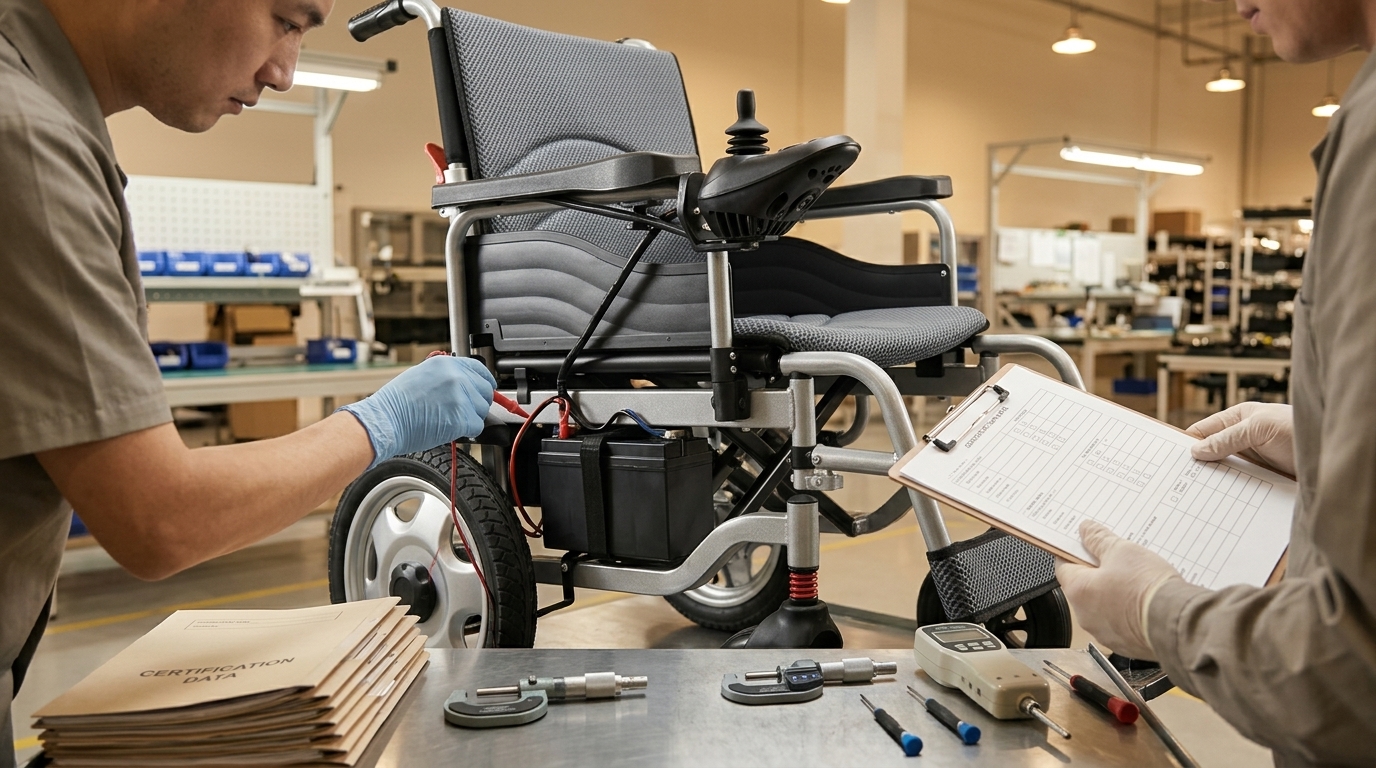
ISO lists ISO 13485:2016 as the quality management system standard for medical devices, and the page notes the standard was reviewed and confirmed in 2025. That matters because buyers aren’t only buying wheelchairs. You’re buying traceability: incoming inspection, approved suppliers, production records, nonconforming product control, and service feedback loops.
For U.S. planning, the eCFR entry for 21 CFR 890.3860 identifies a powered wheelchair as a battery-operated mobility device for people restricted to a sitting position and classifies it as Class II. Don’t treat a factory’s FDA-related reference as a blanket promise for your market. Importers still need to verify registration, listing, labeling, and their own regulatory duties.
Ask for wheelchair factory QC proof in plain language:
| QC point | Buyer question |
|---|---|
| Signed spec sheet | Does it show model name, frame material, rated load, battery capacity, controller setup, folded size, and unit weight? |
| Incoming parts | Which batteries, controllers, motors, chargers, brakes, and wheels are inspected before assembly? |
| Assembly | Are wiring, brake, folding, torque, and joystick-position points checked on the line? |
| Finished unit | Is there a road test, brake test, charger test, folding test, and visual inspection record? |
| Private label | Who approves logo, manual, carton, serial label, warranty card, and barcode files? |
| After-sales | Which spare parts are stocked for warranty claims: controller, joystick, charger, battery, motor, brake, cushion, armrest, footrest, and wheel assemblies? |
Use one sharper decision rule before approving mass production: if the supplier cannot tie the sample, spec sheet, QC record, and packaging files to the same model code, the OEM wheelchair project is not ready.
A wheelchair can look correct in a WhatsApp image and still have a cushion that feels too soft, a joystick response that’s too sharp, or a folding latch that your distributor’s technician dislikes after the third demonstration. For serious OEM work, approve a physical sample and keep a signed golden sample record.
Electric Wheelchair Battery And Electronics
Battery choices create the most avoidable arguments in electric wheelchair sourcing. The buyer asks for longer range, the factory increases battery capacity, and the importer later realizes the paperwork, charger label, airline rules, warehouse process, or service plan does not fit the sales channel.
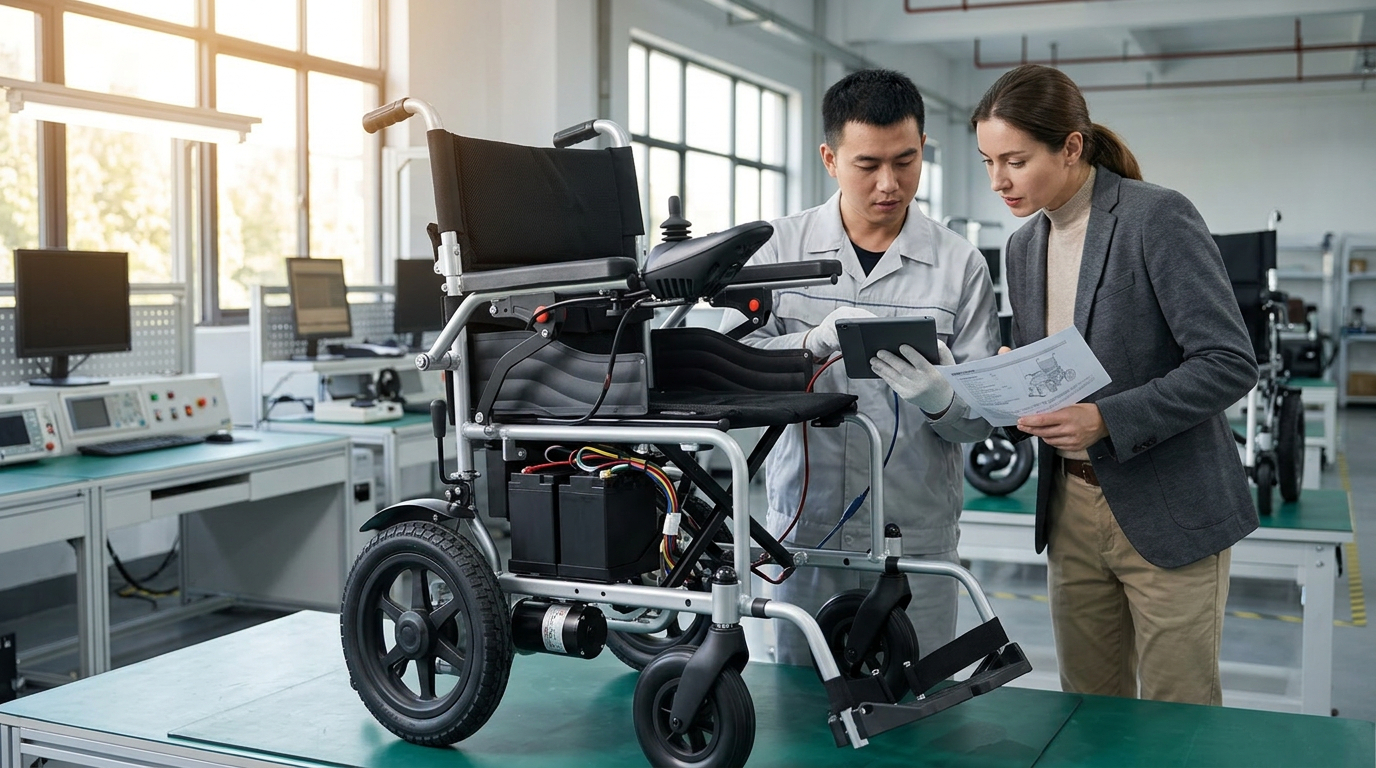
So work backward.
Where will the wheelchair be sold? Who replaces the battery? What documents does the forwarder request? What charger plug and label language does your market need? If your sales team advertises range, what test condition will they quote? Rider weight, slope, surface, tire condition, and temperature can all change real use.
YOYI CARE steel models such as YHW001-F, YHW001-A1, and YHW001-D list 24V12Ah lithium batteries in their current product specs, while YOYI CARE’s OEM/ODM service supports multiple battery-capacity choices by project. Treat that as a model-by-model decision, not a universal promise.
The electronic control system deserves the same attention. A care facility may prefer a calmer speed profile for corridors and elevators. A retail customer may want more responsive turning for outdoor use. Both buyers say “easy control.” They don’t mean the same thing.
For frame selection, institutional buyers who expect heavier daily use should also read the steel electric wheelchair factory guide before fixing the private-label spec. Steel may add weight, but it can be the better fit for care facilities, rental fleets, and distributor programs where durability is the first complaint filter.
Ask these before approving electronics:
- Which controller and joystick options are available for this model?
- Can the motor-controller program be set for indoor care use?
- Can joystick position be changed without affecting folding, wiring, or service access?
- Are brake, charger, and battery faults easy for technicians to diagnose?
- Which spare parts are shared across models?
- Can the manual explain controller use without overclaiming medical benefits?
This advice doesn’t apply to a one-off tender where the buyer has already fixed every technical line item. In that case, your job is compliance to the tender spec. For private label buyers building a repeat product line, battery and electronics choices shape returns, reviews, and warranty cost.
Private Label Wheelchair Packaging And Brand Files
Packaging is where private-label wheelchair projects often get messy. The wheelchair is ready, but the carton mark is wrong. The manual uses the factory brand name. The barcode is missing. The spare parts list doesn’t match the shipment.
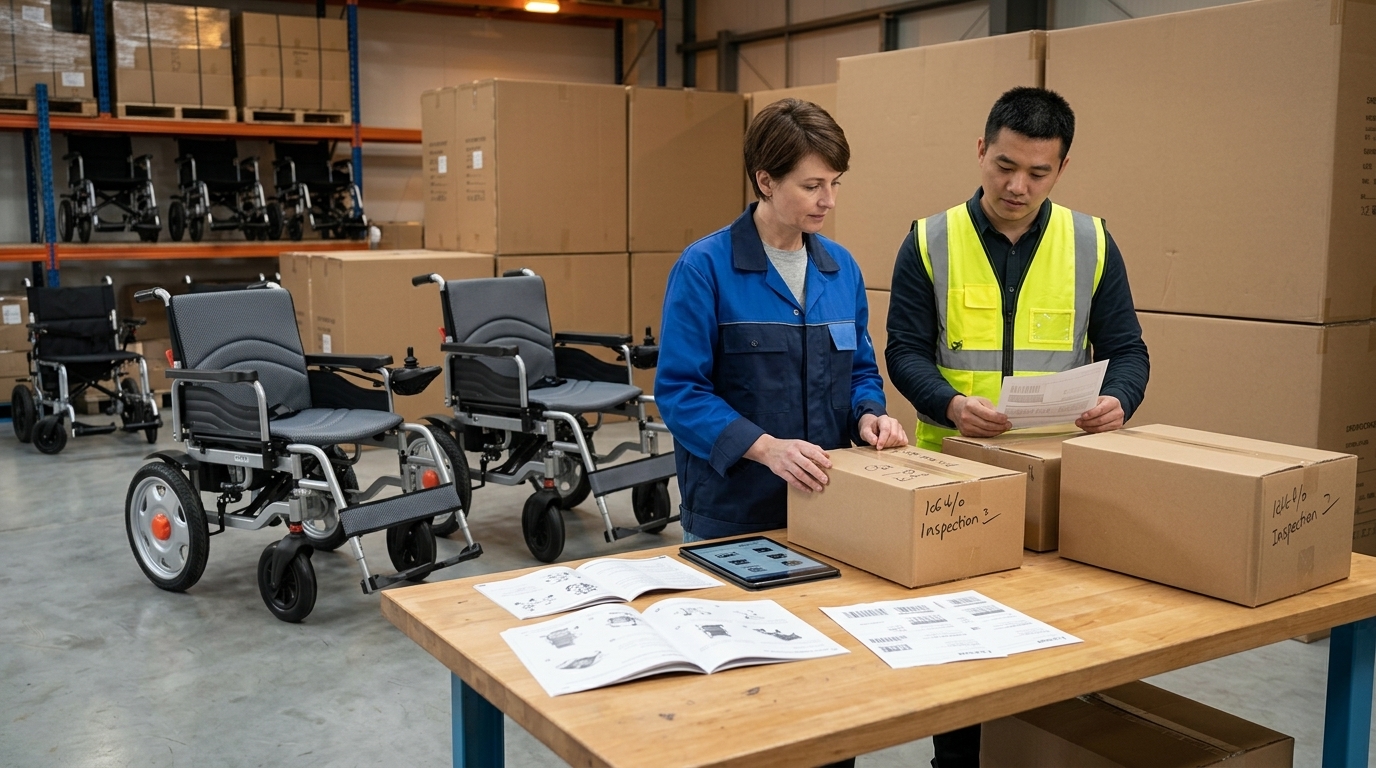
Build a packaging file list before sample approval:
| File | What to lock |
|---|---|
| Logo artwork | Vector file, size, location, color reference, logo method |
| Carton design | Model name, gross weight area, barcode space, handling marks |
| User manual | Brand name, language, safety warnings, battery/charger notes |
| Label set | Product label, serial label, charger label, battery label if applicable |
| Warranty file | Warranty term, covered parts, free/paid replacement rules, remote support process |
| Sales assets | Product photos, key specs, private-label model naming |
For buyers building more than one assistive mobility line, YOYI CARE’s medical device OEM ODM service page gives useful context on how branding, product selection, and custom requirements can be managed under one supplier program. The same service flow references sample proofing, quality inspection, production orders, after-sales service, 3 years warranty, free parts replacement, and remote maintenance; buyers should still lock the exact warranty scope in the purchase contract.
One practical detail: decide who owns the English copy.
If the factory writes the manual, your team should still review it for market claims. Avoid language that promises cure, treatment, or clinical outcomes unless your regulatory file supports it. For wheelchairs, clear use, maintenance, charging, folding, controller, and safety instructions usually matter more than big claims.
OEM Wheelchair Supplier Shortlist Questions
By the shortlist stage, stop asking only “What is your best price?” Ask questions that expose whether the factory can run a private-label electric wheelchair project without chaos.
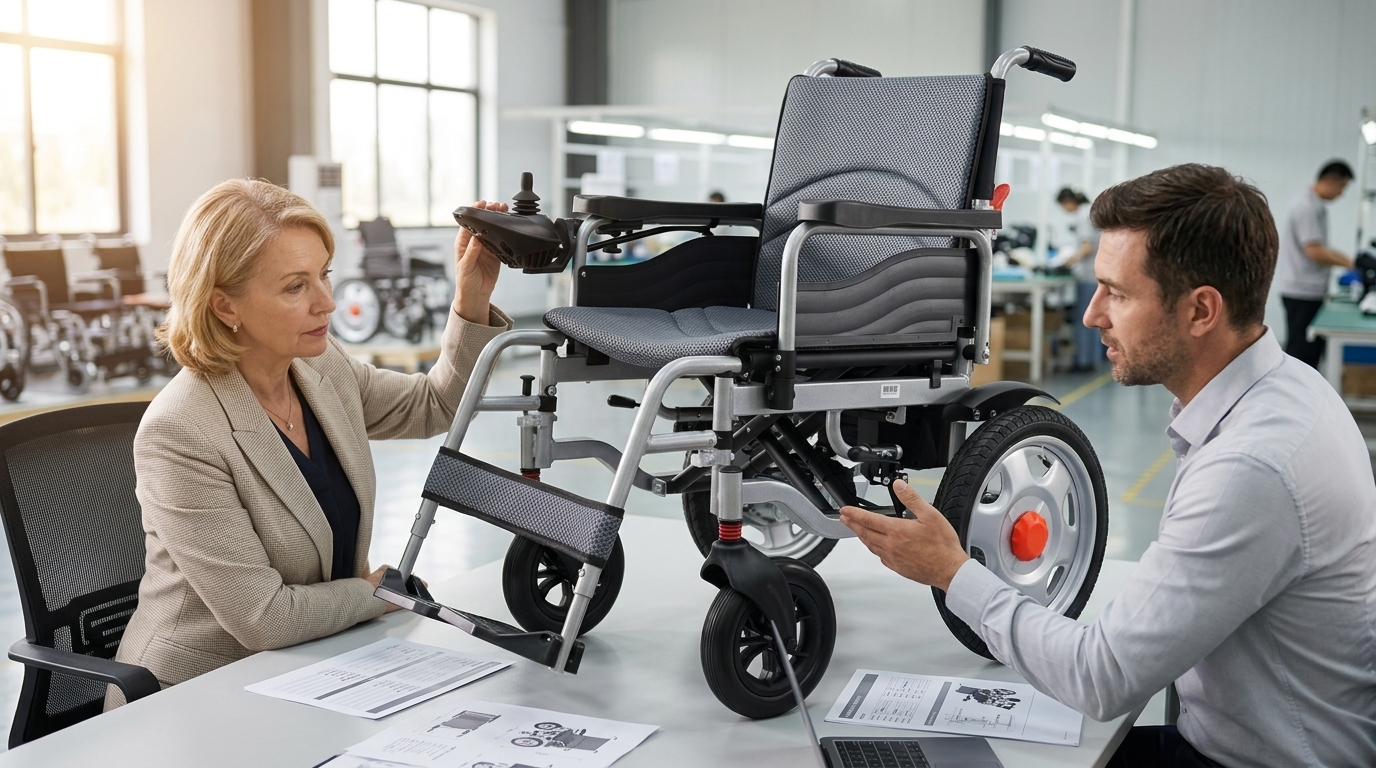
Use this question set:
- Which electric wheelchair models are already stable for export?
- Which YOYI CARE model series fits our channel: compact folding, steel-frame care use, heavy-duty use, or premium lightweight use?
- Which parts can YOYI CARE customize: cushion, logo, battery, color, electronic control system, and packaging?
- What are the exact battery options, charger options, and battery documents for this model?
- What controller and joystick options are available, and can the speed profile be adjusted?
- What is the signed rated load, folded size, unit weight, and carton size for the exact model?
- Which certificates apply to this model family, and can you provide current copies?
- What QC records are created for each production batch?
- Can we approve a physical golden sample before mass production?
- Which spare parts are available for warranty and after-sales support?
- What MOQ changes apply to logo printing, color matching, carton customization, and battery selection?
- Who checks manuals, labels, carton files, warranty cards, and barcode placement before packing?
- What changes would you reject because they may affect safety, compliance, or stable production?
That last question is revealing. A serious OEM electric wheelchair factory should be willing to say no. If a supplier accepts every request without asking about battery paperwork, rated load, controller settings, spare parts, or target market rules, the risk is being pushed to you.
YOYI CARE brings a China-based manufacturer view to these projects. Since 2013, we have worked around OEM/ODM customization, QC, certification support, warranty handling, and after-sales parts planning for elderly care and mobility products. Our 60+ patent references also matter for buyers who want product development support, not only logo printing.
Before you place a private-label order, send the supplier a one-page spec sheet. Include target market, buyer channel, preferred frame type, rated load requirement, battery preference, controller preference, logo needs, color, packaging files, manual language, expected warranty process, and any certification documents your importer requires.
Short spec sheets beat long email chains.
FAQ
What can OEM wheelchair factories customize?
OEM electric wheelchair factories can usually customize cushions, logos, batteries, colors, electronic control systems, manuals, labels, and packaging. Deeper changes, such as frame redesign, need separate engineering review and may affect testing or certification scope.
Which YOYI CARE specs should private-label buyers request?
Ask for the exact model code, frame material, rated load, battery capacity, controller setup, folded size, unit weight, carton size, and warranty spare-parts list. Compare quotations only after each supplier prices the same spec.
Is FDA registration always enough?
No. FDA-related references don’t replace importer duties, correct labeling, device listing checks, or market-specific review. Ask your supplier for current documents, then confirm requirements with your regulatory consultant or importer.
How should buyers compare quotations?
Compare the same model, battery, controller, cushion, packaging, QC level, warranty parts, and document scope. A lower quote may exclude private-label files, spare parts, or battery paperwork that you’ll still need later.
Send YOYI CARE your target market, preferred model style, customization list, expected order range, and certification questions. We’ll help you check the wheelchair spec before you commit to tooling, branding, packaging, or a production order.


