

If you’re shortlisting a steel electric wheelchair factory, start with fit: durability, wide-seat stability, obstacle crossing, serviceable parts, and landed cost. Steel usually makes sense for care facilities, distributors, and OEM/ODM brands that want a sturdy, affordable powered wheelchair line without chasing the lowest shipping weight in the catalog.
Steel Wheelchair Sourcing Fit
A steel electric wheelchair is the right shortlist item when buyers need frame strength, stable daily handling, and better cost control than carbon fiber or high-end aluminum. It’s less ideal when air travel weight, one-hand lifting, or ultra-compact storage is the top buying reason.
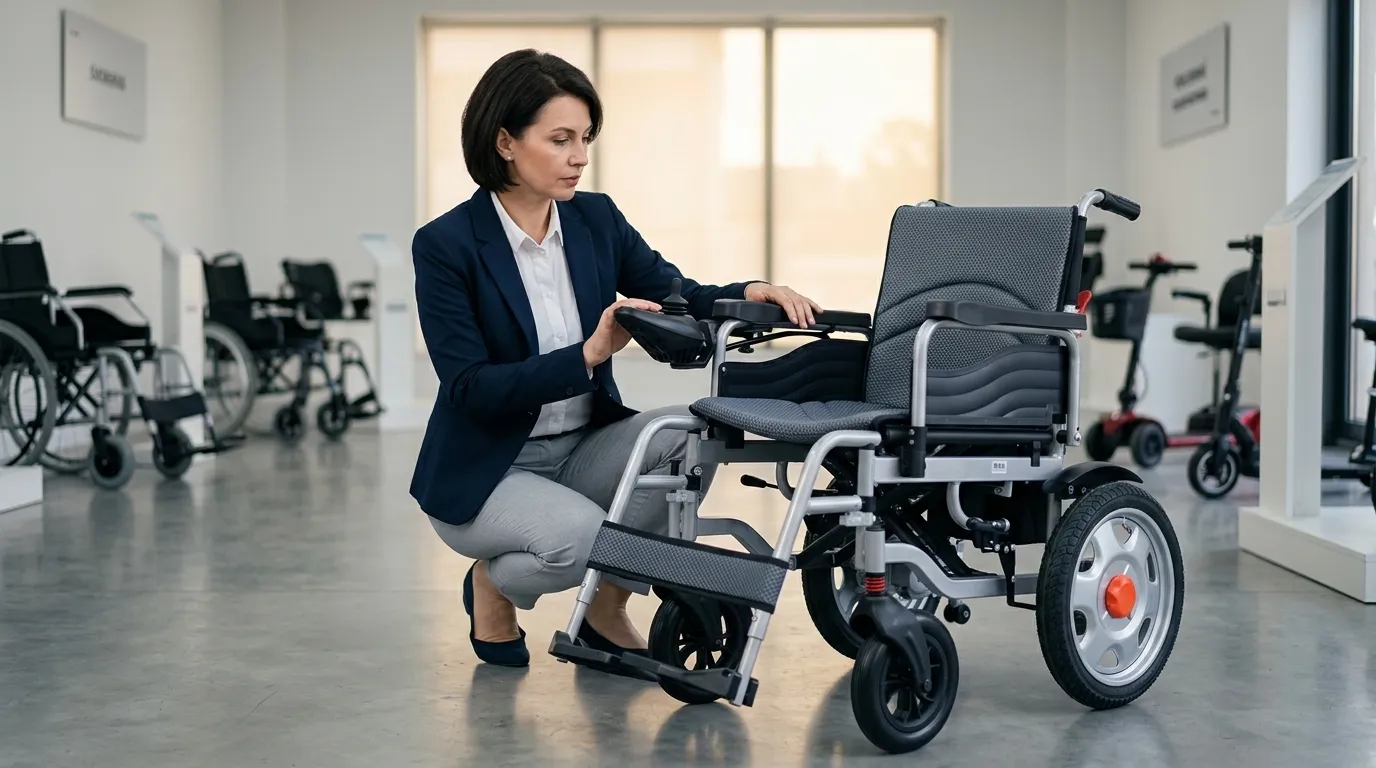
| Material choice | Best fit | Tradeoff | Buyer question |
|---|---|---|---|
| Steel frame | Care facilities, rental fleets, broad-seat users | Heavier carton weight | Can the frame handle repeated corridor bumps? |
| Aluminum frame | Home users, retail mobility shops | Usually higher cost | What is the real load rating by configuration? |
| Carbon fiber | Premium travel segment | Higher price and narrower audience | Is the market ready for the price point? |
Steel wins in places where chairs get shared, cleaned, charged, parked, and moved by different staff every day. A resident turns too close to a door frame. A caregiver lifts the footrest too fast. A chair rolls over an elevator gap 20 times a week. These are boring use cases. They’re also where weak hardware gets exposed.
If your catalog needs several powered mobility price bands, check whether the factory can support steel, aluminum, and premium lightweight lines under one development process; YOYI CARE’s powered mobility range is a practical starting point for buyers comparing an electric wheelchair manufacturer supplier with OEM/ODM capability.
Facility Durability Checks
The frame is only one part of durability. For care facilities, the failure points are often smaller: caster forks, footplate brackets, armrest pads, joystick mounts, upholstery stitching, battery box access, charging ports, and folding locks. Ask for photos before paint, after welding, after powder coating, and after final assembly. If a factory can’t explain its inspection flow, the sample may look good and still become a warranty problem.
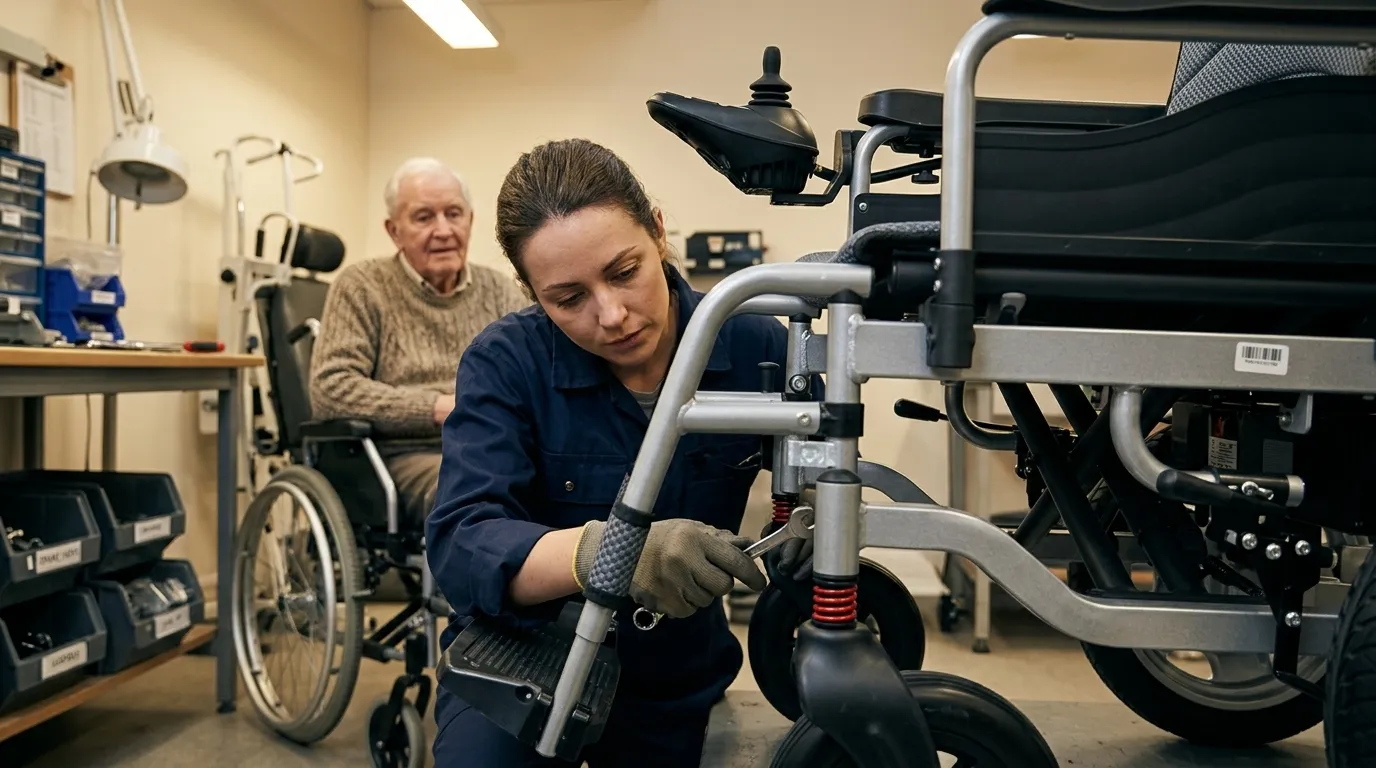
For a steel model such as the YOYI CARE steel electric wheelchair, distributors should review the chair as a system, not a frame alone. Seat width, controller position, wheel size, anti-tip design, and turning radius affect whether the chair feels calm in a nursing home corridor or jumpy in tight indoor spaces.
Procurement teams should ask for these checks before approving a sample:
- Weld consistency at load-bearing joints, especially around seat frame and rear wheel supports
- Rated obstacle height with test conditions, not just a short video over a curb
- Battery removal and charging workflow for facility staff
- Joystick mounting options for left-hand and right-hand users
- Spare parts list for controllers, tires, armrests, footrests, chargers, and upholstery
- Carton drop handling, because distributors see damage before end users see the chair
Obstacle crossing deserves its own line in the RFQ. A wheelchair can look powerful in a factory yard, then struggle with a 20 mm elevator lip when loaded. Ask the supplier to state the tested obstacle height, surface, battery condition, user-weight load, and tire setup. No drama. Just numbers.
Wide Seat Procurement Details
Wide-seat sourcing is where steel can be useful, but only if the chassis was planned for it. Adding a wider cushion to a narrow frame doesn’t make a true broad model. It can shift the user’s center of gravity, crowd the wheels, and make transfers awkward.
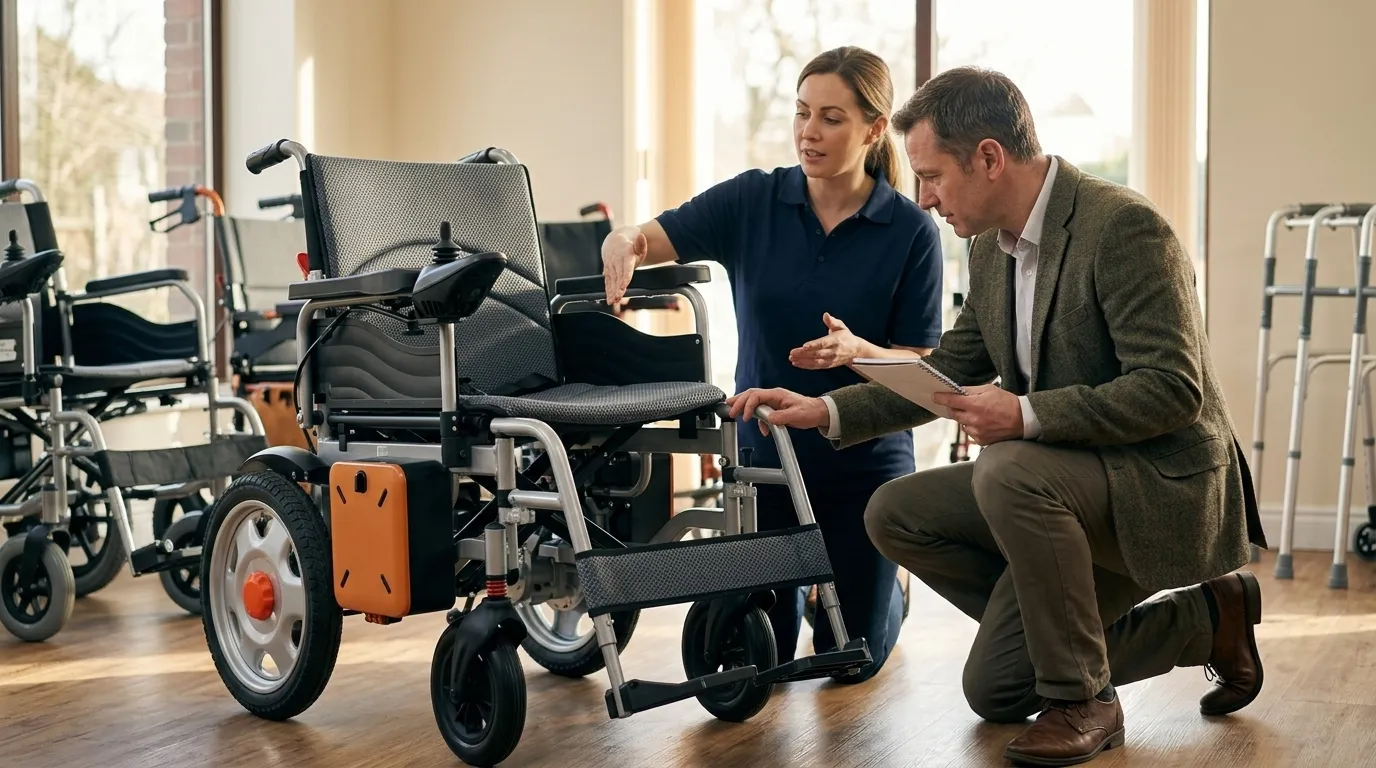
Ask whether the same chassis supports 18-inch, 20-inch, and 22-inch seat plans, or whether each width uses a different frame. A serious steel electric wheelchair factory should give you drawings or specification sheets that separate seat width, overall width, folded width, turning radius, and load rating. Those numbers decide whether the chair fits a U.S. home doorway, a hospital elevator, or a care facility storage room.
| Procurement detail | Why it matters |
|---|---|
| Seat width | User comfort and SKU planning |
| Overall width | Doorway, corridor, and elevator fit |
| Rear wheel position | Stability during turns and ramps |
| Armrest style | Transfer comfort and serviceability |
| Footrest clearance | Obstacle crossing and caregiver handling |
This advice doesn’t apply to every buyer. If you sell mainly travel chairs for apartment users, a lighter aluminum or carbon fiber line may fit better. If you supply long-term care facilities, rehab distributors, or rental fleets, a wide-seat steel line can be easier to maintain and easier to price.
Factory Audit Signals
A factory audit should confirm three things: the manufacturer can build the chair, document the chair, and support the chair after shipment. Pretty sample photos answer only the first part.
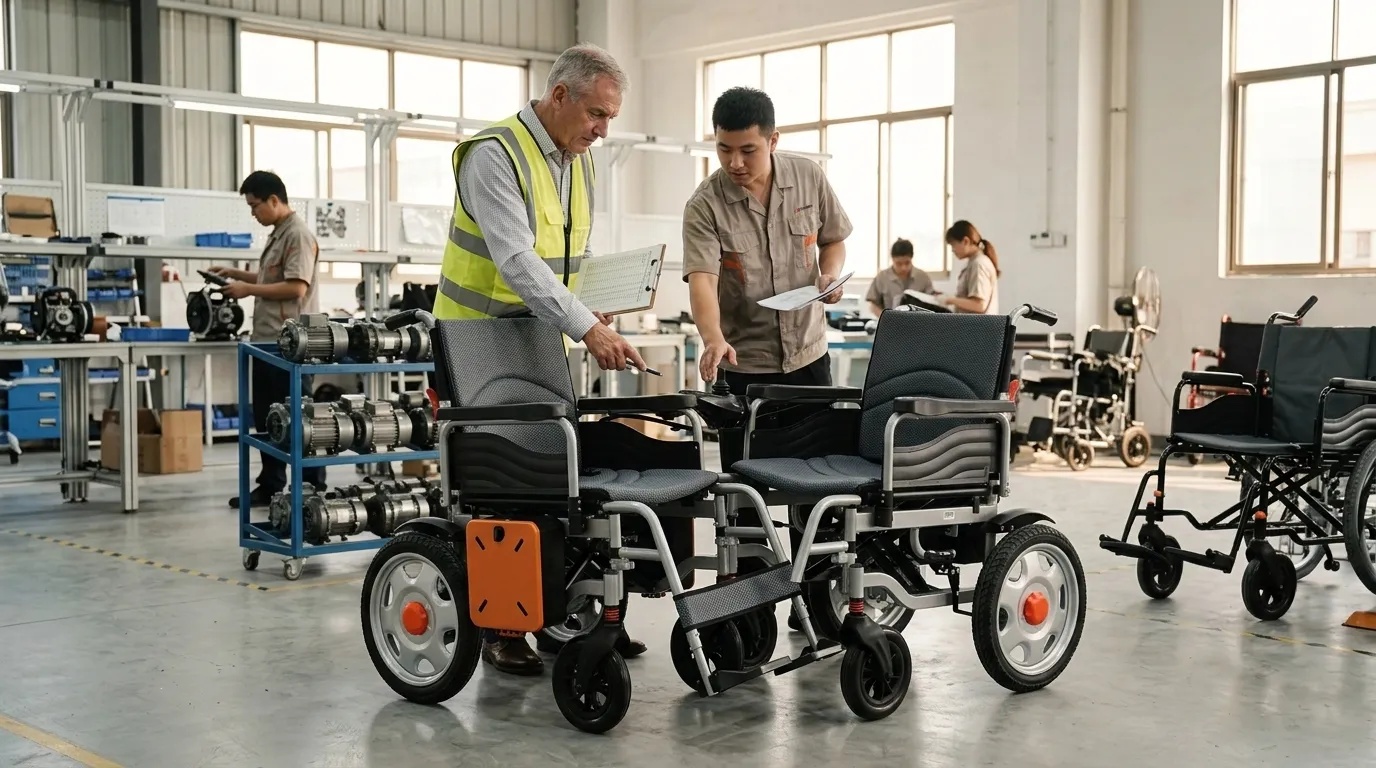
YOYI CARE was founded in 2013 and references ISO13485, CE, FDA, and other certifications on its official site, with OEM/ODM customization and 60+ patents across its product work. Still, B2B buyers should request model-specific files. Certification references are useful; a purchase order needs traceable documents tied to the exact wheelchair configuration, battery option, charger, label, and destination market.
The U.S. Food and Drug Administration device classification page, current as of January 15, 2026, explains that device class affects the type of premarket submission needed. The FDA 510(k) page, current as of August 22, 2024, also explains substantial equivalence and when a 510(k) may be required. For importers, that means one uncomfortable but useful question: who owns the market paperwork for your target SKU?
When buyers compare China sourcing options, it helps to separate country-level screening from model-level approval; our China electric wheelchair factory sourcing guide for importers covers the broader sourcing work before you narrow the list to steel-frame models.
OEM ODM Order Control
OEM/ODM work sounds simple until the first carton proof arrives with the wrong label size, the manual names the wrong battery, and the joystick sticker uses a translation nobody approved. Fix it early.
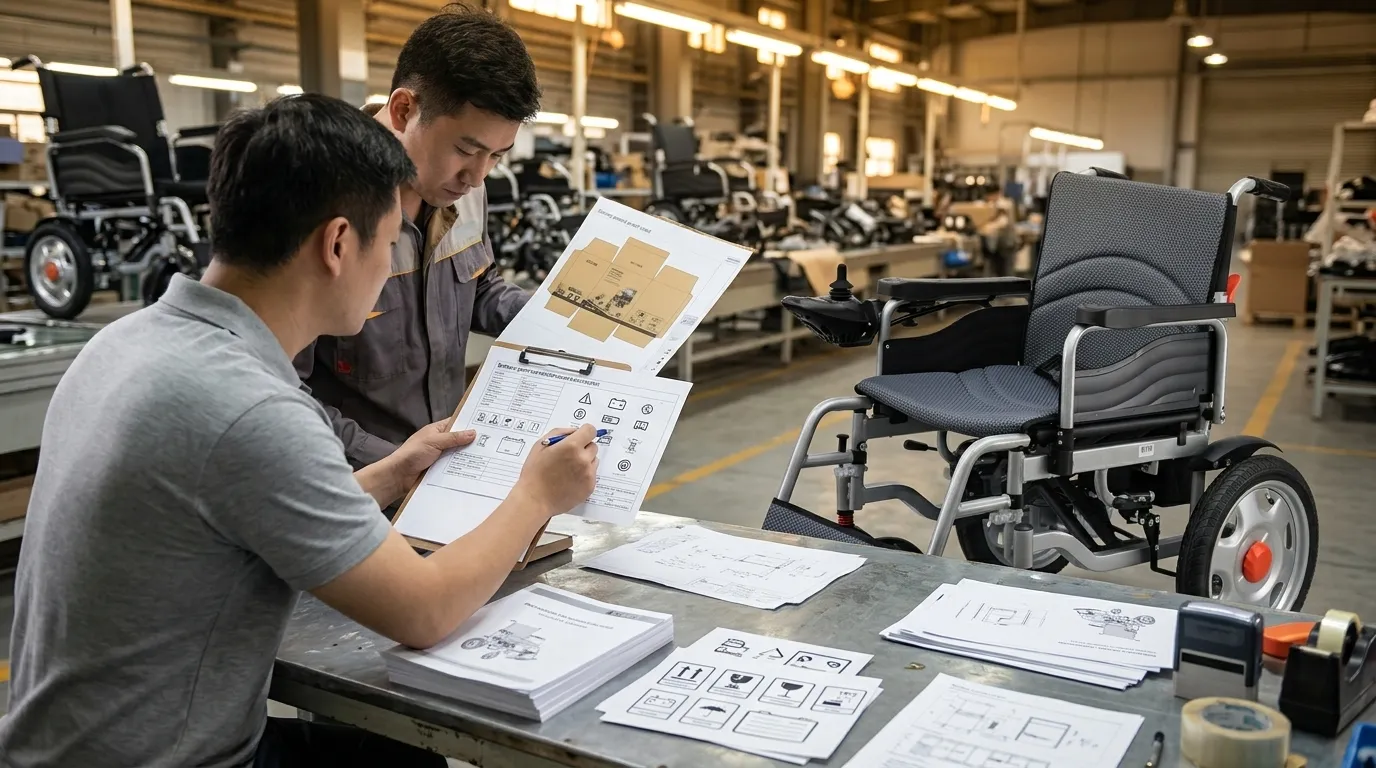
For private-label brands, request a change-control sheet for every branded part: logo plate, carton mark, user manual, charger label, warranty card, color trim, cushion fabric, barcode, and spare parts code. The factory should tell you which changes are cosmetic and which changes may affect compliance or technical files. A controller change, charger change, or battery chemistry change is not the same as changing a carton logo.
A practical order review should include:
- Target market and importer role
- Intended user environment: home, facility, retail, rental, hospital
- Seat width mix by SKU
- Battery and charger requirements
- Labeling language and warning label placement
- Spare parts kit for the first shipment
- Warranty terms and response process
- Sample approval photos before mass production
If you’re still deciding whether to work with a trading company, distributor, or direct factory, compare the service scope carefully; our article on choosing an electric wheelchair supplier explains what bulk-order buyers should check before they sign.
Steel Wheelchair RFQ Checklist
Send a tighter RFQ than your competitors. A vague “send price for electric wheelchair” request gets a vague quote back. A strong RFQ makes the factory reveal how it thinks.
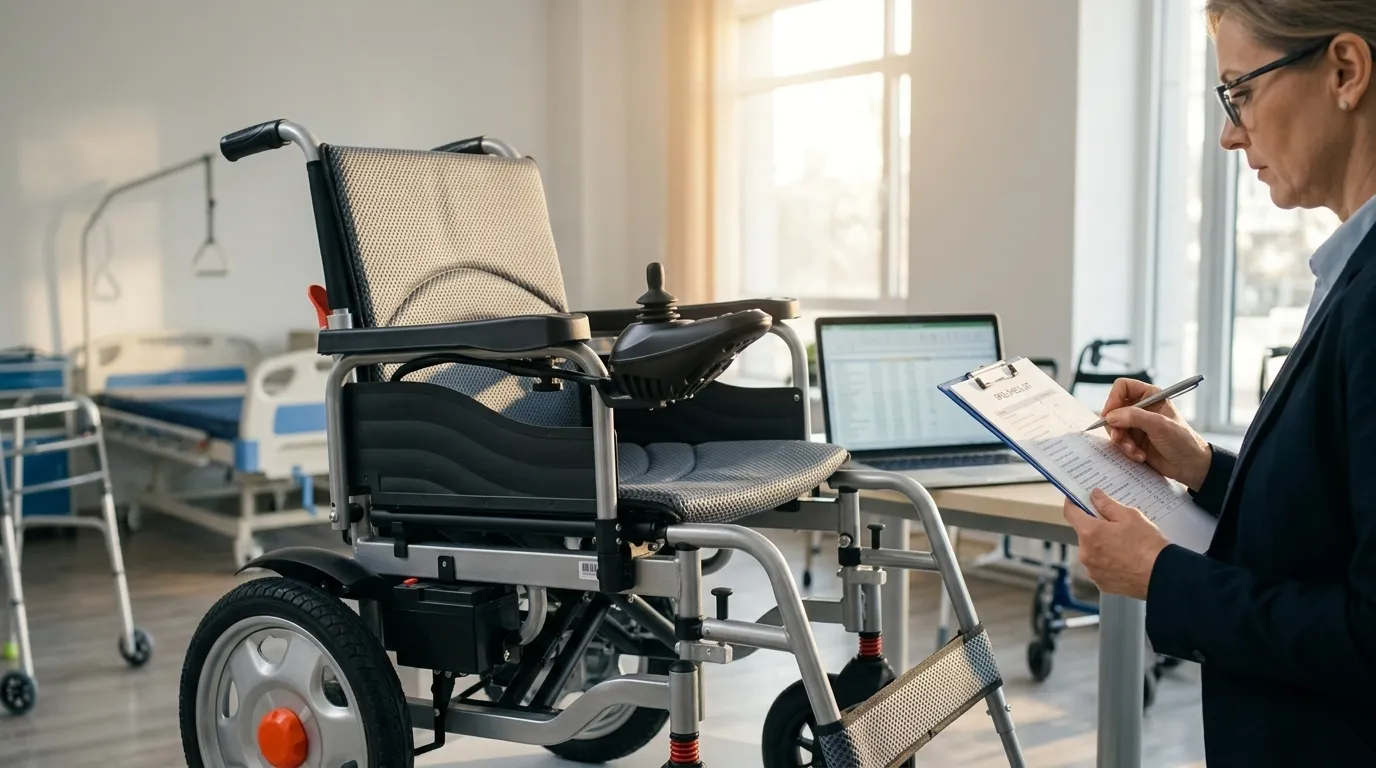
Use this version:
| RFQ item | What to request |
|---|---|
| Frame | Steel grade or frame description, weld photos, coating method |
| Seating | Seat width options, cushion material, armrest type |
| Mobility | Motor power, wheel size, obstacle height, slope rating |
| Power | Battery type, charger type, charging time, replacement method |
| Safety | Braking system, anti-tip design, controller settings |
| Documents | Certifications, test reports, user manual, labels |
| Service | Spare parts list, warranty policy, after-sales contact flow |
| Branding | Logo method, carton design, manual language, color options |
Benchmark retail examples such as Drive Medical Cirrus Plus EC, Pride Mobility Jazzy Select, and Golden Technologies Compass Sport when you discuss positioning with sales teams. You don’t need to copy those chairs. You need to know whether your own steel model is a facility chair, retail chair, rental chair, or private-label value chair.
One last filter: ask the factory which feature it would remove to control cost. A good answer might be packaging complexity, optional color trim, or nonessential upholstery choices. A bad answer is anything tied to brakes, frame strength, charger quality, or after-sales parts.
FAQ
Is steel better than aluminum?
Steel is better for durability-focused, cost-sensitive, facility-use wheelchairs. Aluminum is better when low weight, frequent lifting, or travel storage matters more than frame cost.
What documents should importers request?
Ask for model-specific certificates, test reports, user manuals, labels, battery and charger files, packing details, and warranty terms. Match every document to the exact SKU you plan to import.
Are wide seats worth stocking?
Wide seats are worth stocking when you sell to care facilities, rental fleets, or distributors serving broad-seat users. Confirm overall width, turning radius, and load rating before adding the SKU.
Can YOYI CARE make OEM models?
Yes. YOYI CARE supports OEM/ODM customization for powered mobility products, including branding, packaging, configuration discussion, QC support, warranty, and after-sales parts coordination.
For steel wheelchair sourcing, send YOYI CARE your target market, seat-width plan, branding needs, document requirements, and expected care setting. We’ll help you compare the right model path before you commit to a sample or bulk order.


