

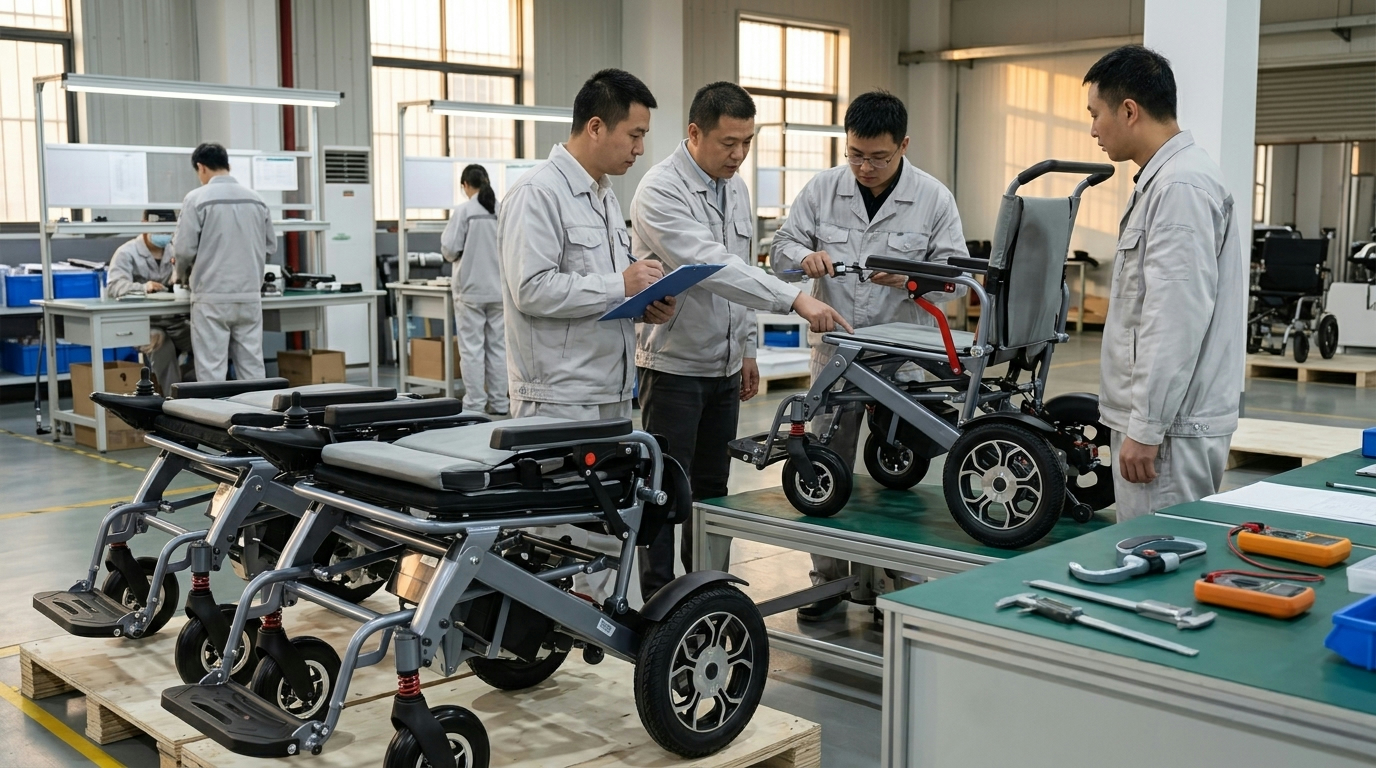
An aluminium electric wheelchair factory is worth shortlisting when it can prove lightweight frame control, foldable model reliability, battery and brake testing, and export-ready documentation before you ask for price. For B2B buyers, aluminum gives the best value-to-weight balance: lighter than steel, less expensive than carbon fiber, and easier to scale for private-label supply.
Aluminum Factory Shortlist
The right aluminium electric wheelchair factory should prove four things before price talks: frame consistency, folding reliability, electrical safety, and export documentation. Ask for product specs, QC test records, certification scope, battery shipping papers, warranty terms, and spare-parts support. If one of those is vague, keep the supplier on probation.
Aluminum and aluminium mean the same material family. The spelling changes by market. US importers usually write “aluminum,” while UK, EU, Middle East, and Commonwealth buyers often write “aluminium.” Your product sheet can support both spellings, but your packaging, IFU, carton marks, and website copy should match the destination market.
If you’re still comparing production regions, use our China electric wheelchair factory sourcing guide before you ask any aluminum supplier for a quotation. Region-level screening comes first. Model-level screening comes after.
| Factory proof | What to request |
|---|---|
| Frame control | Frame material spec, welding checks, surface treatment details, incoming inspection records |
| Folding reliability | Folded size, hinge design, latch inspection, carton fit, transport test method |
| Electrical system | Motor, controller, brake, charger, battery, wiring, and joystick release-stop details |
| Export support | Certificate scope, labeling files, user manual, warranty terms, spare-parts list |
| OEM readiness | Logo placement, color options, packaging artwork, sample approval process |
YOYI CARE was founded in Zhejiang Province in 2013 and works with medical equipment buyers across mobility, oxygen concentrator, and nursing bed categories. For electric wheelchairs, we focus on OEM/ODM customization, QC, certification references such as ISO13485/CE/FDA, warranty support, and after-sales parts planning. The certificate name matters. The model scope matters more.
Aluminum Frame Tradeoffs
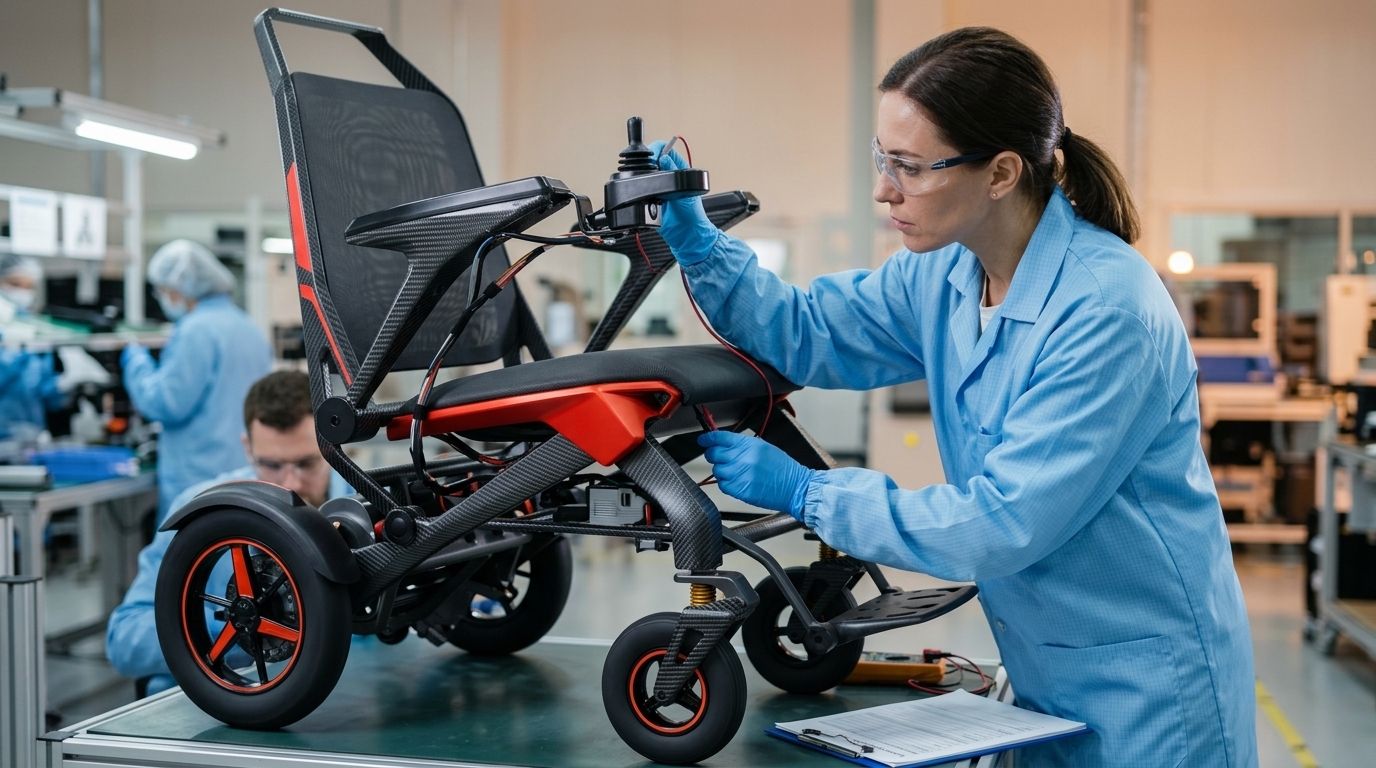
Aluminum works best when your channel needs a wheelchair that a caregiver can lift, fold, store, and ship without pushing the retail price into a premium niche. Steel can be strong and price-friendly, but it adds weight. Carbon fiber is lighter and attractive for premium positioning, yet it raises part cost and cosmetic inspection pressure.
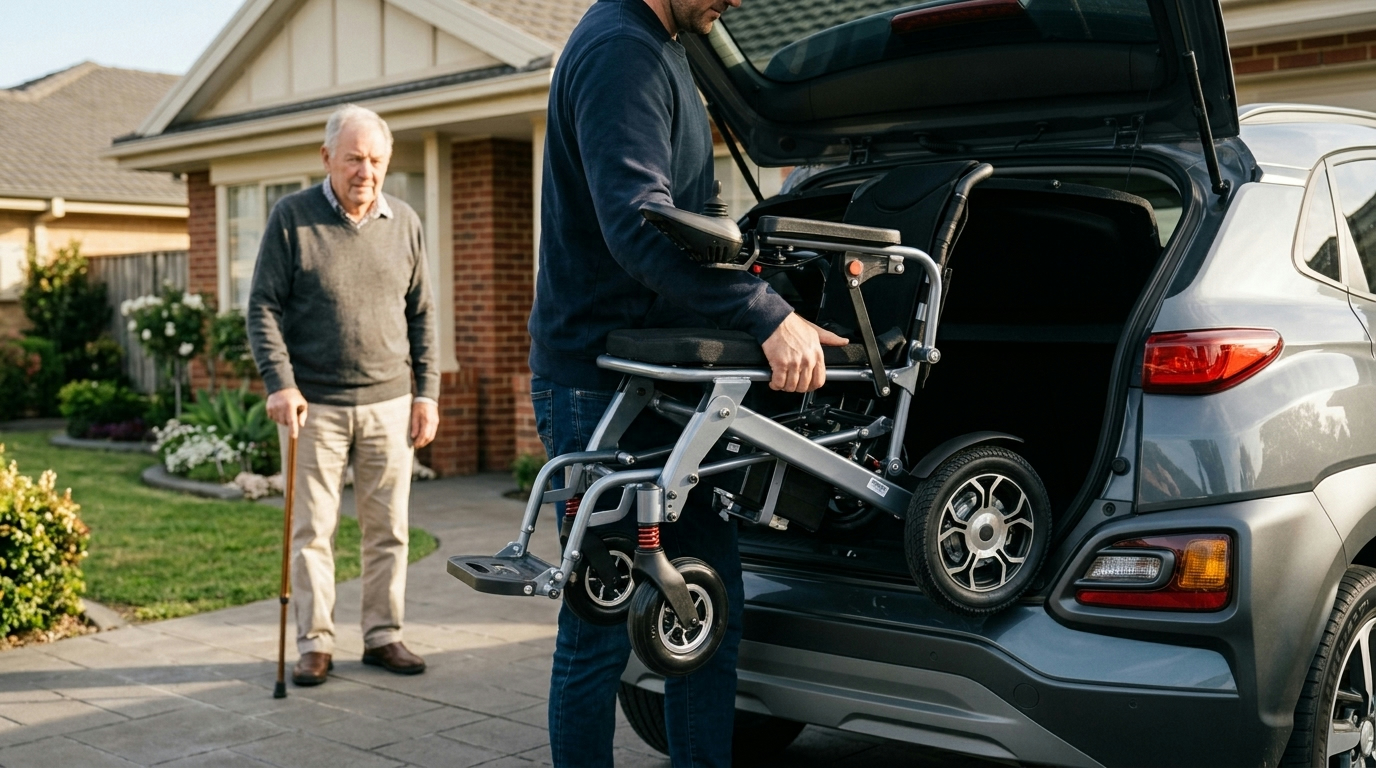
For example, YOYI CARE’s foldable aluminum electric wheelchair YHWL-001 lists an aluminum alloy frame, 14 kg weight without battery, 18.45 kg gross weight, 70 x 38.5 x 71 cm folded size, and 0.225 m³ carton volume. Those numbers matter to distributors because warehouse space, container loading, courier limits, and showroom handling all affect margin.
| Frame material | Best fit | Buyer tradeoff |
|---|---|---|
| Aluminum alloy | Mainstream lightweight and foldable electric wheelchair programs | Good weight control and scalable cost, with frame QC still needed |
| Carbon fiber | Premium ultra-light retail channels | Lower weight, higher cost, stricter finish inspection |
| Steel | Budget models, rental fleets, heavier-duty institutional use | Lower frame cost, heavier handling and shipping burden |
Aluminum beats carbon fiber for most distributor programs where price, repeat supply, and spare parts matter every month. Carbon fiber wins when the buyer is selling a premium story and the market accepts it. Steel still has a place, especially where portability is less important than a lower entry price.
Foldable YHWL Models
Foldable design is where many low-cost electric wheelchair projects fail. The first sample opens and closes nicely. Then the real work starts: carton vibration, repeated folding, caregiver handling, curbside loading, and spare-part replacement after months of use.
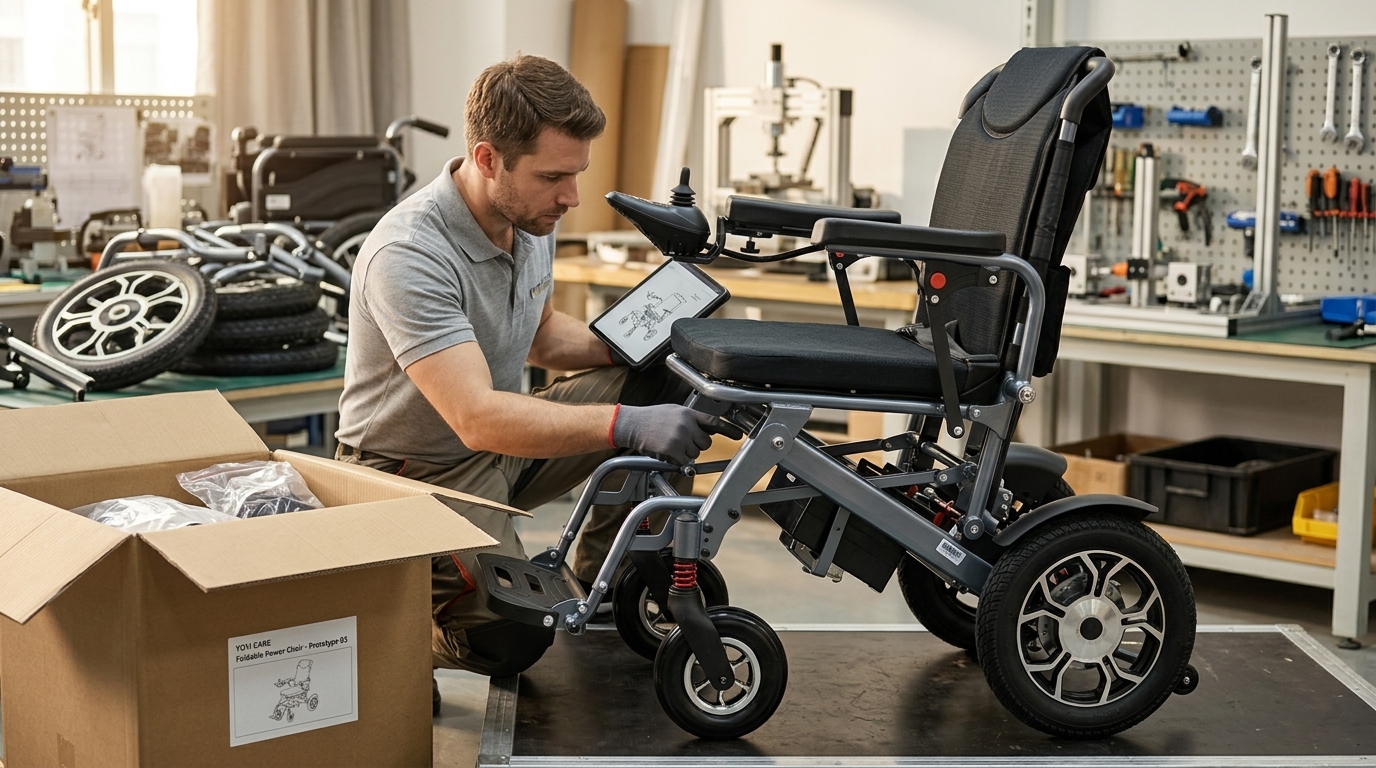
The YOYI CARE YHWL aluminum line is built around lightweight, portable electric wheelchair use cases. YHWL-001 lists dual 24V/250W brushless motors, a 24V12Ah lithium battery, 25-30 km listed range, 8-inch front wheels, 12-inch rear wheels, electromagnetic brakes, and a 360-degree joystick that stops when released. Range should always be checked against the test method, user weight, slope, surface, temperature, and battery age. A number without conditions is just a brochure line.
For distributors and care-facility procurement teams, ask for these foldable model details before sample approval:
- Weight without battery, battery weight, and gross carton weight
- Folded size, unfolded size, carton size, and CBM
- Battery type, charger rating, battery removal method, and shipping documents
- Brake type, joystick behavior, controller options, and service access
- Seat width, cushion type, armrest structure, and footrest design
- Spare parts list for controller, battery, charger, wheels, joystick, brakes, and upholstery
Private-label buyers often focus on color first. That’s fine for a showroom. For repeat orders, the hinge, latch, wiring route, and brake response deserve more attention.
Factory QC Evidence
US buyers should anchor the regulatory conversation in the device category. The FDA product classification database lists “Device wheelchair, powered” under product code ITI, Class II, with 510(k) submission type, and 21 CFR 890.3860 defines a powered wheelchair as a battery-operated wheeled device intended for medical mobility for people restricted to a sitting position.
That doesn’t mean every overseas model is cleared for the US market. It means your supplier should understand the difference between factory certification, market registration, product testing, and your importer responsibilities.
| QC area | Evidence to request |
|---|---|
| Stability | Static and dynamic stability test references, including applicable ISO 7176 or ANSI/RESNA methods |
| Braking | Electromagnetic brake checks, joystick release-stop behavior, slope test method |
| Frame strength | Weld inspection, fatigue test plan, hinge/latch inspection, impact checks |
| Electrical safety | Controller, wiring, charger, battery, EMC, and power system records |
| Labeling | Model name, serial/lot coding, warning labels, user manual, maintenance instructions |
| Shipment | Carton drop/vibration plan, packing photos, battery shipping papers |
For EU and UK projects, ask for CE or UKCA scope, Declaration of Conformity, ISO13485 certificate scope, labeling language, risk documentation, and importer details. For the US, separate FDA establishment registration, product listing, and 510(k)-related questions. Those are not the same thing.
OEM Sourcing Questions
Once the base model passes, move into OEM. Logo placement is easy. Changes to battery capacity, controller behavior, seating, frame geometry, charger, or packaging can affect testing, documents, carton design, and service training.
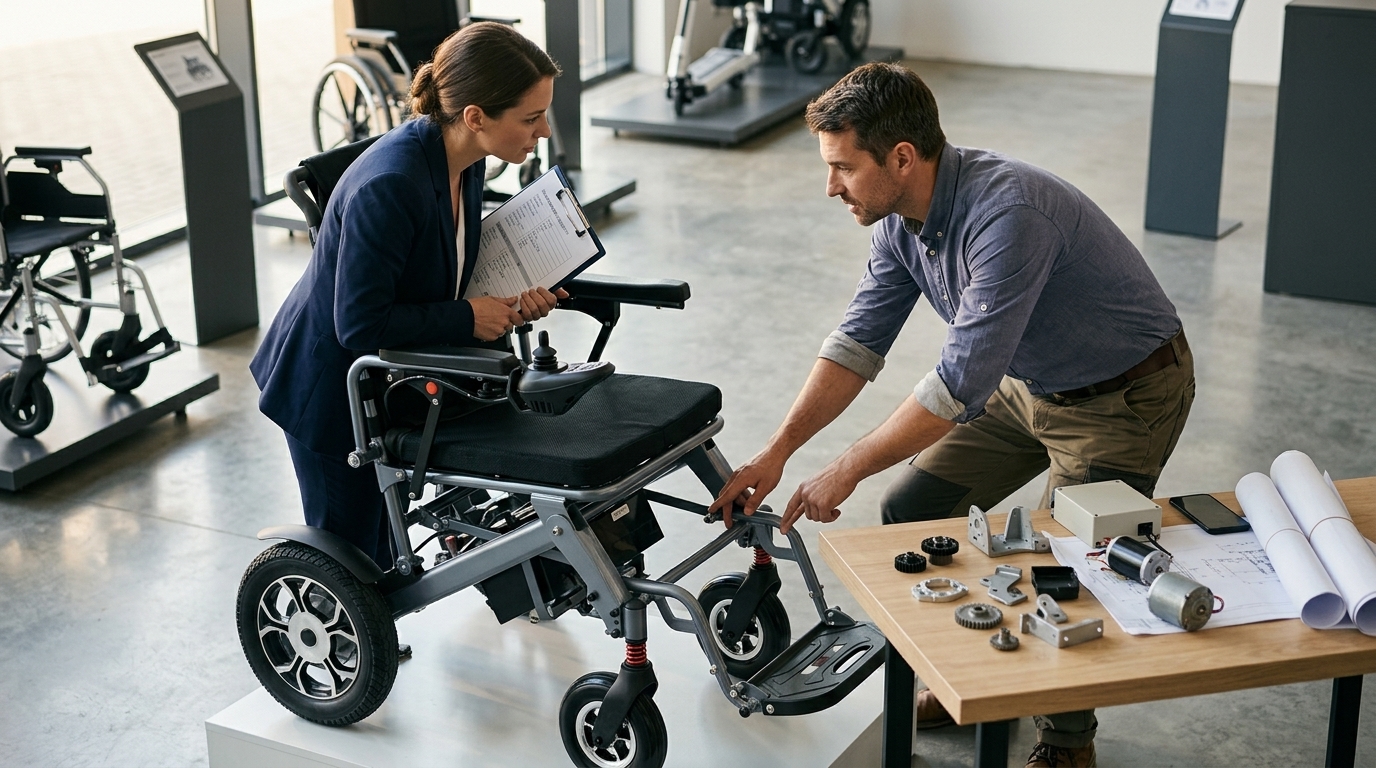
YOYI CARE supports OEM/ODM work across electric wheelchair lines, and buyers comparing model families can review our category page as a wholesale electric wheelchair manufacturer before narrowing the sample list. A good OEM conversation should start with validated options, not a blank “anything is possible” promise.
Replace “can you customize?” with these buyer questions:
- Which changes are cosmetic, and which changes need new testing?
- Which YHWL parts are shared across models?
- Can we approve samples with signed photos and spec sheets?
- Can packaging artwork, carton marks, and manuals match our market language?
- Which spare parts should ship with the first order?
- Who owns molds, drawings, label files, and private-label artwork?
For deeper private-label planning, use our OEM electric wheelchair factory checklist before confirming logo placement, color trim, accessories, and packaging. It’s better to solve those questions before the golden sample, not during mass production.
Import Documentation Basics
Documentation quality tells you whether a factory has real export habits. A supplier may build a good chair and still slow your shipment because the battery documents, carton labels, or certificate scope don’t match the model name.
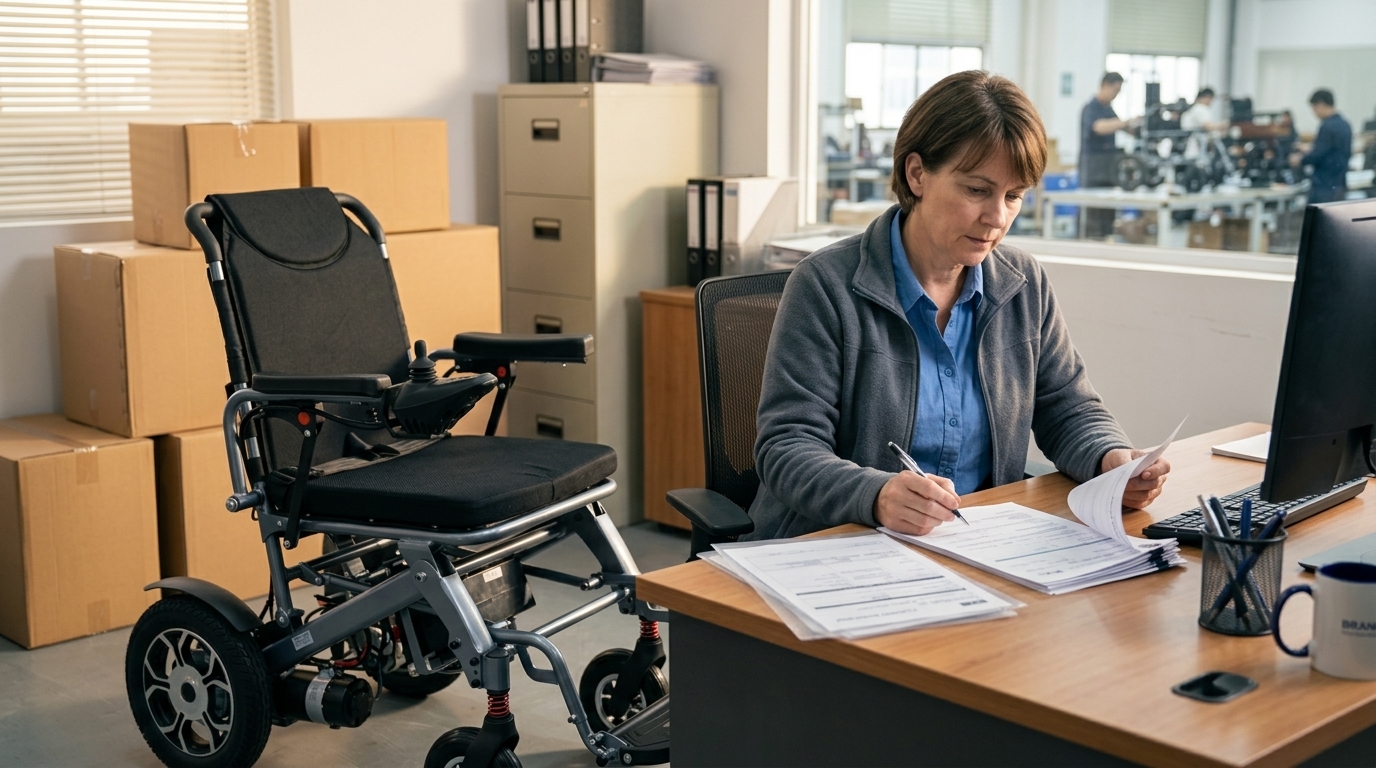
Ask for the document pack early:
| Document | Why it matters |
|---|---|
| Model spec sheet | Confirms frame, motor, battery, size, weight, and packaging data |
| Certificate scope | Helps verify ISO13485, CE, FDA, or other references apply to the right entity and product line |
| Battery papers | Supports lithium battery shipping review, including UN38.3 test summary and SDS where required |
| User manual | Shows warnings, maintenance, charging, folding, and operating instructions |
| Warranty terms | Defines parts, labor, exclusions, and claim process |
| Spare-parts list | Helps distributors plan service stock before the first container arrives |
| QC records | Gives evidence behind brake, frame, folding, and electrical checks |
One warning from experience: don’t accept “we have CE” or “we have FDA” as a full answer. Ask which product, which factory entity, which standard, which market, and which document date. A reliable factory will ask your destination market before answering. That question is a good sign.
FAQ
Is aluminum good for wheelchairs?
Yes. Aluminum alloy is a strong choice for electric wheelchairs when the buyer needs lower handling weight, foldable packaging, and moderate pricing. It is usually better than steel for retail portability and easier to price at volume than carbon fiber.
Aluminum or carbon fiber wheelchair?
Choose aluminum for mainstream distribution, home-care dealers, and private-label lines where price and repeat supply matter. Choose carbon fiber when your market can support premium positioning and you can accept higher part cost, stricter cosmetic inspection, and a narrower buyer segment.
What documents should importers request?
Request the model spec sheet, ISO13485 or quality certificate scope, CE/FDA or market-specific evidence where applicable, battery shipping papers, user manual, labeling files, warranty terms, spare-parts list, and QC test records. Match every certificate to the exact model name and factory entity.
Send YOYI CARE your target market, preferred aluminum/aluminium spelling, label language, frame material, folding needs, and private-label requirements. Our team can recommend a YHWL model, confirm the document pack, and plan OEM/ODM details based on your distribution channel.


