

A wholesale electric wheelchair order should be approved only after the model mix, sample standard, battery paperwork, packing plan, spare parts, and warranty terms are clear in writing. If you’re buying for distribution, private label, hospital tender, or care-facility use, this checklist helps you avoid the expensive surprises: wrong frame type, weak cartons, missing labels, or unclear after-sales ownership.
Bulk Order Checklist
For a wholesale electric wheelchair order, approve eight items before the deposit: buyer channel, model mix, sample sign-off, certification file, battery documents, carton plan, spare-parts package, and warranty process. If one item is vague, freeze the order and fix it before production. Vague terms become expensive after cartons are sealed.
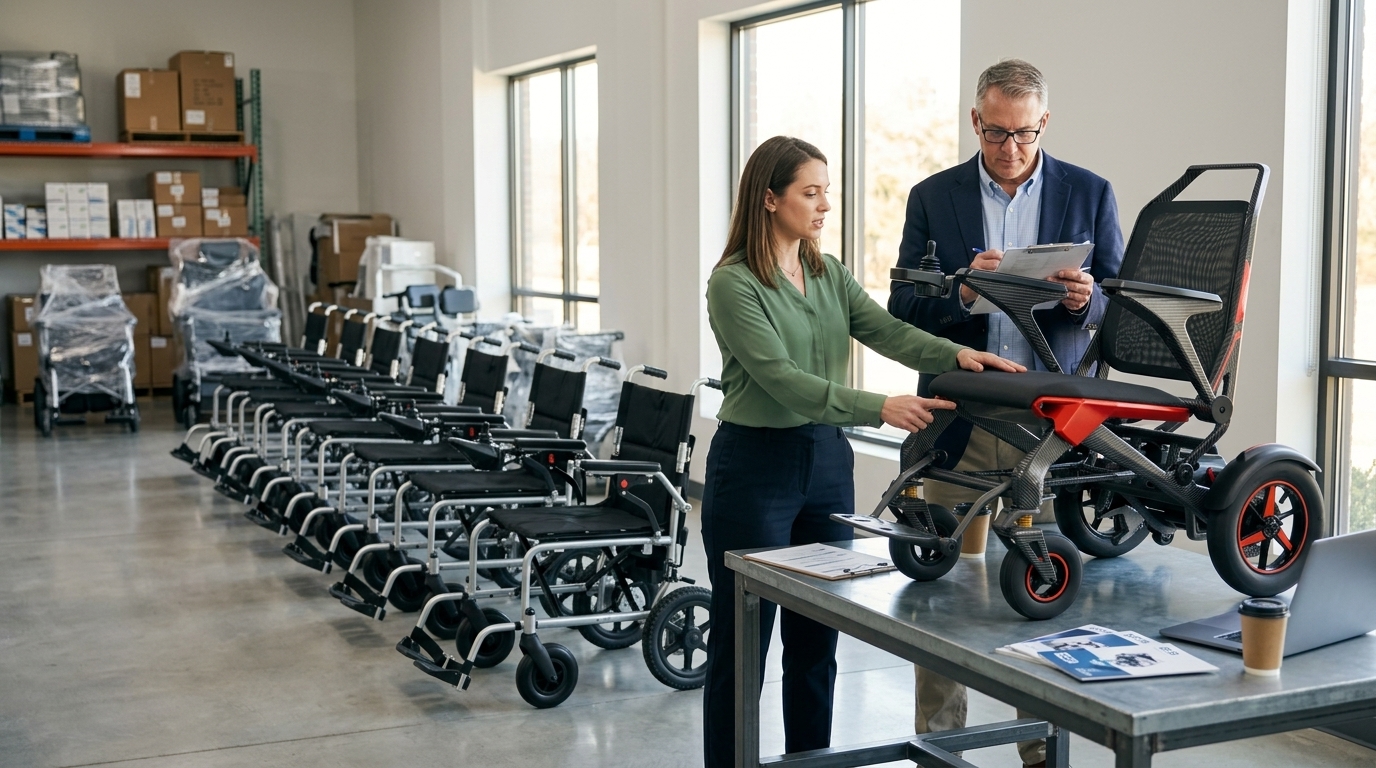
| Area | Buyer’s question | Better proof | Risk if vague |
|---|---|---|---|
| Model mix | Which chair fits each sales channel? | Model matrix with frame, load, range, folded size, battery | Inventory that sits |
| MOQ and price | What quantity bands are quoted? | Signed quotation with Incoterms, currency, validity date | Margin loss |
| Sample | Who signs the approved sample? | Sample checklist, photos, videos, serial number | Production drift |
| Compliance | Which files apply to the target market? | Current certificate copies, test reports, label draft | Customs or sales delays |
| Battery | Are battery documents tied to the actual battery? | UN38.3, SDS/MSDS, watt-hour label | Freight hold |
| Packing | Can cartons handle export transit? | Carton spec, drop-test record, pallet plan | Damage claims |
| QC | What is checked before shipment? | Inspection plan with agreed pass/fail points | Rework after arrival |
| Service | Who owns warranty response? | Warranty terms, parts list, troubleshooting flow | Slow repairs |
At YOYI CARE, we look at this as a risk-control file, not just a buying checklist. YOYI CARE was founded in 2013, works on OEM/ODM electric wheelchair projects, and references ISO13485, CE, FDA-related compliance materials, and 60+ patents on the official site. Those facts help, but they don’t replace order-specific confirmation. Always ask for the current file that matches your model, market, and label.
If you’re still deciding between a trader and a factory, our electric wheelchair supplier vs factory comparison explains why the lowest first quote can cost more once cartons, spare parts, and warranty calls start landing on your team.
Electric Wheelchair Model Mix
One container full of the same chair is easy to quote and hard to sell. A distributor serving pharmacies, online retail, and care facilities needs different models because each buyer reads value differently.
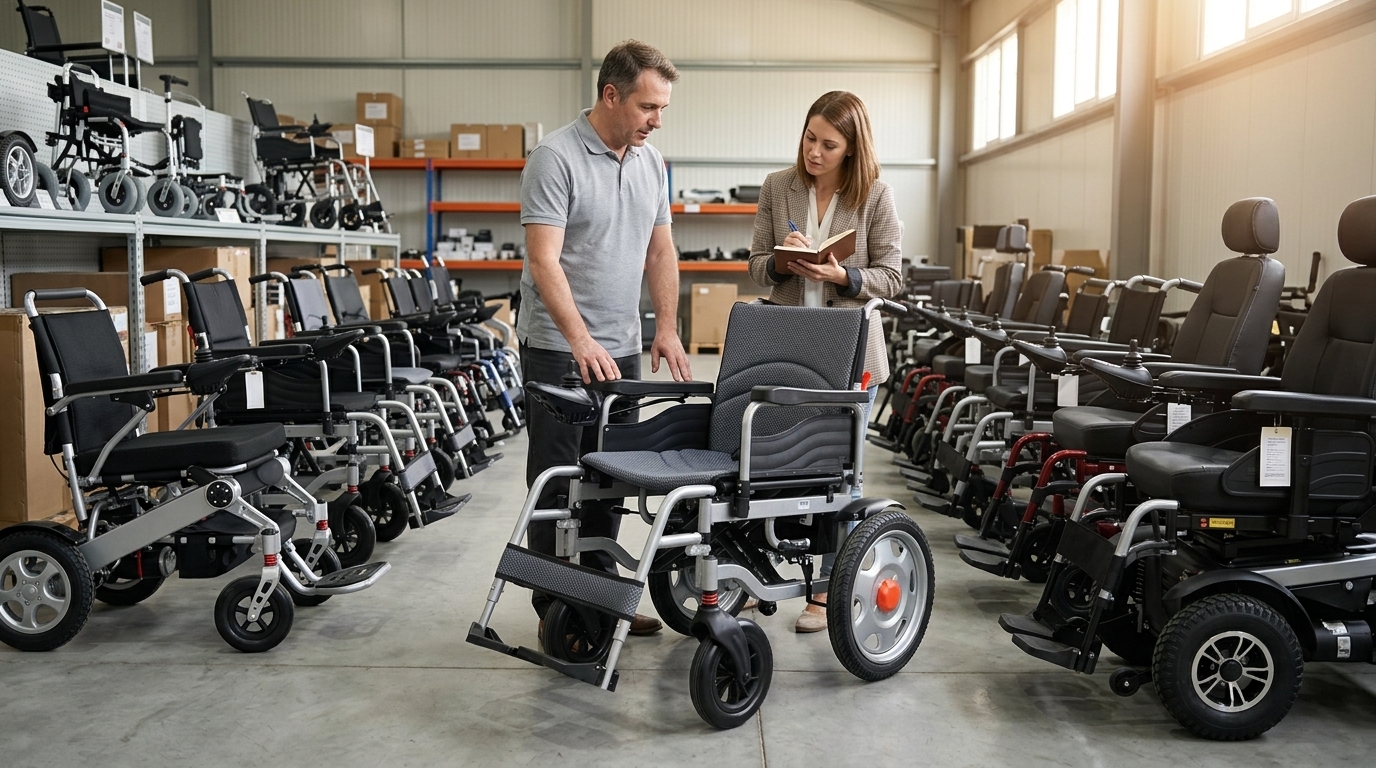
| Buyer channel | Strong starter fit | Why it works | Watch point |
|---|---|---|---|
| Entry distributor | Steel electric wheelchair | Lower target cost and familiar structure | Higher shipping weight |
| Retail importer | Foldable aluminum electric wheelchair | Easier storage, demos, and home delivery | Hinge noise and folded size |
| Premium travel catalog | Carbon fiber electric wheelchair | Lighter frame category and higher retail ticket | Battery file and frame QC |
| Hospital or care facility | Mid-back or reclining electric wheelchair | Better fit for repeated facility use | Training and spare parts matter more than colors |
Pride Mobility Jazzy Carbon and Sunrise Medical QUICKIE Q50 R Carbon have made lightweight folding chairs more visible in retail channels. Still, price-driven tenders often buy aluminum or steel first. If you plan to add a premium line, read our carbon fiber electric wheelchair sourcing guide before you lock the frame material, battery capacity, and carton plan.
This advice changes when you’re buying against a fixed hospital tender. In that case, match the tender line by line. Frame material, seat width, controller position, battery type, charger plug, manual language, and carton marks should follow the bid document before anyone talks about catalog expansion.
MOQ, Samples & Pricing
The cheapest quote often hides a decision you forgot to make. Ask for quantity bands, but don’t ask only for “best price for 1x40HQ.” A useful quotation states model code, frame material, motor, controller, battery model, charger plug, accessories, logo cost, spare-parts pack, Incoterm, currency, and quotation validity date.

A sample is a small contract.
Before bulk production, approve these sample points in writing:
- Model code and frame material
- Seat width, backrest type, armrest style, and footrest style
- Motor, controller, battery, charger, and plug
- Tire type, brake behavior, joystick position, and turning response
- Upholstery, color, logo position, carton artwork, and manual language
- Serial-number format, rating label, barcode, and spare-parts list
- Folded size, carton size, net weight, gross weight, and pallet plan
- Test videos for folding, charging, braking, driving, and packing
If you want standard models plus private-label options from one source, review YOYI CARE as a custom electric wheelchair manufacturer before you compare only unit price. The better question is landed cost: chair price, packaging, spare parts, local service time, damage rate, and the cost of a delayed shipment.
Don’t accept “same as sample” as the only production standard. Keep one approved sample with the buyer and one reference sample at the factory. Record the sample serial number. If the battery brand, controller, charger, frame tube, or carton structure changes later, require a new sign-off.
Compliance Documents & Packaging
A chair that arrives scratched is still your problem, even when the motor runs. Bulk buyers should review packaging and documents together because one missing carton mark or battery file can stop a shipment that passed factory QC.
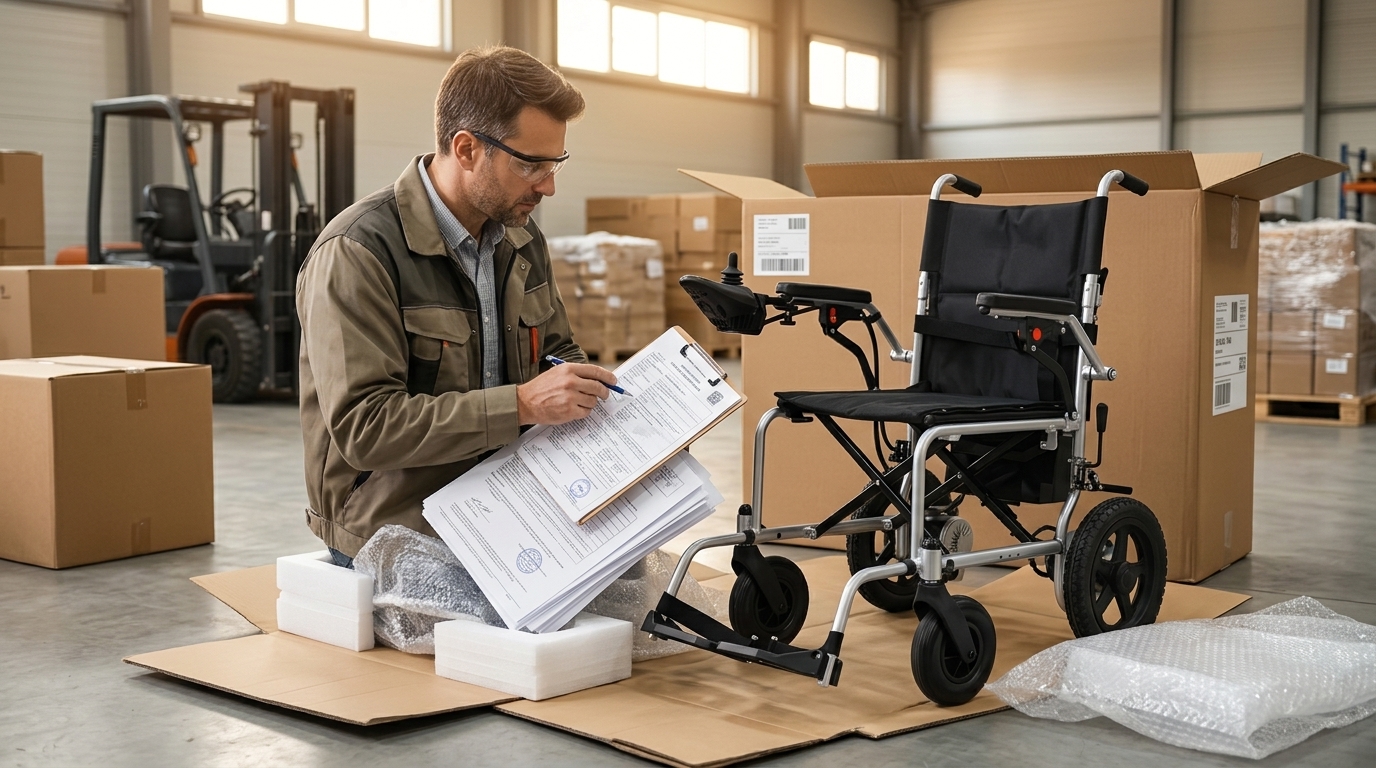
The U.S. Food and Drug Administration states that the Quality Management System Regulation became effective on February 2, 2026, and incorporates ISO 13485:2016 for medical device quality management systems. FDA QMSR, 2026. That doesn’t mean every electric wheelchair claim is allowed in every market. It means your supplier’s quality file should be current, traceable, and matched to the device you import.
| Document or item | Ask for | Common miss |
|---|---|---|
| ISO13485, CE, FDA-related file | Current copies tied to the manufacturer and model | Expired or mismatched documents |
| Product specification sheet | Load rating, range basis, battery model, charger details | Marketing specs without test method |
| Battery file | UN38.3, SDS/MSDS, watt-hour label, battery model | Battery changes after sample approval |
| User manual and label | Target-market language, warnings, importer details | Artwork approved too late |
| Packing list | Serial numbers, carton dimensions, net and gross weight | Mismatch with customs documents |
| Carton plan | Foam, corner protection, pallet layout, carton marks | Damage during mixed handling |
For battery-powered mobility devices, the Federal Aviation Administration says certain lithium-ion mobility-device batteries are limited to 300 Wh when removed, with spare-battery limits also stated on its PackSafe page. Federal Aviation Administration PackSafe, 2024. That page is for passenger transport, so it doesn’t replace dangerous-goods freight rules. It does show what airlines and end users may ask about after your product reaches the market.
Avoid loose retail claims such as “FDA approved” unless your regulatory file, listing status, and claim wording support that exact language. For the European Union, ask your EU importer or regulatory consultant to confirm MDR responsibility, labeling, language, and economic-operator details before mass printing cartons.
Warranty, Parts & Service
After-sales starts before production. A clean warranty promise is less useful than a spare-parts plan your service team can actually follow at 9:00 a.m. on a Monday with a dealer waiting on the phone.
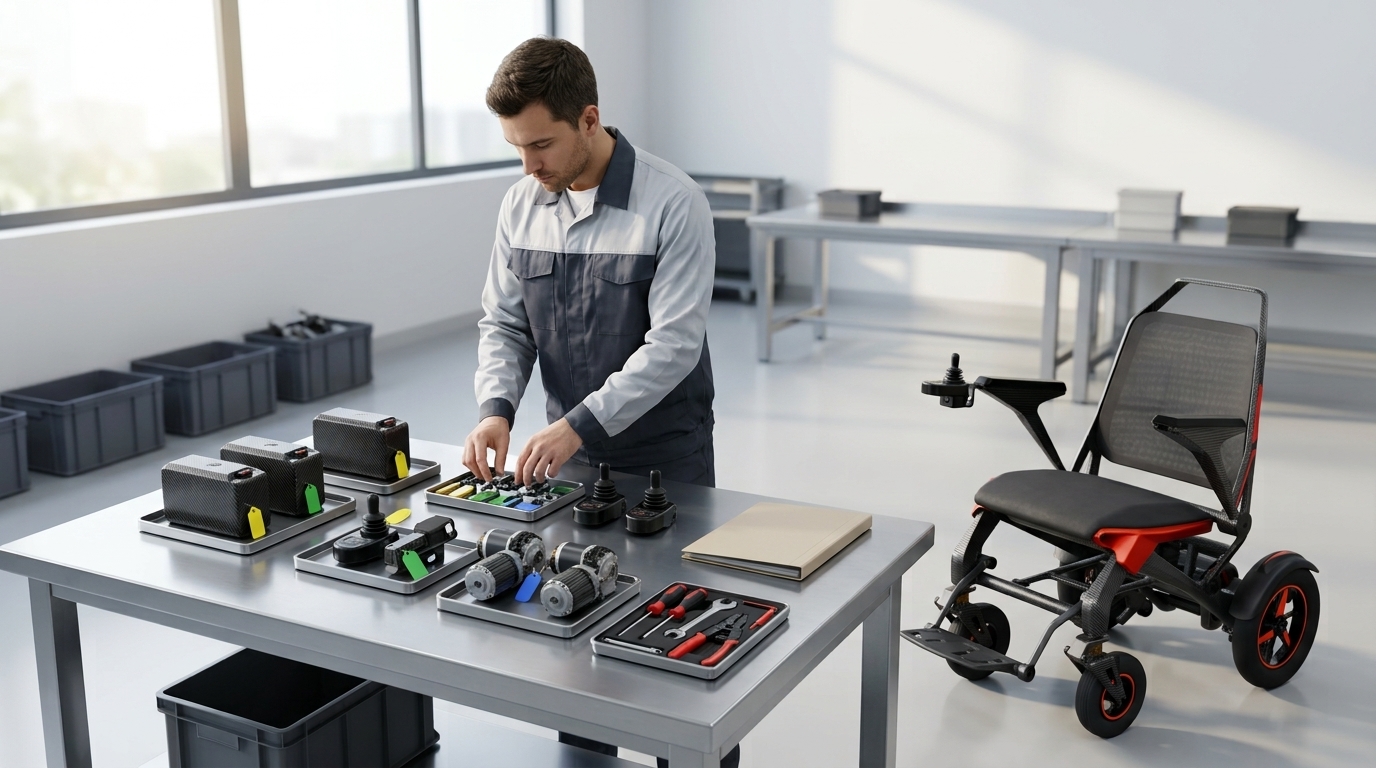
For electric wheelchair bulk orders, we prefer to lock these QC points before mass production:
- Incoming check for frame tubes, motors, controllers, batteries, chargers, tires, upholstery, and fasteners
- In-process check for welding, folding joints, brake assembly, wiring route, and screw torque
- Finished-chair check for charging, joystick response, braking, folding, noise, and surface finish
- Packing check for accessories, manual, label, serial number, carton strength, and pallet marks
Warranty language should name parts. “One-year warranty” is too thin by itself. State how the warranty applies to frame, motor, controller, battery, charger, joystick, tires, upholstery, armrests, and footrests. State whether the clock starts at shipment, arrival, or retail sale. State who pays replacement-parts freight. Put photo and video requirements in the process, because unclear evidence rules slow down every claim.
| Warranty point | Better wording | Why buyers care |
|---|---|---|
| Battery | Coverage period, use limits, replacement evidence | Battery claims are expensive |
| Controller and joystick | Fault test steps and replacement rule | Dealers need fast diagnosis |
| Frame and folding parts | Coverage for welds, hinges, locks, and misuse exclusions | Folding models get repeated stress |
| Spare parts | First-order parts pack and reorder price list | Local service can’t wait for full chairs |
If a national hospital tender already has an in-country service contractor, follow that service contract first. The factory warranty still matters, but the hospital will judge your distributor by response time, spare-parts availability, and technician training.
OEM/ODM Brand Choices
Private label changes the purchase order. Logo position is the easy part. The heavier decisions are manual language, warning labels, barcode rules, carton artwork, accessory set, color tolerance, spare-parts naming, and whether any structural or electrical change affects the existing file.

Use this order packet before the deposit:
- Target country and buyer channel
- Preferred frame material and model tier
- Required certificate copies and test reports
- Approved sample checklist and serial number
- Logo files, carton artwork, manual language, barcode format
- Battery model, charger plug, and battery document set
- Spare-parts pack, warranty terms, and service contact route
- Final inspection plan and shipment photo requirements
YOYI CARE’s OEM/ODM work is most useful when buyers separate cosmetic changes from engineering changes. Color, logo, and carton marks are usually faster to confirm. Controller, battery, charger, brake system, and frame changes need a new technical review. That extra review may feel slow during quotation, but it is much faster than explaining a field issue to 40 dealers after launch.
FAQ
What documents do importers need?
Importers usually need the commercial invoice, packing list, bill of lading or air waybill, product specification sheet, user manual, battery documents such as UN38.3 and SDS/MSDS, and market-specific compliance files. For regulated claims, confirm the target market rules before shipment.
How should samples be approved?
Approve samples with a written checklist, photos, videos, serial number, charger and battery details, carton artwork, and user manual version. Keep one approved sample with the buyer and one reference sample at the factory.
Which electric wheelchair sells best?
No single electric wheelchair sells best across every channel. Steel and aluminum models suit price-sensitive distributors and care facilities; carbon fiber models fit premium retail and travel-focused catalogs when your market can support a higher selling price.
Send YOYI CARE your target country, buyer channel, preferred frame material, branding needs, certificate requests, and first-order quantity range. We’ll help you build a bulk order approval packet before the deposit, so price, sample standard, packing, documents, spare parts, and warranty terms are settled before production starts.


