

If you’re validating a wheelchair OEM project, start with customization scope: cushion, logo, battery, color, controller behavior, packaging, and whether the line will be private label or based on an ODM platform. For distributors, importers, hospitals, and medical equipment brands, the right partner should prove manufacturing history, quality system discipline, certification support, warranty terms, and spare-parts access before you discuss artwork.
This guide is written from YOYI CARE’s position as a China-based medical equipment manufacturer founded in 2013. It applies to B2B sourcing for electric wheelchair ranges. One-off clinical seating prescriptions belong with qualified rehab professionals and local regulatory teams.
Wheelchair OEM Customization Scope
A wheelchair OEM program covers sellable details beyond a logo: seating comfort, battery setup, color, electronic control behavior, packaging, manuals, and branded product lines. The best scope is narrow at first. Approve the platform, test samples, then expand into deeper hardware and branding changes after buyer feedback.
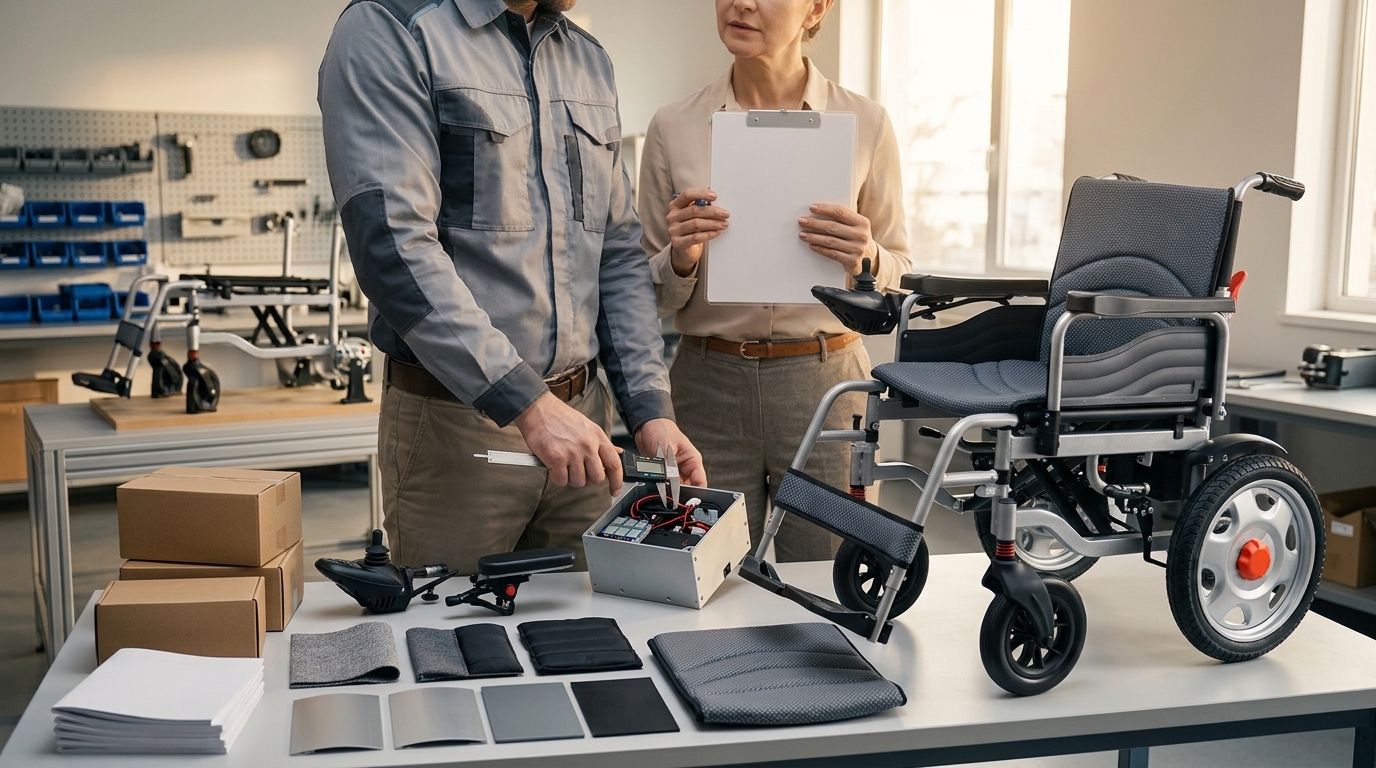
At YOYI CARE, early OEM/ODM discussions usually start with the same practical question: what will your buyers notice in the first 30 seconds? For a distributor, that might be a cleaner frame color and carton design. For a hospital procurement team, it might be a stable control feel, easy-clean cushion cover, and predictable parts supply. For a private-label brand, it’s often the full line logic: entry model, travel model, facility model.
To compare starting platforms, review YOYI CARE’s range as a custom electric wheelchair manufacturer before you lock your private-label brief.
| Customization area | Typical B2B choice | Approval risk to check |
|---|---|---|
| Cushions | Foam density, cover material, seat feel | Don’t make pressure-care claims without testing and market clearance |
| Logo | Badge, joystick label, manual cover, carton mark | Keep regulatory labels readable and correctly placed |
| Battery | Removable pack, capacity range, charger plug | Confirm shipping papers and after-sales replacement plan |
| Color | Frame finish, upholstery tone, accent parts | Approve physical samples, not screen colors |
| Electronic control systems | Joystick feel, speed profile, controller setup | Any deep change needs drive testing and records |
| Packaging | Carton print, insert layout, barcode, manual | Plan drop protection and spare-parts identification |
| Branded product lines | Good-better-best SKU structure | Avoid too many variants before sell-through data exists |
YOYI CARE’s official materials reference ISO13485/CE/FDA-related certification support and 60+ patents. For any purchase order, ask for current, model-relevant documents. Certificates and regulatory files are scoped by product, market, and intended use; a logo in a brochure doesn’t tell you enough.
OEM vs ODM Choices
Most distributors should start with ODM plus private-label changes, then move into deeper OEM work after the first market test. It’s faster to validate demand when the base electric wheelchair platform already exists, the factory understands its failure points, and your team can focus on brand fit, packaging, documents, and after-sales parts.
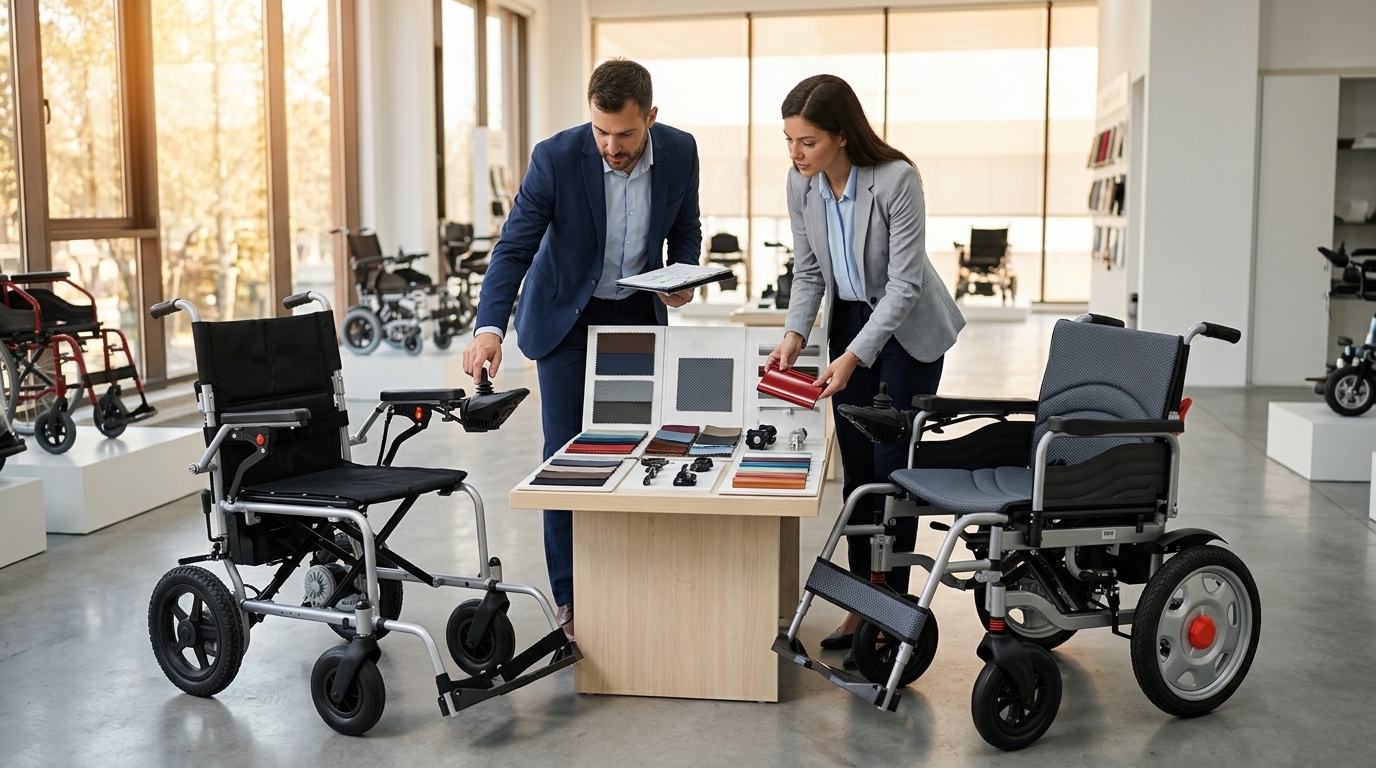
A full OEM build makes sense when you already know the channel, target price band, battery preference, folding style, and service model. If your sales team is still debating whether buyers want a lightweight travel chair or a stronger facility-use chair, don’t begin with a custom frame. Begin with samples.
| Buyer situation | Better route | Reason |
|---|---|---|
| New distributor entering mobility products | ODM platform with logo and packaging | Lower development risk and simpler sample review |
| Existing brand replacing a weak supplier | ODM with controlled component changes | Lets you fix known complaints first |
| Mature brand with exact product map | OEM development | Better fit for exclusive structure and line control |
| Hospital or care-facility procurement | Stable ODM model | Service parts and repeat consistency matter more than cosmetic changes |
For a deeper sample review, our OEM electric wheelchair factory checklist covers the item-by-item checks private-label buyers should make before approving a production sample.
If your program includes walkers, mobility scooters, hospital beds, and wheelchairs under one brand, reviewing YOYI CARE’s medical device OEM ODM service can help your team group the RFQ before you send drawings and artwork.
Electric Wheelchair Components
The interesting part of wheelchair OEM work is usually inside the chair, not on the carton. A neat logo can’t fix a poor battery choice, a hard-to-source joystick, or a frame that doesn’t match your buyer’s use case.
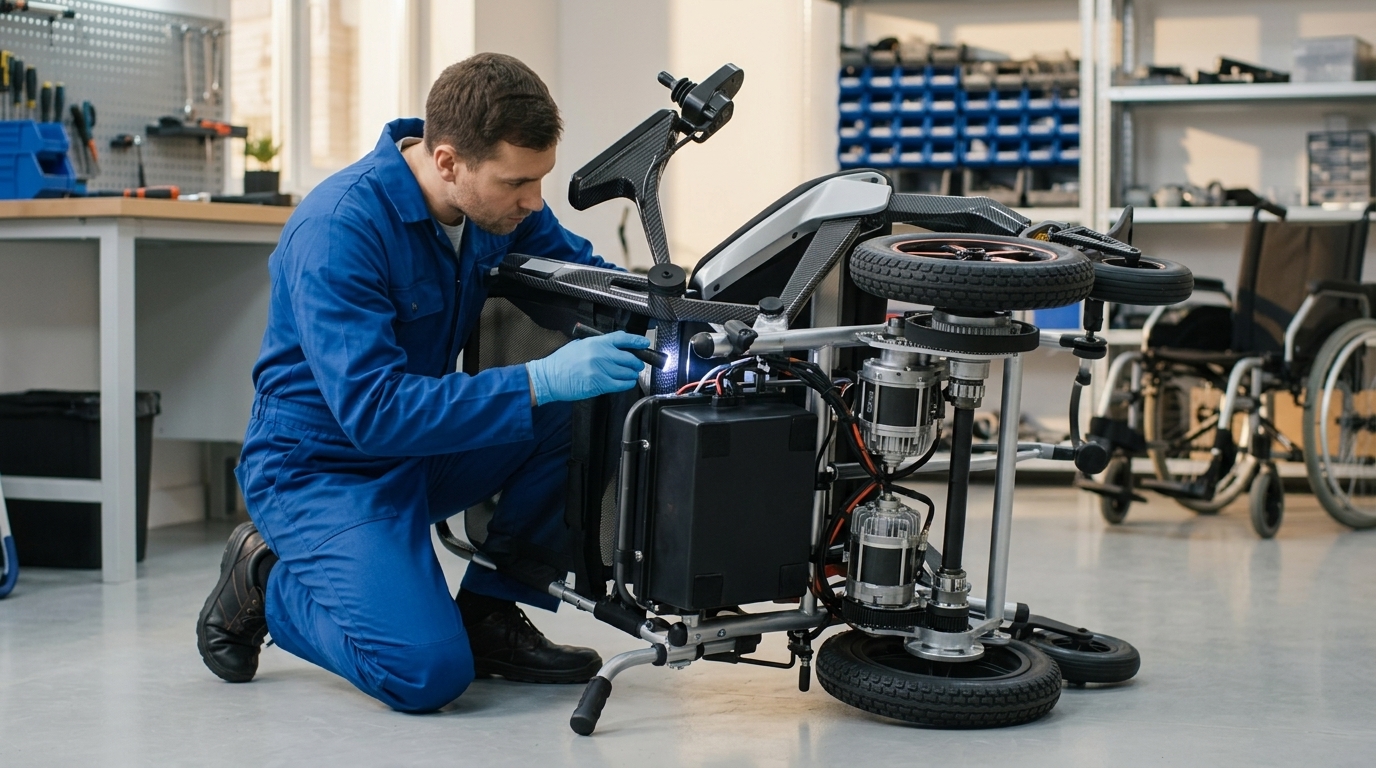
Use named retail benchmarks carefully. A distributor might compare a travel SKU with WHILL Model F or Pride Mobility Jazzy Carbon, while a facility team may know Drive Medical Cirrus Plus EC. Those names are reference points for positioning, not copy instructions. Build your own spec sheet around weight class, folding method, battery handling, spare parts, service access, and target buyer.
| Component | What to specify | Tradeoff |
|---|---|---|
| Frame | Steel, aluminum, or lightweight structure | Steel can suit value or facility channels; lighter frames suit travel buyers but raise cost sensitivity |
| Folding system | Fold size, latch feel, loading method | A tighter fold helps storage, but weak latches create service complaints |
| Battery | Capacity, removability, charger, connector | Larger capacity may add weight and shipping checks |
| Motors and brakes | Motor type, brake response, incline target | Test with real load conditions, not catalog language alone |
| Controller | Joystick sensitivity, speed levels, display | A familiar feel reduces training time for dealers and facilities |
| Cushion and backrest | Foam, cover, seat width, cleaning needs | Comfort language must stay inside tested and approved claims |
| Packaging | Carton, foam, manual, spare-parts bag | Good packaging cuts arrival damage and support tickets |
Here’s where buyers often overreach: they ask for a new battery, new controller, new color, new cushion, new frame badge, and new manual in the same sample round. That creates confusion. Change 2 or 3 high-value items first. Then record every revision with photos, part names, and approval dates.
Certification And QC Files
Quality documents should match the product, destination market, and sales claim. ISO 13485:2016 covers quality management systems for medical device design and manufacture, and ISO’s own page says the standard remained current after its 2025 review: ISO 13485:2016.
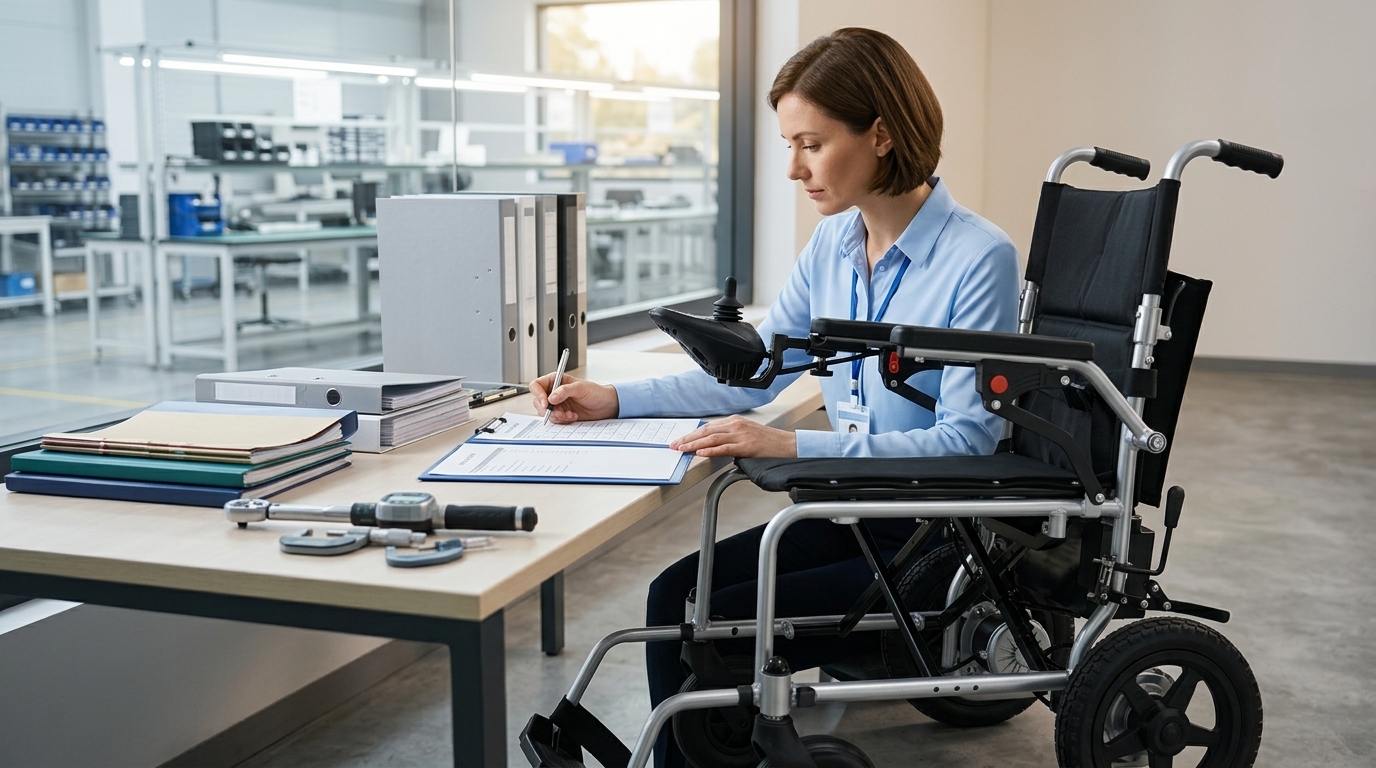
Use careful wording with FDA-related claims. Depending on product, intended use, and U.S. pathway, evidence may include registration/listing, 510(k) clearance, exemption status, or other documentation. Buyers can check device categories through the FDA Product Classification Database during U.S. market planning.
| File to request | Why it matters |
|---|---|
| Manufacturer profile | Confirms factory history, category focus, and export experience |
| ISO13485 certificate scope | Shows whether the quality system covers relevant medical devices |
| CE or destination-market files | Helps importers screen product-market fit |
| FDA-related evidence | Supports U.S. planning when applicable |
| Battery and charger reports | Affects shipping, labeling, and support |
| QC checklist | Shows how the factory checks assembly, controls, brakes, labels, and packing |
| Warranty policy | Defines covered parts, claim evidence, and replacement process |
| Spare-parts list | Lets distributors plan service before the first container arrives |
Ask for the boring files early. A distributor who waits until the shipment is ready may discover the manual language is unfinished, the label layout doesn’t match the carton, or the battery paperwork needs buyer-side review. None of that is dramatic. It just slows sales.
Supplier Fit For Bulk Orders
A low unit price can look clean on a spreadsheet until spare joystick modules are backordered, the carton artwork changes without approval, or warranty claims arrive with no photo process. For bulk orders, supplier fit comes down to repeatability.

Before you compare a trading company and factory quote, read our guide to choosing an electric wheelchair supplier for bulk orders, then use the same questions in your RFQ.
Ask these before deposit:
- Which parts are standard, customized, and locked?
- Who approves logo, manual, label, and carton artwork?
- How are sample revisions recorded?
- Which spare parts ship with the first order?
- What warranty evidence does the factory need?
- Who supports after-sales communication when your dealer has a field issue?
- Which documents are tied to this exact model and market?
Freeze changes after sample sign-off. If your buyer changes battery, color, controller settings, and packaging after approval, the “same” chair becomes a moving target. That’s where rework starts.
FAQ
What is wheelchair OEM?
Wheelchair OEM means a manufacturer builds electric wheelchairs to your brand and agreed specification, from logo and packaging to approved component choices. For distributors, it’s a sourcing and brand-control model that still needs destination-market compliance.
Is ODM faster than OEM?
Usually, yes. ODM starts from an existing platform, so sampling and document review are often simpler than a ground-up OEM design, although every changed component still needs factory approval and buyer sign-off.
Can batteries be customized?
Yes, but battery changes affect range expectations, chair weight, charger compatibility, shipping paperwork, and after-sales parts. Pick the battery spec early and confirm documentation before carton and manual design.
What certificates should importers request?
Ask for ISO13485 scope, CE or destination-market files where applicable, FDA-related evidence when relevant, battery and charger reports, user manual drafts, labeling files, and warranty terms. Match each file to the exact model.
Does YOYI CARE support private labels?
Yes. YOYI CARE supports OEM/ODM customization for cushions, logo, battery, color, electronic control systems, packaging, and branded electric wheelchair lines, with QC, warranty, and after-sales support.
If you’re building an electric wheelchair line, send YOYI CARE your target market, buyer channel, preferred frame type, battery expectations, branding needs, and existing retail benchmarks. We’ll help turn that into a practical OEM/ODM spec for sampling, QC review, certification discussion, warranty planning, and after-sales parts support.


