

Hospital beds and nursing home beds may look similar at first glance, but they are designed for very different care environments. Each type focuses on specific patient needs, safety requirements, and caregiver workflows. Understanding their differences helps healthcare facilities, caregivers, and families make informed decisions when selecting the right bed for patient care. This article also highlights options such as electric nursing beds and manual nursing beds for different care scenarios.
1. Purpose and Care Environment
Hospital beds are engineered for clinical treatment, allowing healthcare professionals to perform procedures, monitoring, and interventions efficiently. They support patients with acute medical conditions, surgical recovery, or intensive care needs. Nursing home beds are created for long-term residential care. Instead of focusing on complex medical procedures, these beds prioritize comfort, stability, and ease of daily caregiving for elderly patients or individuals with chronic mobility limitations.
2. Level of Adjustability
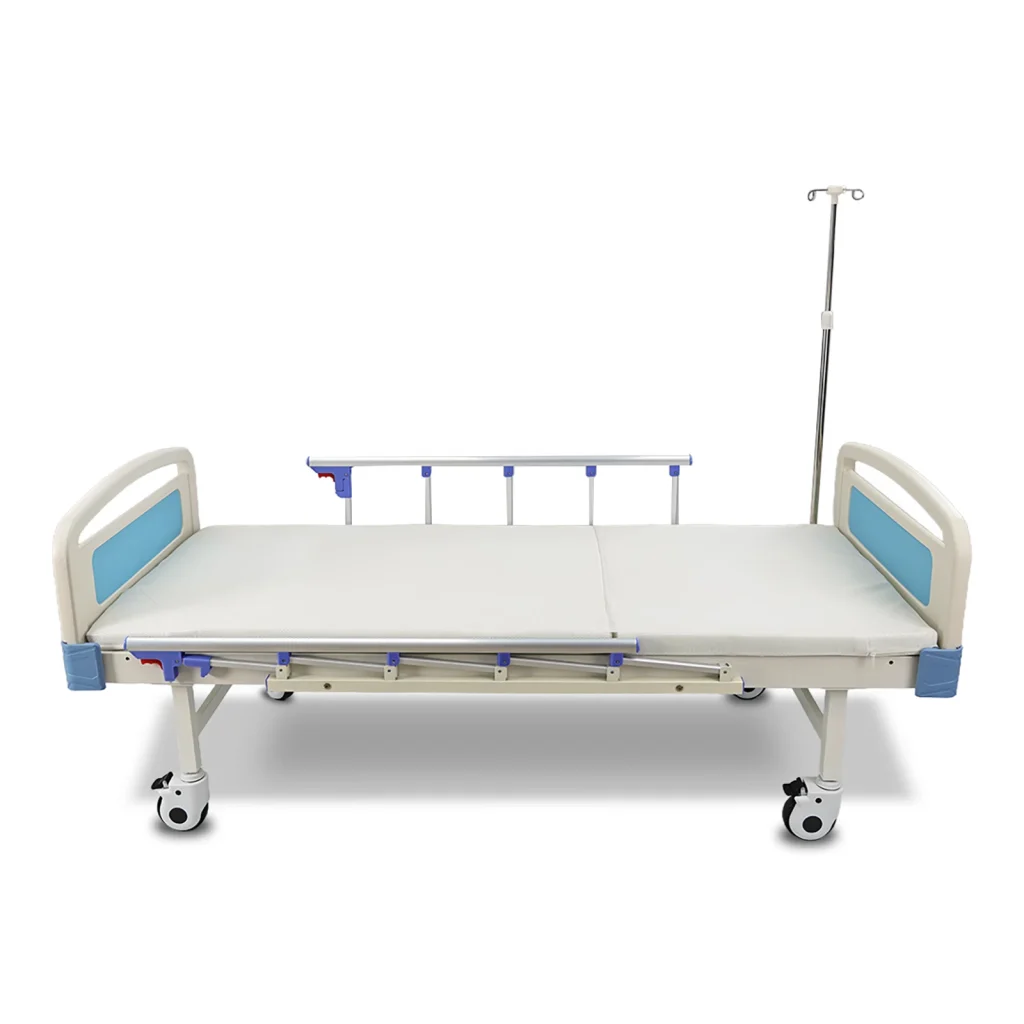
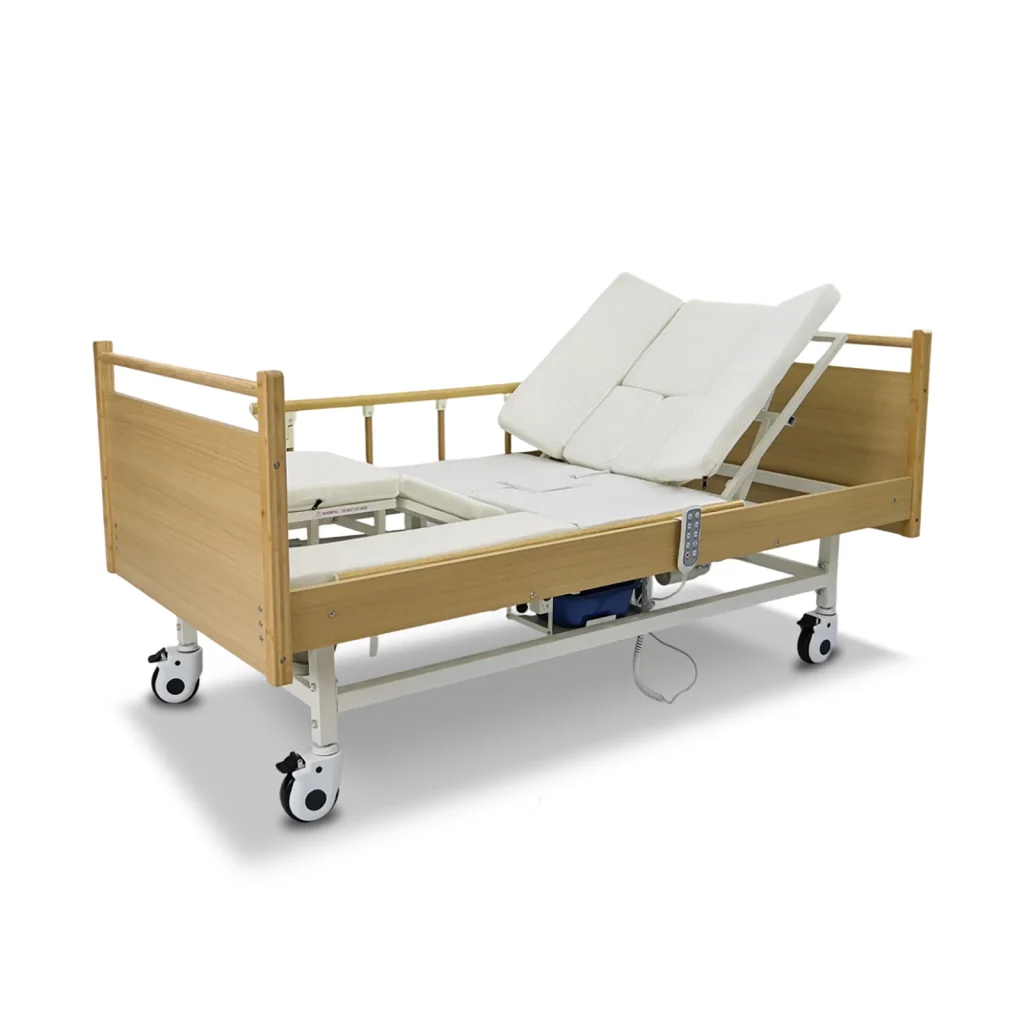
Hospital beds offer a greater range of adjustments because patients often require frequent repositioning or specific treatment positions. Modern electric nursing beds provide multiple electric motors for backrest, leg section, and height control, supporting both patient comfort and caregiver efficiency. Nursing home beds also offer adjustability but tend to have simpler mechanisms. Many facilities still rely on manual nursing beds for cost-effective and reliable daily care, with backrest and leg section adjustments to improve comfort.
3. Safety Features
Hospital beds contain enhanced safety systems due to the medical risks involved. Typical safety features include sturdy full-length or split side rails, nurse call integration, bed-exit alarms, emergency braking systems, and antibacterial, easy-clean surfaces. These features help prevent falls, ensure infection control, and support emergency responses. Nursing home beds prioritize gentle safety features tailored for seniors or long-term residents, such as low-bed design, soft or wooden side rails, individual wheel locks, and pressure-relief mattress compatibility. Their focus is on preventing accidents gently without making the environment feel clinical.
4. Frame Materials and Appearance
Hospital beds are built with heavy-duty steel frames, antimicrobial surface coatings, and robust medical-grade components. Their design is functional, durable, and easy to sanitize, matching a clinical setting. Nursing home beds aim for a homelike appearance to make patients feel comfortable. Common materials include wood veneer panels, warm color schemes, and lightweight aluminum or steel frames covered by wood accents. These beds blend into residential interiors rather than resembling hospital equipment.
5. Mobility and Flexibility
Hospital beds include high-strength casters for frequent movement across wards or for emergency repositioning. They also offer central locking systems and compatibility with medical devices such as IV poles. Mobility is essential in urgent clinical environments. Nursing home beds are generally more stationary, often with small casters, lightweight frames, and individual braking wheels. Their mobility is limited because long-term residents rarely require room transfers.
6. Patient Comfort and Long-Term Use
Hospital beds provide comfort but their primary focus is medical functionality. For long-term residents, electric nursing beds or manual nursing beds in nursing homes are preferred because they combine durability with ergonomic support for daily life and activities. These beds are designed to improve posture, reduce pressure points, and facilitate safe transfers, ensuring long-term comfort and usability.
7. Cost and Maintenance
Due to advanced medical-grade features, hospital beds are typically more expensive and require regular technical maintenance. Nursing home beds have lower operating costs, easier maintenance, and long-term reliability suitable for residential care facilities.
Conclusion: Which Bed Should You Choose?
The choice between a hospital bed and a nursing home bed depends entirely on the patient’s condition and care environment. Choose a hospital bed if the patient requires medical monitoring, frequent repositioning, high-level clinical support, or emergency-ready functions. Choose a nursing home bed if the patient needs long-term comfort, gentle residential-style care, fall-prevention features, or daily support without intensive medical procedures. Understanding these differences ensures patients receive the right level of comfort, safety, and clinical support in every stage of care. For long-term residential settings or home care, electric nursing beds and manual nursing beds from YOYI CARE provide reliable, ergonomic solutions that improve both patient experience and caregiver efficiency.


