

A typical adult home-care bed has a sleep surface of about 36 inches wide by 80 inches long, roughly 91.4 × 203.2 cm. But the assembled frame is larger, and that’s the number your customer’s room actually has to accommodate.
Picture delivery day. The bed fits the patient perfectly, but the assembled frame won’t clear the hallway turn without disassembly. Now your installer is improvising in a tight corridor, and you’re fielding a call about extra labor and a delayed setup. A few measurements before the order can save you all three.
Standard Hospital Bed Dimensions in Inches and Centimeters
A 36 × 80-inch sleep surface is a common starting point for adult home-care beds. Overall length, width, and height depend on the model and accessories. Read the sleep-surface dimensions and assembled dimensions separately, then check the height specification and mattress requirements for the exact configuration you plan to buy.
Metric and inch conversions are rounded. Confirm which rails, boards, and accessories are included in the quoted overall measurement.
Bed Frame Size vs. Mattress Size: What Changes?
The sleep surface is the platform supporting the mattress. The overall footprint describes the bed’s external length and width. Headboards, footboards, bumpers, and rail assemblies can extend beyond the sleeping area.
YOYI CARE’s KND02-03S electric nursing bed and KND02-03B electric nursing bed show why this distinction helps. Both list a 195 × 89.7 cm bed surface, while their listed overall widths differ by 6.6 cm.
That difference can affect access beside the bed or clearance through an opening. Ask for a dimensioned drawing showing the configuration you’ll receive. Have the supplier mark the widest point, including anything projecting from the frame.
Keep the measurement order visible on your comparison sheet. One supplier may write length × width, while another starts with width. Label every column and keep units consistent. A bare figure such as “195 × 89.7” is easy to misread when copied into a purchase order.
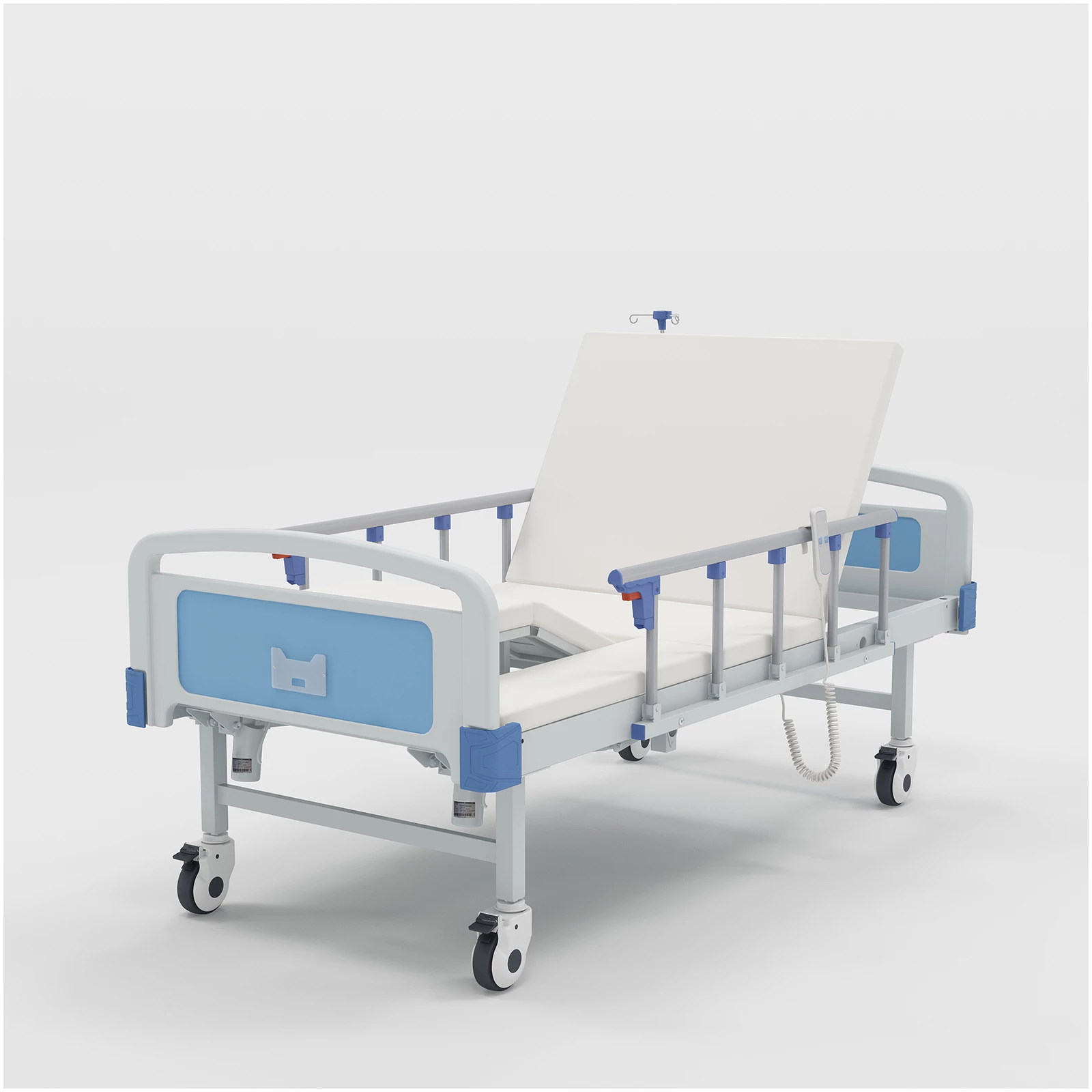
Is a Hospital Bed the Same as Twin XL?
No. They’re close, but not interchangeable.
A standard hospital bed mattress measures about 36 inches wide by 80 inches long. A Twin XL mattress measures 38 inches wide by 80 inches long. The length matches. The width doesn’t.
That 2-inch difference matters more than it sounds. A Twin XL mattress on a hospital bed frame can leave uneven gaps along the rails and boards. The FDA’s bed-system guidance explains that the frame, mattress, rails, and accessories need to work together. A mattress that doesn’t fit the deck properly can create gaps that affect rail clearance and patient safety.
So order the mattress specified for the bed model. Record its length, width, thickness, and compatibility with the moving deck. For fitted sheets, check pocket depth as well as length and width. When replacing a mattress or adding an overlay, ask the supplier to review the resulting fit and rail arrangement.
How High Is a Hospital Bed With a Mattress?
Check where the height measurement ends. Floor-to-deck height measures the mattress platform. Floor-to-mattress-top height includes the mattress. A number beside a product photo may instead describe the highest part of the headboard.
During a trial, check whether the user can place their feet appropriately for the planned transfer. Caregivers should also test their working position. Confirm whole-bed height adjustment separately from backrest and leg adjustment; an electrically moving backrest does not establish a height-adjustment range.
How Wide Are Bariatric Hospital Beds?
Bariatric models offer wider sleeping surfaces and different load ratings.
Specify both the sleeping width and the transport width. An expandable model may narrow for movement through a building, then widen in the room. Ask how that change affects the mattress configuration and rails.
Check the maximum user weight separately from safe working load, which includes the loads defined by the manufacturer. A wider mattress alone does not establish a higher weight capacity.
How Much Room Does a Hospital Bed Need?
Start with a floor plan showing the actual frame footprint. Then add space for the care tasks: approaching either side, changing bedding, using a wheelchair, or positioning a lift.
Here’s a planning example. Put a hypothetical 1.0 × 2.2 m bed in a clear 3.0 × 3.5 m room, centered across the width with its head at the wall. You have 1.0 m on each side and 1.3 m beyond the foot. Furniture, door swings, and equipment reduce those clear areas.
This calculation shows available space; the care team must determine the working clearance for the intended tasks. Mark the proposed footprint on the floor with removable tape and rehearse the transfer route before delivery.
If a mobile patient lift is part of the plan, check under-bed access as well. Its legs and casters need room around the bed’s base. Test the specified lift with the bed at the heights used for transfers, including the space needed to turn it beside a chair.
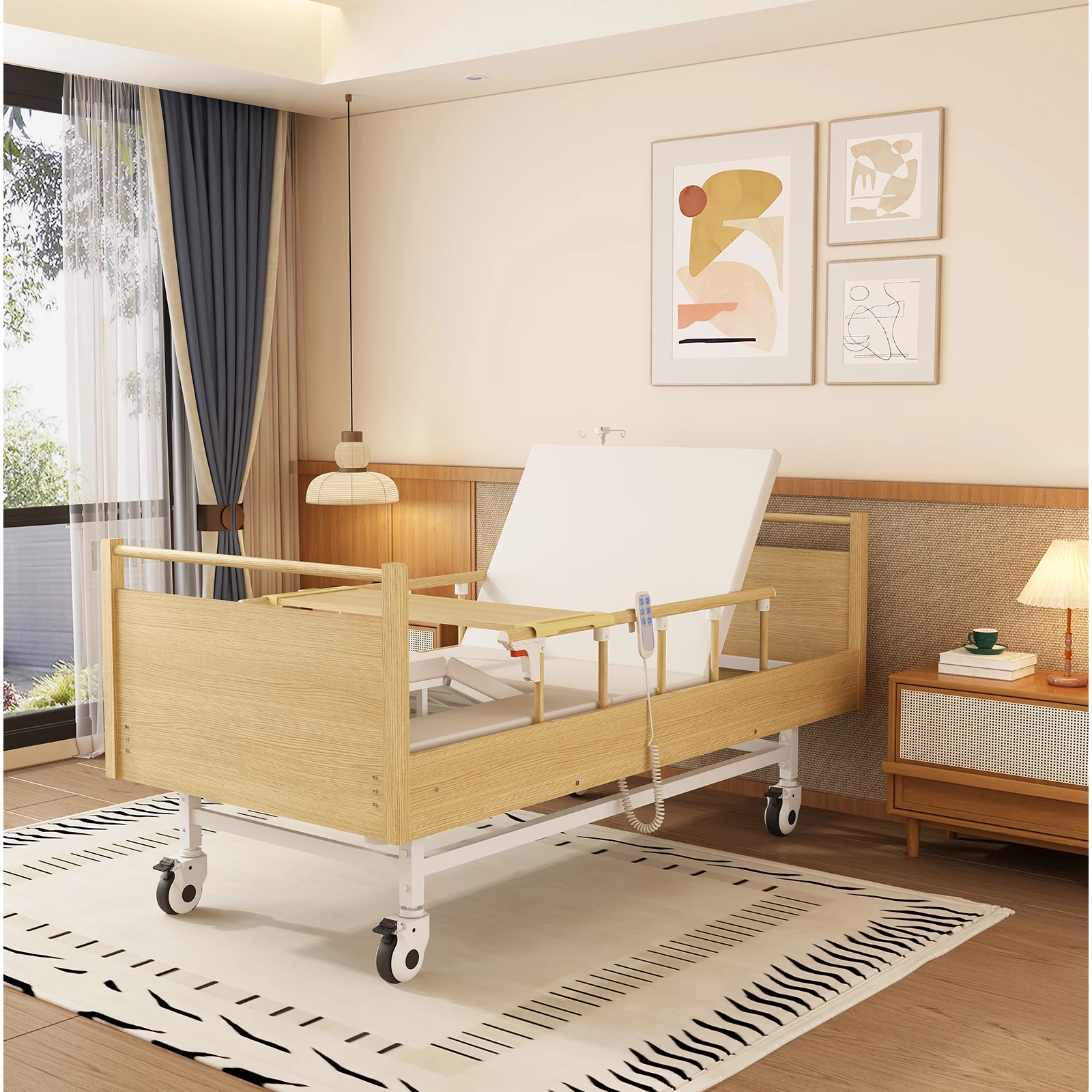
What Should Buyers Measure Before Delivery?
Check the whole route from unloading point to bedside. Measure clear door openings with doors open, corridor turns, lift interiors, and stair landings. Ask whether the bed arrives assembled or in sections, and request the largest component’s dimensions and weight.
For instance, KND02-03S lists a 199 × 97 × 18 cm carton alongside its assembled bed dimensions. Those numbers serve different purposes: the carton helps plan receiving and handling, while the assembled footprint helps plan bedside use. Confirm the final packing arrangement with the quotation.
Distributors should put these measurements in the purchase specification. Our home care bed wholesale guide covers packaging and configuration checks alongside the order.
- Confirm overall dimensions with the selected accessories fitted.
- Record the approved mattress size and thickness.
- Identify deck height and any adjustment range.
- Check delivery sections, carton sizes, and assembly access.
If you’ve shortlisted models from our nursing bed range, send YOYI CARE your room plan and delivery-route measurements. Include the required sleep surface, care functions, destination market, and quantity so we can review the configuration and provide model-specific dimensions.
FAQs
What size is a standard hospital bed?
A common adult home-care sleep surface is 36 × 80 inches. The overall frame is larger, and dimensions vary by model.
Are all hospital beds the same size?
No; adult home-care, ward, bariatric, and pediatric beds can have different dimensions. Compare the exact model’s sleep surface, overall footprint, and height specification.
Will a Twin XL mattress fit?
A 38 × 80-inch Twin XL mattress is wider than a 36 × 80-inch hospital sleep surface. Use the mattress size and type approved for the bed.
Does bed height include the mattress?
That depends on the specification’s measurement point. Ask whether it describes the deck, the mattress top, or the overall bed structure.
Can a hospital bed fit through doors?
Compare the clear opening and turning space with the bed’s transport configuration. Sectional delivery may help, so confirm the largest component size before ordering.


