

A walker and a rollator are not interchangeable. A walker gives the user a frame to steady themselves between steps. A rollator rolls along with them and usually adds hand brakes, storage, and, on four-wheel models, a seat.
For distributors, the real question isn’t which one is better. It’s which one fits the end user’s daily routine. A few steps from bed to bathroom points one way. A walk to the shops with a break halfway points another. Get that wrong, and you’re not just stocking the wrong product. You’re fielding returns and explaining to your customer why the item you recommended doesn’t work.
Rollator vs Walker: What Is the Main Difference?
A standard walker has four rubber-tipped legs and must be lifted forward. A two-wheel walker has front wheels and rear tips or glides. A rollator typically has three or four wheels and brakes. Walkers provide a more stationary base; rollators allow continuous movement but require steering and reliable brake control.
Product names can blur these categories. “Rolling walker” may describe either a two-wheel frame or a four-wheel rollator. Count the wheels and check the braking system before comparing listings.
| Buying point | Standard walker | Two-wheel walker | Rollator |
|---|---|---|---|
| Floor contact | Four rubber tips | Two front wheels; rear tips or glides | Three or four wheels |
| Movement | Lift, place, then step | Advance the frame, then step | Roll forward while walking |
| Hand brakes | Usually absent | Usually absent | Normally fitted |
| Resting seat | Usually absent | Model dependent | Common on four-wheel models |
| Main buying check | Can you lift it repeatedly? | Can you advance it with control? | Can you steer, stop, and park it? |
When Does a Standard or Two-Wheel Walker Make Sense?
A standard walker offers a planted base once all four tips are on the floor. It can suit short, controlled indoor trips when you need support through both hands. The trade-off is effort: you have to lift and reposition the frame each time you move forward.
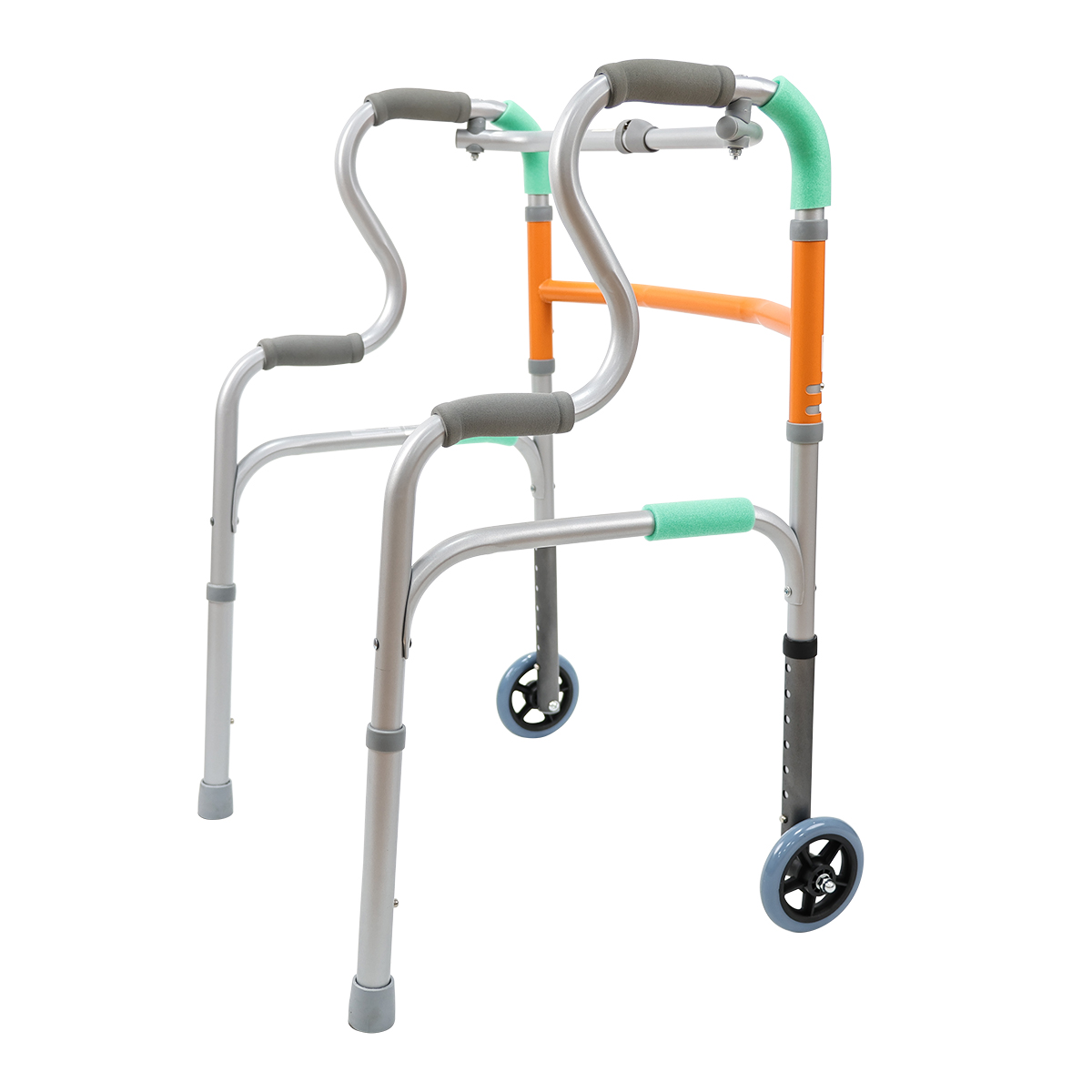
A two-wheel model reduces that lifting task. Its front wheels move forward while the rear tips or glides remain in contact with the floor. That can make a bedroom-to-kitchen route easier to manage.
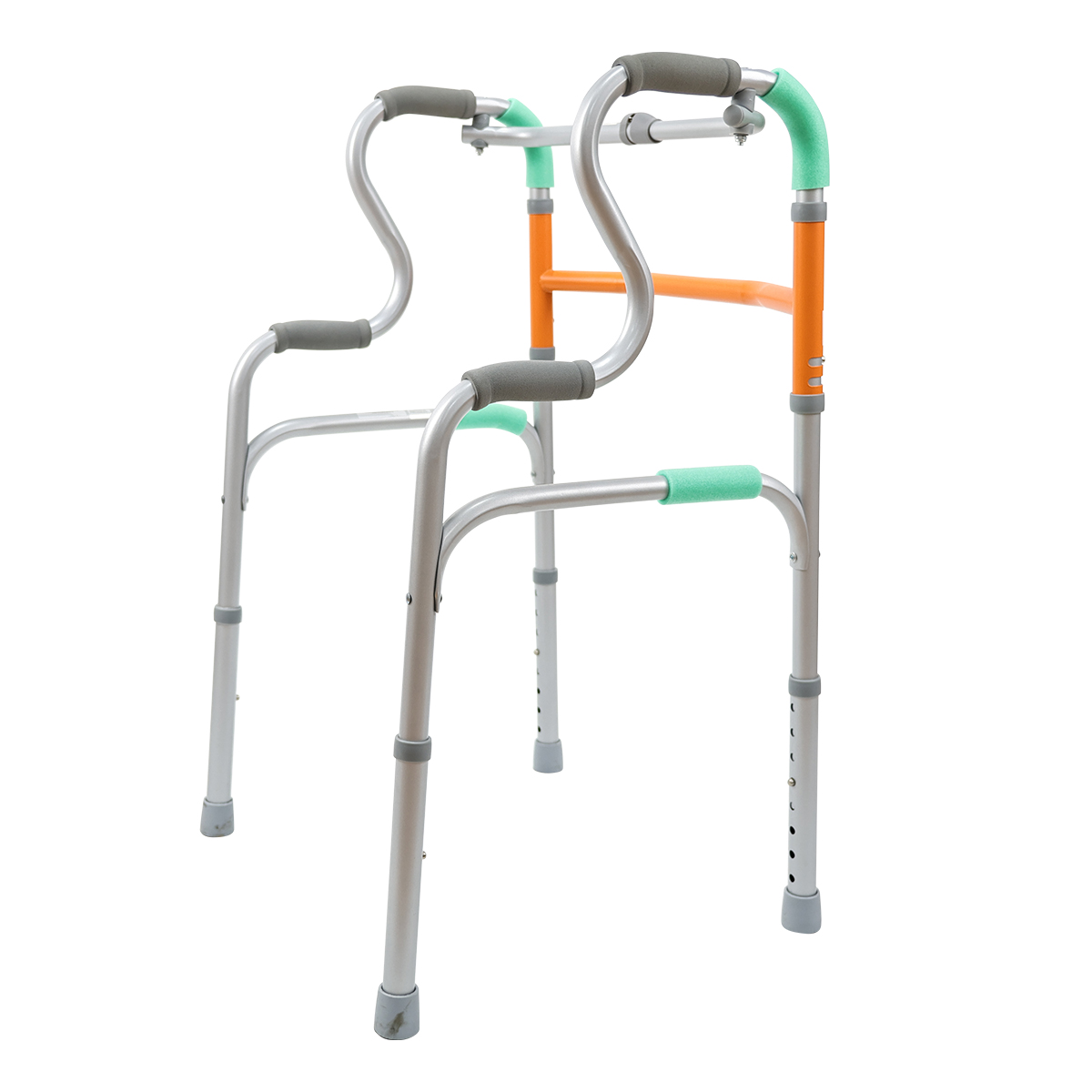
For a concrete comparison, YOYI CARE offers the HHB-ZK03-1 traditional walker and the HHB-ZK03-2 two-wheel walker. Ask to try the movement of each frame before choosing by appearance.
When Is a Rollator the Better Fit?
A rollator is the better fit when the end user can walk on both legs but needs balance support or regular rest breaks. The wheels move with their stride, and a seated model gives them somewhere to pause during a longer outing.
Alberta Health Services’ four-wheel walker guidance says users need enough hand strength to squeeze the brakes. It also rules out this type for people instructed to remain non-weight-bearing or partial-weight-bearing.
Three-wheel rollators commonly lack a seat. If rest breaks are the reason for the purchase, confirm the actual model‘s seating provision. An ordinary rollator seat is for resting while stationary. Being pushed while seated requires a model specifically designed for transport.
Which Features Matter for Indoor and Outdoor Use?
- For indoor use, the features that matter most are turning radius, wheel type, and frame width. A rollator or walker needs to turn beside a bed, fit around dining chairs, and roll without catching on loose rugs. Smaller, solid wheels work better on smooth indoor floors. Large pneumatic wheels are harder to maneuver in tight spaces.
- For outdoor use, wheel diameter, tire construction, and braking control become more important. Larger wheels roll over pavement joints and uneven surfaces more easily. Pneumatic tires absorb vibration better than solid ones. And on slopes, the brake system needs to hold the frame steady when the user stops.
Rollator vs Walker Cost: What Should Buyers Compare?
Compare the complete package, including delivery, setup, and replacement parts. The NHS walking-aid guide lists a broad £40–£200 range for walking frames bought online or in mobility shops. That UK retail reference is useful context; request an itemized quote for your model and market.
Ask about replacement rubber tips on walkers and brake cables or wheels on rollators. Distributors should also compare carton dimensions, assembly time, warranty labor, and spare-part availability. These checks belong alongside unit cost when building a senior care product range.
- Test the aid through a doorway and around a chair.
- Try folding, lifting, and reopening the frame.
- Check the rated user load and any separate bag limit.
- Request the model’s instructions and replacement-part prices.
If you’re ordering for a store, ask the person who will demonstrate the product to test the sample. They should be able to explain the folding latch and, where fitted, the parking brakes before the first customer tries it.
Start with the walking task, then shortlist models from our traditional walker range. Send YOYI CARE your target market and order quantity, along with the required handle height and wheel layout, to request model specifications and a quotation.
FAQs
Is a rollator the same as a walker?
A rollator is a wheeled walking aid within the broader walker family. In shopping comparisons, “walker” usually means a standard frame or two-wheel model.
Which provides more stationary support?
A standard walker provides a planted base when its four rubber tips are on the floor. A rollator moves on wheels and requires active control of its direction and brakes.
Can you sit on every rollator?
No; many three-wheel rollators have no seat. On a seated model, apply the parking brakes on firm, level ground before sitting.
Is a two-wheel walker a rollator?
A frame with two front wheels and rear rubber tips or glides is usually classified as a two-wheel walker. Rollators typically have three or four wheels and brakes.
What should distributors check before ordering?
Confirm the intended user, dimensions, load rating, folding system, and parts support for each model. Test a sample on the routes your buyers will use.


