

If you’re sourcing beds for a care facility, hospital, or distribution catalog, the electric home care bed vs. manual debate isn’t just about features. It’s about the total cost of ownership, caregiver retention, and what your end users actually need. And honestly? The answer isn’t always “go electric.”
Here’s the breakdown.
What Actually Makes Them Different?
Both types adjust the backrest, legs, and overall positioning to keep patients comfortable and reduce pressure injury risk. The difference is how.
- Manual beds require physical effort to adjust the bed’s position, typically using a hand crank. A caregiver turns a crank at the foot of the bed every time a repositioning is needed. Our manual beds include functions for back lift, leg lift, side-turning, and even hair washing support, so “manual” does not mean “basic.”
- Electric hospital beds operate with motorized controls, allowing patients or caregivers to adjust the height, backrest, and leg position effortlessly using a remote. Our electric models go further with timed turning, side-slip prevention, bowel movement assistance, and smart controls via voice, app, or touchscreen.
Same purpose. Very different daily experience.
Why the Electric Home Care Bed Market Is Growing Fast
Let’s talk numbers. The electric homecare beds market was estimated at USD 1.2 billion in 2024, and forecasts indicate a 7.5% CAGR from 2026 to 2033, with the market expected to reach USD 2.30 billion by 2033.
That growth isn’t random. A few things are driving it:
- Aging populations: The United Nations highlighted that in 2022, 771 million individuals globally were aged 65 and above, with projections indicating a rise to 994 million by 2030 and 1.6 billion by 2050.
- Caregiver strain: Survey data shows that 92% of caregivers who chose electric beds reported satisfaction, compared to only 54% of manual bed users. That gap is massive. It directly affects staff turnover in care facilities.
- Home-based care trends: The shift toward cost-effective care and reduced hospital stays is encouraging the adoption of home care medical equipment, including advanced beds.
In Europe specifically, the market shows a strong trend toward rental models and high-end electric beds supported by national health systems. If you’re selling into the EU, electric is increasingly what procurement teams expect to see.
And there’s a practical reason, too. Automation significantly reduces physical strain on caregivers and empowers patients with limited mobility to adjust their position independently. For facilities running 24/7 with thin staffing margins, that matters more than the price tag.
Related article: Home Care Beds for Sale: A Straight-Talking B2B Buyer’s Guide

When Manual Beds Still Make Sense
Manual beds are more affordable and easier to maintain since they lack complex electrical components. However, they require physical effort to operate, which can be challenging for elderly caregivers or in facilities with high patient turnover.
Here’s when we recommend manual to our B2B buyers:
- Budget-focused projects where the target market is price-sensitive. Nearly 46% of users prefer manual beds in cost-sensitive markets, while about 52% of small healthcare setups rely on them for basic patient care needs.
- Regions with unreliable power. Manual beds are not dependent on electricity, making them useful in power outages.
- Short-term or low-acuity care where patients don’t need frequent repositioning.
They’re not the “lesser” option. They’re the right option for specific scenarios.
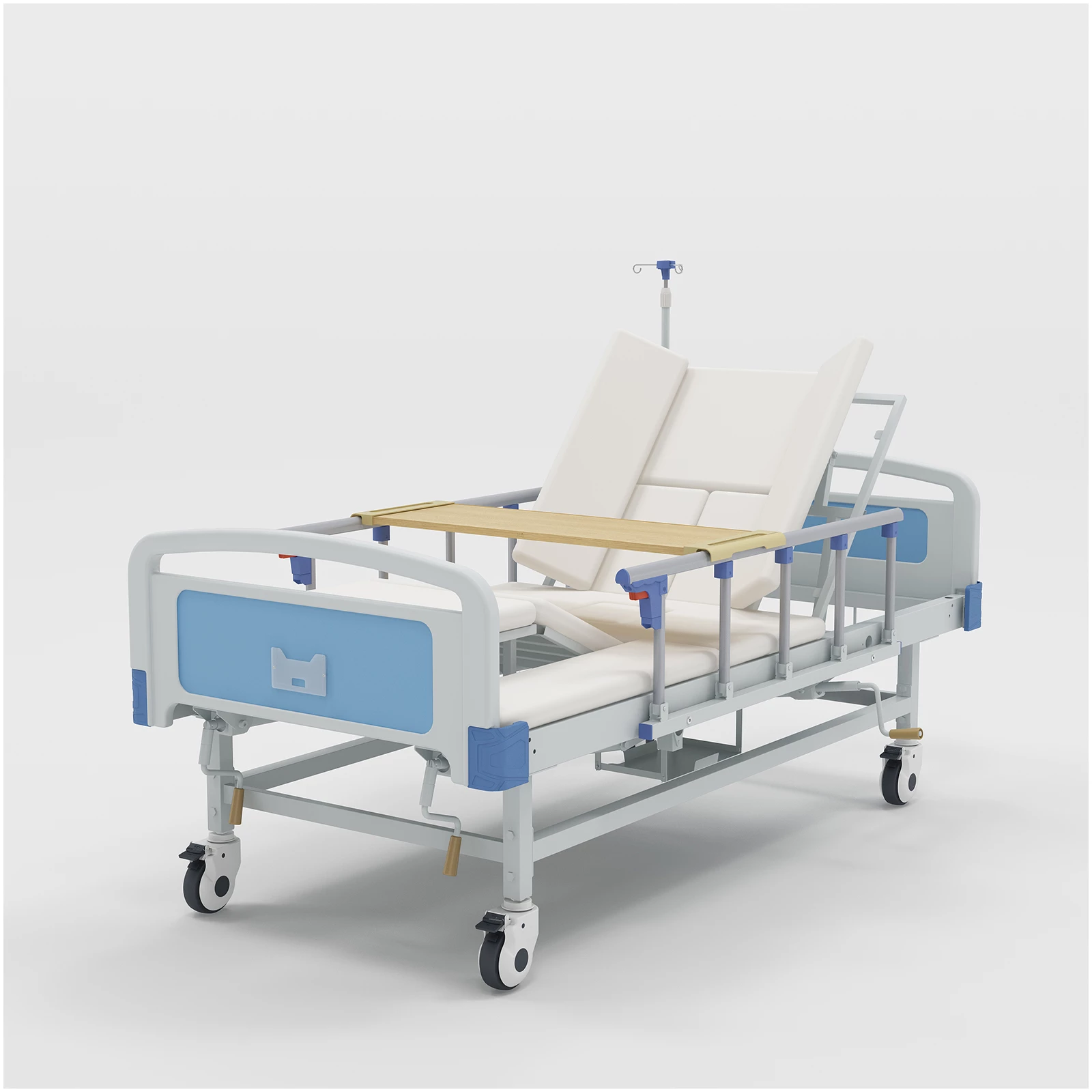
Side-by-Side: Electric vs. Manual Home Care Beds
| Feature | Manual Bed | Electric Home Care Bed |
| Adjustment Method | Hand crank | Remote, app, or voice control |
| Caregiver Effort | High | Minimal |
| Patient Independence | Low | High |
| Upfront Cost | Lower | Higher |
| Maintenance Cost | Lower | Moderate |
| Power Required | No | Yes (battery backup available) |
| Best For | Budget markets, short-term care | Long-term care, elderly facilities, home care |
| Smart Features (IoT, App) | No | Yes |
What B2B Buyers Should Really Ask Before Ordering
Whether you go manual or electric, the bed itself is only half the decision. Here’s what we think matters just as much:
- Can the manufacturer customize? We offer OEM and ODM services across the board. Not every factory can provide this level of customization at low MOQs.
- What certifications do they hold? For European and American markets, you need CE and FDA at a minimum. We also operate under ISO 13485:2016 standards, which covers the full quality management system, not just the product.
- What’s the real lead time? Lead times can vary significantly depending on order quantity, customization requirements, and production schedules. Ask for specifics, not estimates.
- Can they do both types? Working with a single nursing bed manufacturer for both manual and electric models simplifies logistics, ensures consistent build quality, and gives you better leverage on pricing.
Conclusion
- An electric home care bed is the stronger long-term investment for markets in Europe and North America, where caregiver efficiency and patient comfort drive purchasing decisions.
- Manual beds still hold real value in budget-sensitive markets or short-term care settings.
- The global market is clearly moving toward electric, but smart B2B buyers match the bed type to the end market, not the trend.
- Choosing the right manufacturing partner (certifications, customization, lead time) matters as much as choosing the right bed type.
FAQs
What’s the main advantage of an electric home care bed over a manual one?
An electric home care bed allows patients and caregivers to adjust positions using a remote, app, or voice command, with no physical cranking required. This reduces caregiver fatigue and gives patients more independence.
Are manual home care beds still worth buying in 2026?
Yes. Manual beds cost less upfront, require less maintenance, and work without electricity. They’re a smart pick for budget-conscious markets, short-term recovery settings, or regions where power supply is inconsistent.
What certifications should I look for when importing home care beds into Europe or the US?
At minimum, look for CE certification (for the EU) and FDA registration (for the US). ISO 13485:2016 is also a strong signal that the manufacturer follows a proper quality management system. YOYI CARE holds all three.
Can YOYI CARE customize electric and manual beds for my brand?
Absolutely. We offer full OEM and ODM services, including custom logos, material choices, smart control system configuration, color options, and branded packaging.


