

Medical equipment certification for importers starts with one question: what exact device, claim, and market are you buying for? Once that is clear, your checklist is ISO 13485 for factory quality control, CE or UKCA conformity for Europe and Great Britain, FDA registration/listing or clearance for the U.S. when required, plus technical files, test reports, labeling, UDI, and post-market documents.
If you are sourcing power wheelchairs, rollators, home-care beds, shower chairs, or private-label assistive devices, check certification before price negotiation. A low unit price stops looking low when customs asks why the legal manufacturer on the certificate doesn’t match the carton label.
Medical Equipment Certification Checklist
The core checklist is: classify the device, confirm the manufacturer’s quality system, verify market-specific authorization, review technical evidence, check labeling and importer details, then confirm complaint and recall handling. The exact documents change by intended use, risk class, sales market, and whether you sell under your own brand.

| Checkpoint | Ask the supplier for | What can go wrong |
|---|---|---|
| Product classification | Intended use, model list, product code or risk class | A mobility aid becomes a regulated medical device because of the claim on the label |
| Factory quality system | ISO 13485 certificate, scope, site address, expiry date | Certificate belongs to a trading company, not the production site |
| Market route | CE Declaration of Conformity, FDA listing/clearance, UKCA file, local registration | Supplier says “FDA approved” when the device is only listed |
| Technical evidence | Risk file, test reports, EMC/electrical safety where applicable, biocompatibility for contact parts | Test report covers an older model, charger, or frame material |
| Labeling and UDI | Label artwork, IFU, language versions, importer/rep details, barcode plan | Carton, IFU, and certificate use different product names |
| Post-market control | Complaint process, recall process, spare parts and warranty handling | Hospital buyer asks for traceability after delivery and the file is thin |
At first this looks like a certificate problem. Usually, product definition caused it. “Electric wheelchair” is too broad for a clean compliance review; you need model name, controller type, battery pack, charger, intended user, maximum load, claims, and destination market.
For U.S. imports, the FDA uses Class I, Class II, and Class III device classes based on risk and required controls; the FDA device classification page also explains when 510(k) or PMA may be required. For EU sales, the European Commission states that Regulation (EU) 2017/745 has applied since May 26, 2021, replacing the old medical device directives; check the European Commission medical device regulations page before you rely on old CE files.
ISO 13485 Factory Control
ISO 13485:2016 is a quality management system standard for medical device organizations. It is not product approval. That distinction matters.
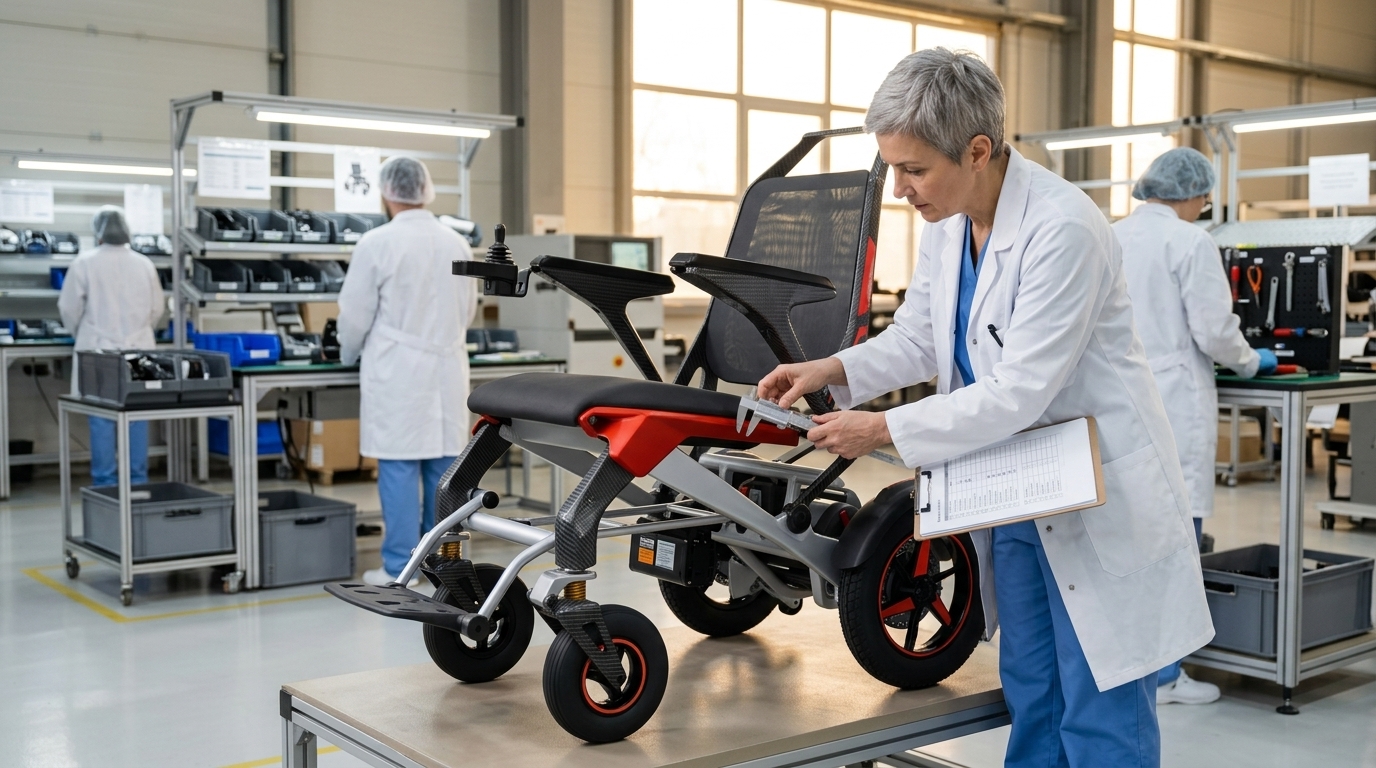
A good ISO 13485 certificate tells you the certified company name, address, certification body, scope, and expiry date. A weak certificate raises questions fast: the model isn’t in scope, the site address is different, the certificate holder is only an exporter, or the certificate is expired. Ask for a verification path from the certification body when the order is large or the buyer is a hospital group.
For OEM/ODM sourcing, ISO 13485 should connect to document control. Who approves label changes? Who controls the IFU version? Who updates the risk file when the customer changes a motor, joystick, charger, upholstery, or carton claim? If you are sourcing from a custom electric wheelchair manufacturer, this is where a mature factory should slow you down a little before sampling. Annoying? Maybe. Useful? Very.
YOYI CARE was founded in 2013, and our official site references ISO 13485, CE, FDA, and other certification-related credentials. We don’t suggest buyers accept a website badge by itself. Ask for current documents, confirm the scope, and match each document to the model you plan to import. Our 60+ patents show long-term product development work; patents still don’t replace regulatory evidence.
CE, FDA, UKCA Routes
Different markets ask different questions. Use the market route to build your import file, then ask the manufacturer what evidence already exists and what must be created or updated.

| Market | Typical route to check | Importer concern |
|---|---|---|
| United States | FDA classification, establishment registration/listing, U.S. agent for foreign establishments, 510(k) or PMA when needed | “FDA registered” does not mean “FDA cleared” or “FDA approved” |
| European Union | MDR classification, CE Declaration of Conformity, technical documentation, EU Authorized Representative, Notified Body certificate where required | Class I self-declaration is different from Class IIa, IIb, or III Notified Body involvement |
| Great Britain | UKCA route, MHRA registration, UK Responsible Person for non-UK manufacturers, current CE acceptance rules | UKCA and CE transition rules have changed; verify current MHRA guidance before shipment |
| Other markets | MDSAP, Health Canada, TGA Australia, Saudi SFDA, Brazil ANVISA, local registration | One certificate rarely opens every market without local registration work |
The U.S. route is often misunderstood. Initial importers in the United States may need to register, and foreign establishments exporting medical devices to the U.S. generally identify a U.S. agent. For Class II devices, 510(k) clearance may be needed unless exempt. For Class III devices, PMA may apply. The wording matters in sales materials: cleared, approved, registered, and listed are not interchangeable.
EU CE work is also easy to oversimplify. A Declaration of Conformity should identify the legal manufacturer, device, applicable regulation, standards, authorized representative where needed, and signatory. If a Notified Body certificate applies, confirm the Notified Body number, certificate scope, device category, expiry date, and any conditions.
If your launch involves a custom mobility product, pair this certification review with supplier selection. Our article on choosing a power wheelchair manufacturer explains the OEM/ODM checks that sit beside the regulatory file: engineering control, sampling discipline, production QC, and after-sales support.
This guide doesn’t cover IVDs, implants, pharmaceuticals, or software as a medical device in depth. Those categories can need deeper clinical, cybersecurity, usability, sterilization, or laboratory evidence.
Importer Document Review
Your shipment is ready. The forwarder asks for the manufacturer name on the FDA listing. The commercial invoice says Brand A, the certificate says Factory B, and the label says Importer C. No one planned a problem; the file was never reconciled.

Before you place a purchase order, ask for this document set:
- ISO 13485 certificate with scope, site, expiry date, and issuer details
- CE Declaration of Conformity or UKCA Declaration where applicable
- Notified Body certificate if the device class requires it
- FDA establishment registration/listing evidence and 510(k) number if required
- Model list that connects certificates, test reports, and sales SKUs
- Technical file index or document list, even if the full file is confidential
- Risk management evidence, often based on ISO 14971:2019
- Electrical safety and EMC reports where applicable, such as IEC 60601-1 or IEC 60601-1-2
- Wheelchair-related test evidence where applicable, such as ISO 7176 series references
- Battery shipping documents for lithium batteries, often including UN 38.3
- Label artwork, IFU, carton marks, language versions, and UDI plan
- Warranty terms, complaint process, recall contact, and spare-parts support
The biggest red flags are boring: mismatched names, old model numbers, blurry certificate scans, missing expiry dates, or a test report for a “similar” product. Similar is not the same when a charger, battery, controller, frame geometry, or patient-contact material changes.
For China sourcing, document review should sit inside a wider factory audit. If you are comparing wheelchair suppliers by product range, quality control, export experience, and regulatory readiness, our wheelchair manufacturer China sourcing checklist gives you the broader purchase-side framework.
OEM/ODM Certificate Risks
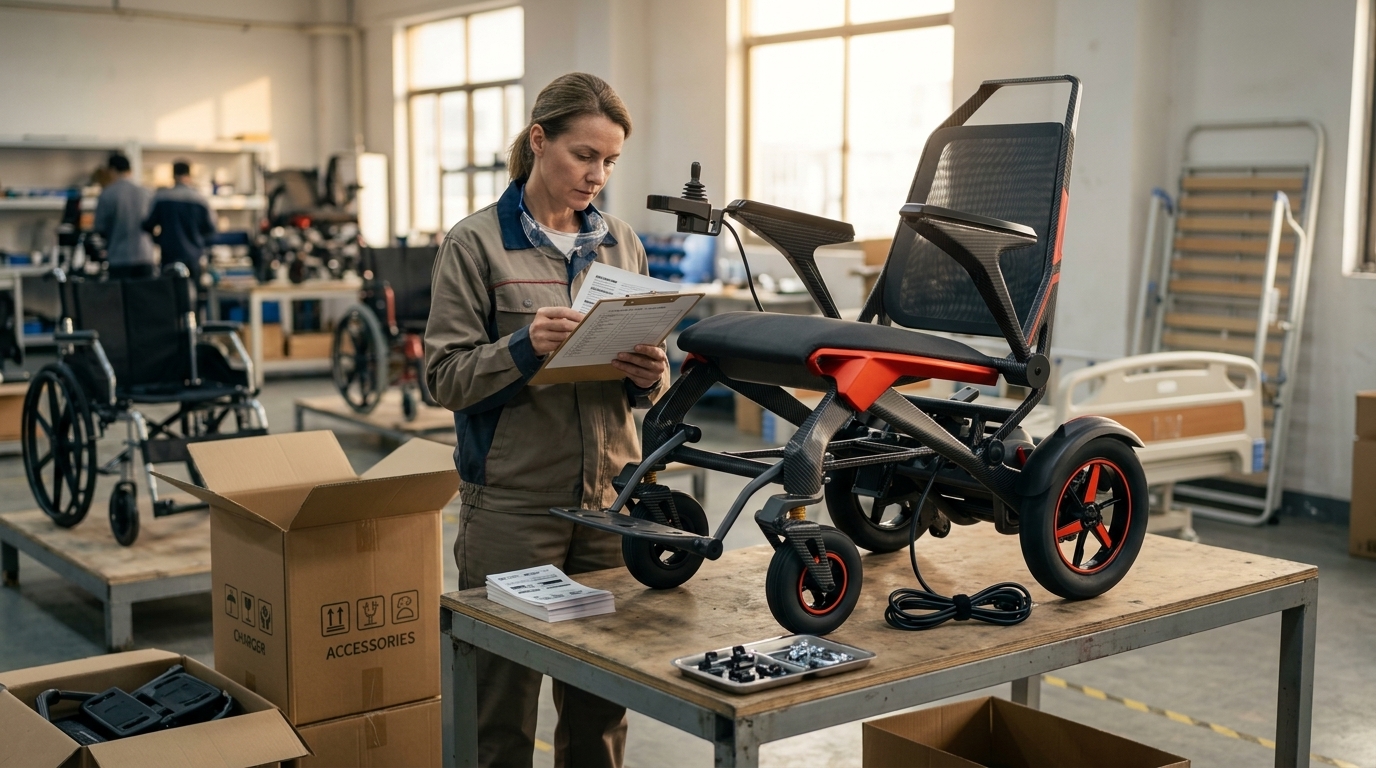
Private-label work changes the risk profile. You may keep the same frame and motor, then change the label, IFU, carton, battery, color, accessory bundle, or marketing claim. Each change looks small in a quotation sheet. Regulators and hospital procurement teams may see a different device file.
| OEM/ODM change | Re-check before approval |
|---|---|
| Private label brand | Legal manufacturer, relabeler role, label address, IFU version, trademark ownership |
| New battery or charger | Electrical safety, EMC, UN 38.3, transport labels, charger plug certification |
| New upholstery or handgrip material | Skin-contact material evidence and supplier material control |
| New claim, such as “rehabilitation use” | Intended use, risk class, clinical or performance evidence |
| New controller or motor | Performance testing, electrical safety, EMC, service documentation |
| New packaging set | Carton label, UDI, importer details, language, accessory list |
Here is the clean way to handle OEM/ODM medical equipment certification for importers: freeze the intended use first, then freeze the configuration, then review certificates. If branding starts before compliance, the art file can push you into a claim the original technical file doesn’t support.
YOYI CARE’s OEM/ODM work usually starts with a blunt question: where will this model be sold? A distributor selling to hospitals in Germany, an importer selling to U.S. DME channels, and a private-label brand selling to care facilities in the UK may need different documentation even when the base product looks similar.
Launch-Ready Sourcing Checklist
Use this medical equipment certification for importers checklist before sampling, before deposit, and again before mass production. The second check matters because suppliers sometimes update parts after sample approval.

- Define the exact intended use, product category, and sales market.
- Classify the device in each target market.
- Confirm the legal manufacturer and production site.
- Verify ISO 13485 scope, expiry date, and certification body.
- Match CE, FDA, UKCA, or local registration evidence to the exact model.
- Review test reports for current components, not old trims.
- Check label, IFU, carton, importer details, language, and UDI needs.
- Decide who handles complaints, recalls, warranty claims, and spare parts.
- Store the document set in your supplier file with renewal reminders.
- Re-check the file after any OEM/ODM change.
One practical rule: if the certificate package can’t survive a 20-minute screen share with your regulatory consultant, don’t send the deposit yet.
FAQ
What certificates do importers need?
Importers usually need ISO 13485 evidence, product conformity or clearance documents, test reports, labeling files, and market-specific registrations. The exact set depends on product risk class, intended use, and destination market.
Is ISO 13485 enough?
No. ISO 13485 supports factory quality control, but it is not product approval. You still need the correct CE, FDA, UKCA, or local market route for the device.
Does FDA registration mean approval?
No. FDA establishment registration or device listing alone doesn’t mean a device is cleared or approved. Some Class II devices need 510(k) clearance, and some Class III devices need PMA.
Who owns OEM certification?
Usually the legal manufacturer owns the technical file. If you sell under your own brand, change labeling, or change intended use, you may take on extra regulatory duties.
YOYI CARE supports distributors, importers, hospitals, and private-label healthcare brands with OEM/ODM coordination, QC, certification document support, warranty planning, and after-sales communication. Send your target market, model category, intended use, and branding plan before sampling so we can confirm which documents are available and where third-party regulatory review is needed.


