

A gravel park path and a sandy beach make very different demands. Yet both can appear under the same “all-terrain” heading in a catalog. Your job is to turn that broad description into a specification your supplier can build, and your sales team can explain.
Sourcing an all-terrain electric wheelchair starts with how the complete chair handles your customers’ routes under load. Check traction and clearance first, then slope stability, braking, battery performance, and the parts your dealers will need to keep it running.
Define What an All-Terrain Electric Wheelchair Must Handle
Begin with a route brief that names the surfaces, obstacles, slopes, and access points the chair must handle. Match the wheel layout and drive system to that brief. A compact folding chair for paved paths and a dedicated off-road chair belong on different shortlists, even when both are marketed for outdoor use.
Establish which category your dealers actually need before comparing prices.
| Route feature | What to check |
|---|---|
| Paved paths and thresholds | Obstacle height, caster behavior, and footplate clearance |
| Firm gravel or uneven paving | Traction, vibration, and steering under load |
| Soft or loose ground | Tire sinkage and suitability of the drive architecture |
| Sloping driveways | Uphill, downhill, and cross-slope limits |
Inspect Tires, Wheel Layout, and Ground Clearance
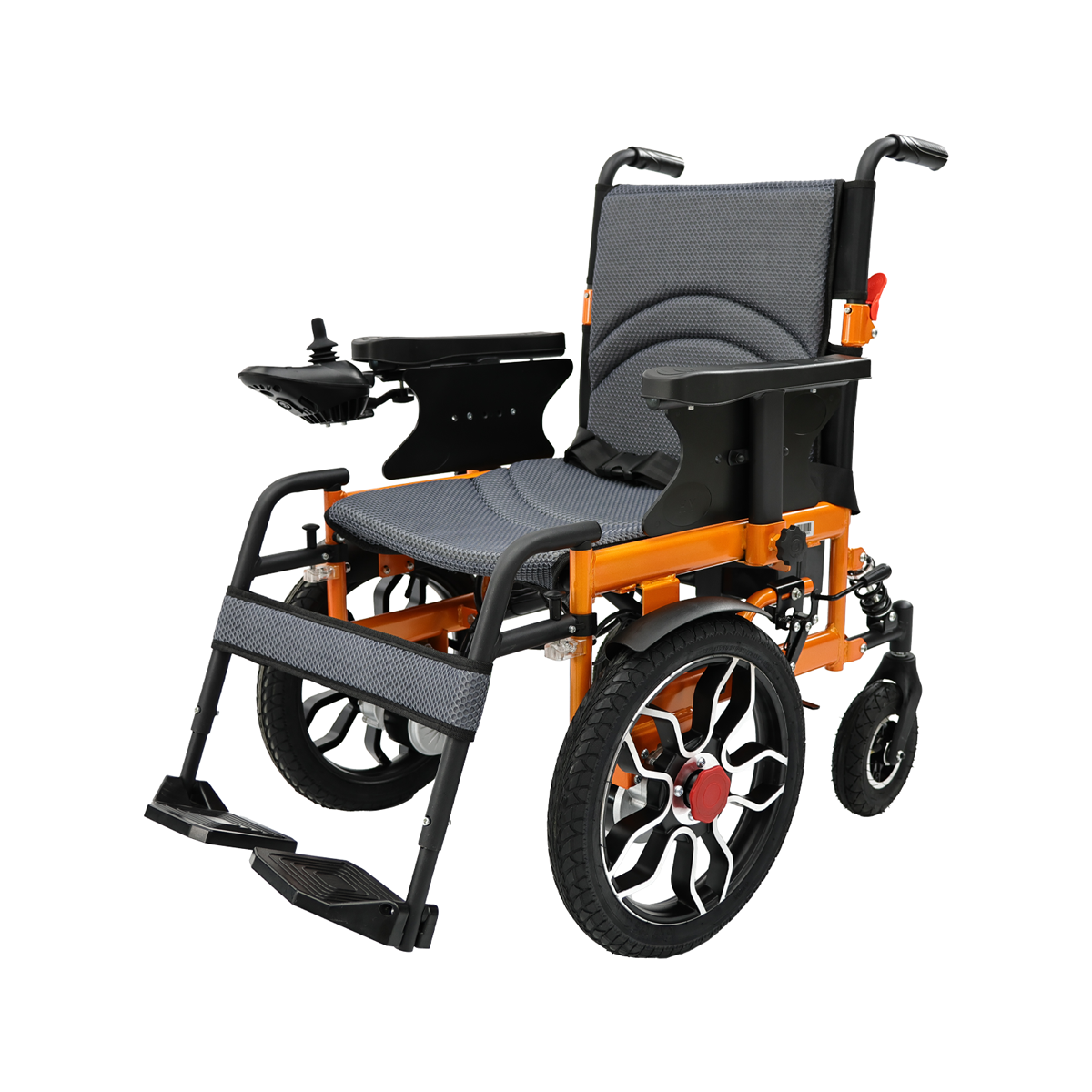
Get the drive-wheel diameter, tire width, tread, and tire construction in writing. For pneumatic tires, add the specified pressure and replacement tube size. Include the smaller wheels: they also have to cross the route’s gaps and surface changes.
YOYI CARE’s YHW001-C front-drive model lists 16-inch pneumatic front wheels, 10-inch PU rear wheels, and rear shock absorbers. Use those details to plan the sample inspection. Check wheel contact, rear-wheel tracking, and suspension movement over the agreed surface profile.
Measure clearance at the lowest exposed point beneath the loaded chair. Record footplate, battery-box, and anti-tip clearance separately. A raised chassis can still catch a low footplate on an approach.
Include seating, carried equipment, and accessories in the agreed loading setup. Check the suspension through its working movement so the inspection captures changing clearance. Photograph the measurement points; the factory and your receiving inspector can then measure the same locations instead of producing two incompatible clearance figures.
Verify Obstacle Climbing, Slope Stability, and Braking
Separate obstacle height from ground clearance. Ask for the tested obstacle dimensions, approach direction, load, speed, and seating position. ISO 7176-10 provides test methods for powered-wheelchair obstacle climbing and descending. Request the result for the quoted configuration.
Slope figures need units. A 10-degree slope is about an 18% gradient, so “10 degrees” and “10%” describe different inclines. Put uphill, downhill, and cross-slope limits on separate lines in the comparison sheet.
ISO 7176-2 addresses dynamic stability. Pair the stability results with brake-effectiveness evidence, including stopping and holding performance. Have trained testers evaluate the sample within the manufacturer’s operating limits using a written test plan and suitable test loading.
Watch for rollback, wheel lift, abrupt steering changes, and footplate contact. Record each observation against an acceptance criterion so a second inspector can repeat the decision.
Assess Motors and Battery Range on Representative Routes
A motor’s wattage tells you little about how the complete chair responds on loose ground. Request the motor and controller identification, then examine starts, turns, and sustained travel under the agreed load. Note current limiting or thermal shutdown during the planned evaluation.
Give range claims the same treatment. Ask which surface, load, speed, temperature, and battery configuration produced the stated distance. A smooth-floor range figure is a weak basis for planning a route that includes gravel and repeated climbs.
Use a repeatable route with recorded distance and elevation changes. Log starting charge, operating conditions, and the endpoint method. Compare candidate chairs on the same basis, then ask the supplier to explain meaningful differences.
Record tire pressure for pneumatic models before the run. Keep charging and rest periods consistent between trials, and note any battery or controller change. Otherwise, a later result may look like a performance improvement when the test setup has simply changed. Include the charger in the approved component list.
Check Comfort, Steering Space, and Transport Fit
Outdoor ability still has to work with the user’s daily routine. Check seat dimensions, armrest access, foot support, and controller reach. Specialist seating needs should be assessed by a seating professional during product selection.
Measure the turning envelope with the specified footrests and accessories fitted. A chair may cross the garden comfortably but struggle at the doorway on the way back. Add the narrowest entrance and tightest turn to the route brief.
For vehicle loading, request the complete weight, heaviest removable part, and folded dimensions. Dealers need to know whether the intended transport arrangement uses manual lifting, a ramp, or a vehicle lift before promising portability.
Check the loading route as well as the cargo space. A chair that fits inside a van may still be too wide for its ramp or exceed the lift’s rating. Supply dealers with the configured chair’s dimensions and mass so they can match the transport equipment before arranging a demonstration.
Confirm Weather Limits and Service Parts
Get the manual’s instructions for rain, cleaning, storage, and water exposure. If the supplier quotes an ingress-protection rating, identify the component or enclosure it covers. Carry those operating instructions into dealer handover materials.
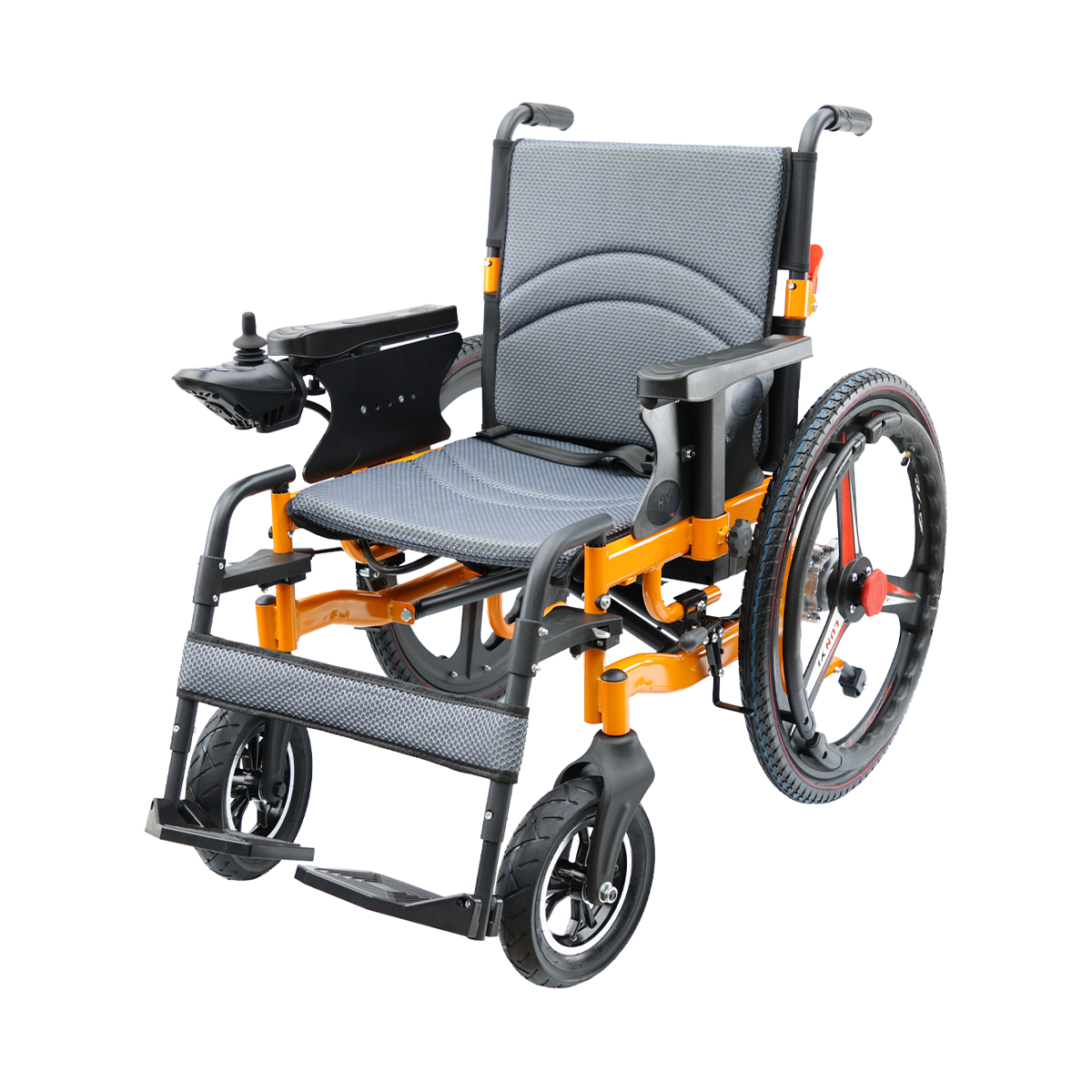
Next, build a first-order parts package around the wheel system. Include the correct tires or tubes, bearings, caster assemblies, and suspension components. Get illustrated part numbers and replacement procedures so technicians can identify what to order.
For example, the YHW001-B lists 24-inch pneumatic rear wheels. Its tire stock needs a separate entry from a model using 16-inch drive wheels. Link every part to its model revision in your service catalog.
Make Sample Approval Part of the Purchase Order
Keep one approval record covering the model, component configuration, route tests, and inspection results. Our electric wheelchair QC checklist helps connect that sample record to production checks.
- Identify the approved tires, controller, battery, and charger.
- Attach performance reports and agreed acceptance criteria.
- Define production inspection and component-change approval.
- Set warranty handling, parts availability, and claim evidence.
Compare the complete commercial offer after sample approval. Freight, training, and local repair stock all affect your margin. Our electric wheelchair price guide breaks down those cost lines.
Review YOYI CARE’s electric wheelchair range, then send us your route brief. Include surface photos, required load, access dimensions, destination market, and order quantity. Ask for a proposed configuration, supporting performance data, and a sample evaluation plan your purchasing and service teams can use.
Frequently Asked Questions
What makes an electric wheelchair all-terrain?
Look for a wheel, drive, and suspension system matched to the intended surfaces. Verify traction, clearance, stability, and braking through model-specific evidence and sample evaluation.
Do larger wheels guarantee better outdoor performance?
Wheel size is one part of the assessment. Tire width, drive layout, clearance, and loaded-chair behavior determine how the complete system handles the route.
Which reports should distributors request?
Request obstacle-climbing, stability, braking, and range results for the quoted configuration. Record the load, setup, test conditions, and applicable methods alongside each result.
How should buyers compare battery range?
Use the same route, load, and endpoint method, and record each battery configuration. Record surface, slopes, speed, and temperature so differences can be investigated.
Which spare parts belong in the first order?
Prioritize tires or tubes, wheel bearings, caster assemblies, and suspension parts. Add the supplier’s recommended electrical service parts and confirm reorder lead times.


