

Electric wheelchairs are no longer one-size-fits-all devices. Modern power chairs come with a wide range of configurable features that let you tailor the chair to each user’s body, lifestyle, and clinical needs. For B2B buyers (wheelchair dealers, distributors, hospitals, etc.), understanding these customization options is key to matching the right product to end users.
Frame Types, Sizes, and Materials
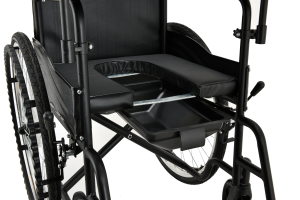
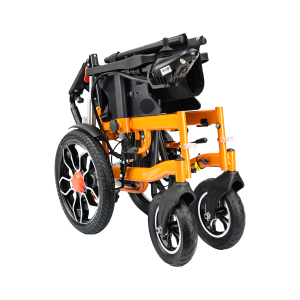
The frame determines the chair’s footprint, weight, and durability. Most power chairs use either a rigid frame (fixed structure) or a folding frame (cross-brace or suitcase-style). Rigid frames provide maximum stability and efficiency, making them ideal for active users and heavy-duty applications Folding frames are more convenient for transport and storage, fitting into tight spaces or vehicle trunks. In institutional settings (e.g. hospitals, rental fleets), foldable chairs can simplify storage, whereas fixed-frame models might be chosen for performance.
The frame determines the chair’s footprint, weight, and durability. Powerchairs use rigid or folding frames , and the material greatly impacts performance and cost:
-
Steel: The most durable and cost-effective material. Steel frames are heavier than aluminum or titanium but offer excellent strength for heavy-duty or bariatric wheelchairs. They are ideal for institutional use where robustness matters more than weight savings.
-
Aluminum: Lightweight, corrosion-resistant, and affordable. Aluminum frames balance strength and portability, making them the most common choice for standard electric wheelchairs .
-
Titanium: Offers an exceptional strength-to-weight ratio, is more resistant to fatigue, and absorbs vibrations well . Titanium is used for high-performance chairs but comes at a higher price point.
-
Carbon Fiber: Ultra-lightweight and strong, carbon fiber frames reduce overall chair weight significantly, providing easier transport and improved battery efficiency . These are premium options for active users or frequent travelers.
By selecting the right frame material—whether steel for strength, aluminum for balance, titanium for premium durability, or carbon fiber for ultra-lightweight performance— buyers can match the chair to user weight requirements, portability needs, and budget considerations.
In our latest blog post, we explore the key differences between the main types of wheelchair frames. Read the full comparison here: Steel vs. Aluminum vs. Carbon Fiber: Which Frame Material Is Best for Electric Wheelchairs?
Seat and Backrest Customization
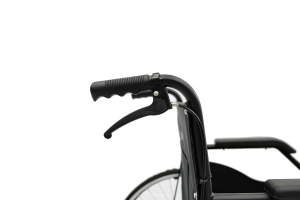
Proper seating and positioning are critical for comfort, safety, and health. Seat width, depth, and cushion type should match the user’s body and weight distribution. Backrests can be fixed or adjustable (tilt, recline, elevating), and may include lateral supports or contoured inserts. Users can often adjust seat depth and back angle, and choose from cushions made of foam, gel, air, or combinations. As NPL Home Medical notes, these choices “help maintain proper alignment and reduce the risk of discomfort or pressure-related injuries”.
For B2B buyers, offering a variety of cushion and support options is important. For example:
- Pressure-relief cushions: Gel or air-cell cushions can be selected for users at risk of pressure sores.
- Contoured seating: Custom-molded or multi-layer cushions provide targeted support for clients with spinal curvature or pelvic obliquity.
- Adjustable features: Height- and angle-adjustable headrests, armrests, and legrests allow fine-tuning for tall or short users and facilitate transfers.
In practice, an elderly patient who spends long hours in a wheelchair might need a thicker pressure-relief cushion and back support pads, whereas a more mobile user might prefer a thinner foam cushion for lightweight efficiency. Dealers often bundle customizable seating systems to ensure each chair fits its user’s posture and comfort needs.
Battery Type and Capacity
Electric wheelchairs typically use either sealed lead-acid (SLA) or lithium-ion batteries. The choice affects range, weight, and maintenance:
- Lithium-ion batteries have a much higher energy density and last significantly longer. They are lightweight (reducing the chair’s total weight) and can endure around 1,000+ charge cycles (3–5 years of daily use). Lithium packs also charge much faster (often in 3–5 hours). The downside is higher initial cost per battery. Because they are lighter, lithium batteries often extend driving range or permit a smaller form factor – useful in portable chair designs.
- Lead-acid batteries (usually AGM or Gel types) are heavier and bulkier. They typically last only about 300–500 cycles (~1–2 years) before needing replacement. Charging is slower (often 6–10 hours) and requires some maintenance. However, SLA batteries are much cheaper upfront and remain widely available. For budget-sensitive buyers or less intensive users, SLA packs may be acceptable.
Choosing the right battery also involves capacity (Amp-hours). Higher-capacity batteries yield longer driving range per charge, which matters for active users or large facilities. B2B purchasers should consider whether the chair will be used on long outings or mainly indoors. In general, lithium options are attractive for premium chairs or long-range models, while lead-acid is common for standard hospital chairs. The key trade-offs are weight and performance versus cost.
Want more tips to extend your electric wheelchair’s battery life? Visit our related blog post: How to Extend the Battery Life of Your Electric Wheelchair
Wheels and Tires
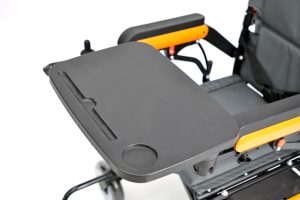
Wheel and tire selection affects maneuverability and terrain capability. Important factors include: drive-wheel size, tire type, and anti-tip wheels. Powerchairs come in front-wheel, mid-wheel, or rear-wheel drive configurations to suit different environments. In general:
- Tire type: Pneumatic (air-filled) tires deliver a softer, smoother ride on uneven outdoor surfaces. They absorb shocks well, but require inflation checks and can go flat. Solid (foam or rubber) tires are maintenance-free and durable, ideal for indoor institutional use. Solid tires give a firmer ride and can be used on rough ground, but are less forgiving on bumps.
- Wheel diameter: Larger rear drive wheels or all-terrain wheelsets improve traction on grass, gravel, or slopes. Smaller wheels (and turning radius) favor indoor use. (For example, a rear-wheel-drive outdoor chair may use 20″x4″ tires, whereas a travel wheelchair uses 6–8″ casters.)
- Power-assist modules: Some users retro-fit a manual chair with a rear-mounted power-assist (e.g. a hub-drive motor) to climb ramps. For factory chairs, “climbing” modes or higher-torque motors can be selected.
Overall, offering the right wheel/tire combo ensures the chair can handle the intended setting – whether that’s city sidewalks, hospital corridors, or carpeted offices. Consultation with end users on terrain needs is important; hospitals might emphasize anti-microbial solid wheels, while outdoor-village settings might need rugged pneumatic tires.
Control Systems and Access Options
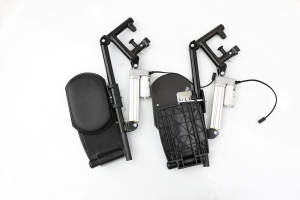
The drive control (typically a joystick) is the user’s interface and must match their abilities. Standard electric wheelchairs use a hand-operated joystick mounted on the right or left armrest. The location and type of joystick are customizable: clients may swap sides (left/right handed) or choose a compact “mini” joystick for limited range of motion. Some chairs also support dual joysticks for individuals with limited strength.
For users who cannot use their hands, alternative drive controls are available. These include:
- Head arrays: A joystick or sensors mounted on a headrest let the user steer by tilting or pressing with their head. (The control unit is built into a specialized headrest.)
- Chin controls: A short joystick is placed near the chin or mouth so the user pushes with their chin.
- Sip-and-puff systems: The user blows or inhales through a tube to signal movements (common for high-level spinal injuries).
- Foot controls: Foot-operated joysticks or pedals allow driving with the feet for those with leg movement but limited arm function.
Permobil notes that “standard joysticks don’t work for every user” and a variety of proportional controls (including foot and head controls) are available to match each individual’s movement and strength. In practice, a child may use a tiny joystick, while an ALS patient might rely on sip-n-puff. B2B buyers should ensure their suppliers can fit whichever control option each client needs.
Smart Features and Connectivity
Modern electric wheelchairs can be equipped with smart technology for enhanced control and monitoring. Examples include:
- App-Based Control: Some models allow a smartphone or tablet to control the chair. Dedicated apps can adjust speed limits, sensitivity, and even fold/unfold or power the chair on and off. For instance, one smart folding chair advertises that its “Smart App Control” lets users change speed, braking sensitivity, and power modes, and provides real-time diagnostics (battery level, distance traveled, etc.) via the phone.
- Remote Diagnostics/Programming: Bluetooth and wireless connectivity enable technicians to service or update the wheelchair remotely. As one rehab industry article explains, modern controllers let clinicians “program a power wheelchair remotely,” which can speed up adjustments and reduce downtime. Bluetooth can also integrate the drive controls with smartphones or environmental controls.
- Security and Monitoring: Advanced chairs may include features like electronic locks (PIN or RFID tag) to prevent unauthorized use. Some vendors offer GPS tracking or facility-wide monitoring systems for fleets of chairs. Although not yet standard on all models, these smart features are becoming more common in higher-end units.
In short, smart integration can turn a power chair into part of a connected care system. However, these options typically come from premium manufacturers. Buyers should verify which features are supported out-of-the-box and whether upgrades are needed. (We address this in the closing section.)
Aesthetic Customization (Branding and Color)
The look of the chair can be customized to reinforce branding or user preference. Many manufacturers allow choosing frame colors and finishes. For example, Permobil notes that aluminum frames “can be anodized or coated in various colors,” letting users express individual style. Dealers often order chairs with custom paint or decals (company logos, patterns, etc.) for corporate customers or rental fleets.
Upholstery is another aesthetic and comfort consideration. Buyers can often select fabrics or vinyl covers in different colors and materials for seats and armrests. High-end clients might want premium leatherette or patterned fabrics, whereas hospital buyers may prefer easy-to-clean, antimicrobial vinyl in institutional colors. Custom embroidery (e.g. a company logo on the headrest) is also possible on some models.
Overall, aesthetic customizations may not affect function but can help a product fit an organization’s image or user’s taste. They are relatively low-cost adjustments (especially if done at the factory) and can be marketed as value-added features.
Specialized Accessories and Add-Ons
To meet specific use cases, a variety of accessories can be added to an electric wheelchair. For healthcare or field use, consider:
- IV Pole / Oxygen Holder: Clinicians often mount an IV pole (or oxygen tank holder) to the back or side of the chair for patients who need intravenous therapy or supplemental oxygen while mobile.
- Weather Canopy or Rain Cover: A foldable canopy or waterproof cover protects users outdoors in rain or sun. Useful for long-term care or hospice settings.
- Storage and Trays: Under-seat bags, backpack-style carriers, or mounted trays/tablets provide space for personal items or work materials. Shopping baskets or caddies can be added for errands.
- Assistive Hardware: Items like seat belts, positioning harnesses, or posture belts improve safety and positioning. Swing-away or elevating legrests, headrests with flip-back sections, and attendant push handles are also common.
- Tech Integrations: For safety in large facilities, staff may add RFID tags, barcode scans, or fleet management modules to track chairs. Alarms or lights can be installed for fall prevention or visibility.
These accessories are often modular and can be retrofitted, but buyers should confirm compatibility (mounting points, weight limits) when placing orders. For example, some chairs have built-in docking clamps for IV poles, while others require frame adapters. In any case, having a full catalog of options allows a single base model to serve multiple scenarios (hospital ward, rehab clinic, home care, etc.).
Custom Development and Smart Integration
While many customization options are available off-the-shelf, some advanced features (especially software-driven ones) may require custom work. Notably, some high-end wheelchair brands now include app-based control and diagnostics, but many existing models do not support these features by default. In practice, adding smart capabilities often means custom engineering. For example, integrating Bluetooth control or an electronic security lock into an older model would involve hardware and firmware development.
In other words, institutional buyers should recognize that upgrading to fully “smart” functionality isn’t trivial on standard chairs. It may involve custom electronics, software, and testing. Fortunately, some manufacturers and suppliers (like YOYI CARE) specialize in this: they can build in custom control interfaces, telematics modules, and mobile app integration per customer specs. YOYI CARE, for instance, provides end-to-end services from choosing frame and seat options all the way to adding Bluetooth/App control, remote diagnostics, and specialized accessories. This can save time for the buyer by avoiding the need to coordinate multiple vendors.

Conclusion
For B2B purchasers of electric wheelchairs, selecting the right combination of features can greatly impact user satisfaction, safety, and cost-effectiveness. By carefully specifying frame style and material, seating systems, battery type, wheel/tire setup, control interfaces, smart features, and accessories, buyers can ensure each chair fits its intended user and environment. Smart integration and customization are key differentiators: while some models come “smart-ready,” others may need custom engineering to meet modern tech demands. Companies like YOYI CARE offer turnkey customization—from logo and upholstery to embedded IoT capabilities—so that healthcare providers, rental services, and distributors can procure a solution tailored to their exact needs.
Each customization choice should be driven by end-user requirements and operational context. For example, a travel wheelchair for an airline traveler will prioritize lightweight frame, lithium battery, and quick folding, while a rehab hospital chair might prioritize weight capacity, pressure-relief seating, solid tires, and safety alarms. By partnering with knowledgeable manufacturers and leveraging customization services, B2B buyers can optimize their electric wheelchair offerings for performance, compliance, and value.


