

Here’s a deeper, technical, and expert-level breakdown of household vs. medical oxygen concentrators, including mechanical design, gas separation technology, regulatory differences, safety mechanisms, and clinical implications.
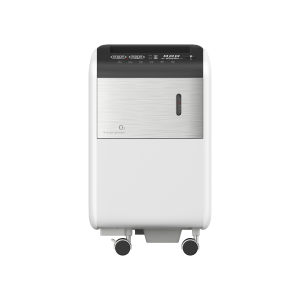 Yoyi care medical oxygen concentrator YY-ZY3B
 Yoyi care Home Oxygen Concentrator YY-15
1. Functional and Clinical Purpose
Household Oxygen Concentrators
- Target Users: Non-medical consumers seeking wellness benefits, stress reduction, mild cognitive boost, or recreational oxygen therapy (e.g., in oxygen bars).
- Use Cases:
- Temporary fatigue relief
- High-altitude acclimatization
- Non-therapeutic relaxation environments (e.g., spa, fitness centers)
- Not intended for managing chronic hypoxemia, pulmonary diseases, or emergency medical scenarios.
Medical Oxygen Concentrators
- Target Users: Patients prescribed supplemental oxygen for conditions such as:
- Chronic Obstructive Pulmonary Disease (COPD)
- Pulmonary fibrosis
- Pneumonia or ARDS
- Post-COVID hypoxia or long-term oxygen therapy
- Therapeutic Role: Maintains arterial oxygen saturation (SpO₂ ≥ 90%), preventing hypoxia-related organ damage and improving long-term survival.
2. Oxygen Generation Technology
Both types use Pressure Swing Adsorption (PSA) or Vacuum Swing Adsorption (VSA), relying on zeolite molecular sieves to separate oxygen from nitrogen in ambient air. However, there are key performance differences:
- Household:
- Smaller compressors, lower adsorbent capacity
- Shorter adsorption/desorption cycles
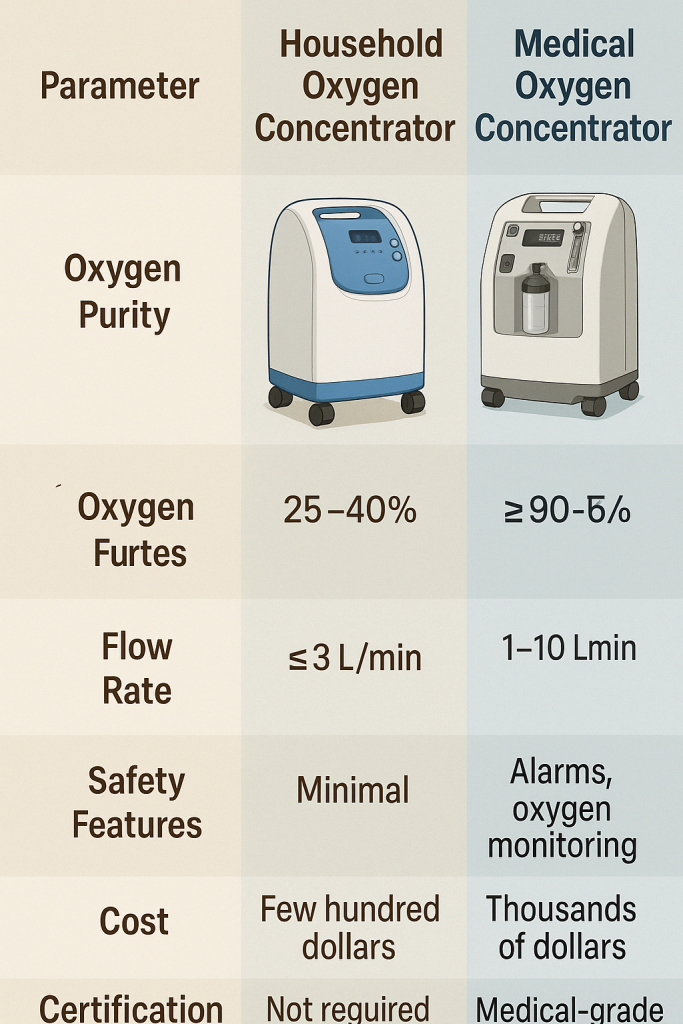
- Oxygen purity: 25–40% (some up to 60%)
- Limited flow rate (≤3 L/min), suitable only for mild enrichment
- Medical:
- Industrial-grade compressors with better heat dissipation
- Advanced dual-tower PSA system ensuring ≥90–96% purity at all specified flow rates
- Continuous high-flow options up to 10 L/min for severely hypoxic patients
- Integrated oxygen sensors with closed-loop feedback to maintain purity
3. Oxygen Delivery and Clinical Efficacy
- Household Units:
- Deliver oxygen-enriched air but cannot reach therapeutic FiO₂ (fraction of inspired oxygen) levels required for hypoxic patients.
- Not capable of compensating during acute respiratory failure.
- Medical Units:
- Designed to deliver prescription oxygen doses that directly correlate with blood gas targets (PaO₂ > 60 mmHg).
- Support both continuous flow and pulse dose delivery for conserving oxygen in portable models.
4. Safety Systems
Medical-grade units incorporate multiple safety features absent in household models:
- High and Low Oxygen Alarms: Alerts if purity drops below 82–85%.
- Flow Blockage and Power Failure Alarms: Ensures immediate awareness in life-support situations.
- Internal Redundancy: Backup power, dual compressors (in some ICU-grade units).
- Bacterial and Viral Filtration: HEPA filters for infection control.
- Medical-Grade Materials: Tubing and fittings tested for biocompatibility, preventing contamination or oxygen degradation.
Household units lack certain safeguards, posing a risk if used for true medical needs. However, if users carefully follow the dos and don’ts and strictly adhere to a doctor’s instructions, home oxygen concentrators can function safely at home.
5. Regulatory and Compliance Standards
- Medical:
- Must meet FDA 21 CFR Part 868.5440 or equivalent EU MDR regulations.
- ISO certifications: ISO 13485, ISO 80601-2-69 (specific to oxygen concentrators).
- Clinical validation of performance across environmental conditions (temperature, humidity, altitude).
- Household:
- Generally falls under consumer electronics, no strict regulatory oversight.
- Marketing is often non-therapeutic, avoiding medical claims to bypass certification.
6. Durability and Maintenance
- Household:
- Shorter continuous operation capacity (typically ≤4 hours).
- Compressors rated for fewer operating hours (≤2,000 hrs).
- Filters may not be medical-grade, leading to quicker clogging and reduced performance.
- Medical:
- Built for 24/7 operation with long-life compressors (≥20,000 hrs).
- Easier access to maintenance, calibrated sensors, and replaceable zeolite beds.
- Strict adherence to maintenance schedules to ensure patient safety.
7. Cost Implications
- Household Units: $200–$500
- Medical Units: $1,000–$3,000 for home models; ICU-grade can exceed $5,000
- Insurance reimbursement is available only for medical devices prescribed by physicians.
8. Clinical Risks of Using Household Units for Medical Needs
- Under-delivery of Oxygen: Fails to correct hypoxemia, leading to tissue hypoxia and organ damage.
- Delayed Emergency Response: Lack of alarms may cause unnoticed equipment failure.
- Infection Risk: Non-sterile tubing or filtration can introduce pathogens into the patient’s airway.
- False Sense of Security: Patients may delay seeking proper medical therapy.
Conclusion
While both devices extract oxygen from ambient air, household oxygen concentrators are not medical substitutes. They lack the oxygen purity, flow stability, safety controls, and clinical certifications essential for treating respiratory conditions. For any therapeutic application—especially for patients with chronic or acute respiratory failure—a medical-grade oxygen concentrator is the only safe and effective choice.
Portable vs Stationary Oxygen Concentrators: What’s the Real Difference?


