

Introduction
Power wheelchairs are life-changing tools that restore mobility, independence, and dignity to users with varying levels of physical ability. But not all power wheelchairs are created equal. Choosing the right type means balancing comfort, terrain handling, weight capacity, transportability, and clinical needs. In this guide, we break down the most common types of power wheelchairs and their differences so you can make a well-informed decision.
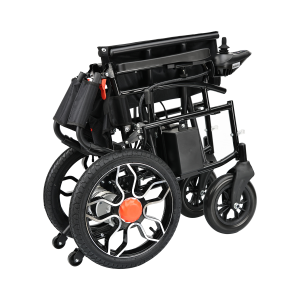
I. Based on Drive Configuration
The drive system determines how the wheelchair moves and handles different environments. There are three main drive types:
1. Rear-Wheel Drive (RWD)
Rear-wheel drive chairs have the motorized wheels at the back, providing good stability and directional control.
- Best for: Outdoor use, higher-speed travel
- Pros: Excellent straight-line stability, strong performance on inclines, better for uneven or rough terrain
- Cons: Larger turning radius, less maneuverable in tight indoor spaces, can feel bulky
2. Mid-Wheel Drive (MWD)
Mid-wheel drive wheelchairs place the drive wheels directly beneath the user’s center of gravity, resulting in balanced and intuitive maneuverability.
- Best for: Indoor use with frequent turning
- Pros: Tightest turning radius among all types, smooth indoor navigation, easy to learn and control
- Cons: May struggle with traction on loose or uneven outdoor surfaces, reduced stability on slopes
3. Front-Wheel Drive (FWD)
Front-wheel drive chairs have the drive wheels located in front, pulling the user over obstacles.
- Best for: Mixed indoor-outdoor use, moderate terrain
- Pros: Good grip on soft surfaces, better at climbing small curbs or transitions, smoother outdoor feel
- Cons: Larger turning arc than mid-wheel, may require more steering control at higher speeds
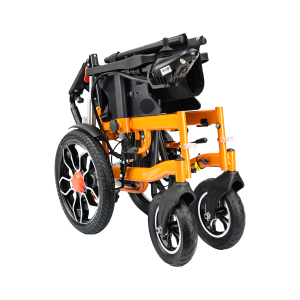
II. Based on Portability and Usage Frequency
Some power wheelchairs are optimized for travel and storage, while others are built for prolonged daily use with maximum support and comfort.
4. Travel/Portable Power Wheelchairs
Designed with convenience in mind, these models are lightweight, compact, and easy to fold or disassemble.
- Best for: Frequent travelers, users with limited space or storage options
- Pros: Fits into car trunks, can be carried on airplanes, user-friendly setup
- Cons: Shorter battery life, reduced seating support, less robust for daily use
5. Full-Size Indoor Power Wheelchairs
These chairs offer ergonomic designs, enhanced comfort, and a larger battery for long-term indoor use.
- Best for: Users who rely on a wheelchair for most of the day indoors
- Pros: Comfortable seating systems, powerful battery performance, customizable controls
- Cons: Heavier and less portable, not ideal for small living areas
6. Outdoor or All-Terrain Power Wheelchairs
Built with rugged components and suspension systems, these are ideal for active users or uneven landscapes.
- Best for: Outdoor adventures, rural areas, and users who need durable mobility
- Pros: Strong motor systems, shock absorption, high ground clearance
- Cons: Bulky size, may not fit well in narrow doorways or confined areas
III. Based on Medical and Lifestyle Functionality
These wheelchairs are designed to address specific clinical conditions or support greater independence.
7. Standing Power Wheelchairs
Allows users to transition from a seated to a standing position through powered lifting mechanisms.
- Best for: Improving circulation, pressure relief, and accessing high surfaces
- Pros: Health benefits such as better bladder and bone health, improves user interaction
- Cons: Expensive, heavier, requires proper user training and supervision
8. Reclining and Tilting Power Wheelchairs
Incorporate powered functions to adjust the seat angle or recline backward for posture and comfort.
- Best for: Users at risk of pressure sores or with limited ability to reposition themselves
- Pros: Redistributes body pressure, assists with transfers, offers rest positioning
- Cons: Mechanically complex, requires maintenance, adds weight
9. Pediatric Power Wheelchairs
Smaller-scale models engineered for children, often adjustable as they grow.
- Best for: Children with long-term mobility needs, in home, school, and therapy settings
- Pros: Child-friendly controls, customizable features, lighter frames
- Cons: May need regular resizing or upgrades, limited by growth
10. Bariatric Power Wheelchairs
Heavy-duty wheelchairs designed for users with higher weight requirements.
- Best for: Users weighing over 300 lbs (136 kg)
- Pros: Reinforced structure, wider seats, upgraded motors
- Cons: Heavier and larger, limited maneuverability indoors
IV. Advanced and Specialty Categories
Integrating modern innovation, these wheelchairs go beyond traditional functionality.
11. Smart Power Wheelchairs
Equipped with connectivity features and automated technology for improved user control.
- Best for: Users seeking intelligent mobility solutions
- Pros: Smartphone integration, remote diagnostics, safety alerts, navigation support
- Cons: Higher cost, may require tech support or connectivity setup
12. Hybrid Manual-Power Wheelchairs
Combine manual operation with electric assistance when needed.
- Best for: Users with partial upper-body mobility who need occasional motor support
- Pros: Promotes physical activity, improves flexibility in usage, lightweight
- Cons: Not as powerful as full electric models, limited terrain capability
Comparison Matrix: Summary at a Glance
| Type | Best For | Pros | Cons |
|---|---|---|---|
| Rear-Wheel Drive | Outdoor, speed | Stability, incline power | Large turning radius |
| Mid-Wheel Drive | Indoor, tight spaces | Small turning radius | Less stable on rough terrain |
| Front-Wheel Drive | Mixed terrain | Good traction | Fishtailing at speed |
| Travel | Short trips | Lightweight, portable | Limited range |
| Full-Size | All-day use | Comfortable, durable | Less portable |
| All-Terrain | Outdoor terrain | Suspension, rugged | Bulky |
| Standing | Health-focused | Promotes circulation | Expensive |
| Reclining/Tilting | Pressure relief | Comfort, posture | Complex |
| Pediatric | Children | Adjustable, safe | Frequent upgrades |
| Bariatric | Heavy users | Strong, supportive | Large size |
| Smart | Tech users | Intelligent features | Cost, complexity |
| Hybrid | Partial mobility | Manual & electric use | Limited power support |
How to Choose the Right Type
Selecting a power wheelchair isn’t just about features—it’s about fit. Consider the following:
- Environment: Will it be used indoors, outdoors, or both?
- Mobility level: Does the user need tilt, recline, or stand support?
- Transport needs: Is portability essential?
- Weight capacity: Ensure it matches the user’s body weight and frame.
- Battery life: Look for range based on daily routine and environment.
- Comfort and support: Especially important for long-term seating or medical conditions
A consultation with a healthcare provider, occupational therapist, or mobility specialist can help you determine which type offers the best balance of independence, performance, and long-term health benefits.
Conclusion
Power wheelchairs are far from one-size-fits-all. From basic indoor models to smart tech-equipped mobility systems, each type serves a unique purpose. By understanding the differences in drive systems, functionality, portability, and clinical application, users and caregivers can make better choices tailored to real-life needs. Whether it’s gaining independence at home or exploring the outdoors safely, the right power wheelchair empowers a higher quality of life.
Frequently Asked Questions (FAQ)
What is the difference between an electric chair and a power chair?
The term “electric chair” can be confusing as it may refer to a historical execution device. In modern usage, a “power chair” or “power wheelchair” is the correct term for a motorized mobility aid. Power chairs are designed to assist individuals with limited mobility by using battery-powered motors for movement.
Will Medicare pay for a power wheelchair?
Yes, Medicare Part B may cover the cost of a power wheelchair if it is deemed medically necessary and prescribed by a doctor. The user must meet specific eligibility criteria, including having limited mobility and being unable to use a manual wheelchair or scooter.
What is the difference between a mobility scooter and a power wheelchair?
Power wheelchairs are typically more customizable and maneuverable indoors, with joystick controls and supportive seating. Mobility scooters are often designed for outdoor use, controlled by handlebars, and require better upper body strength. Scooters are less suitable for users with severe mobility impairments.
What are the disadvantages of an electric wheelchair?
Electric wheelchairs can be more expensive than manual chairs, require regular charging and maintenance, and may be heavier or less portable. Some models may also have limited range or terrain capabilities.
What is the lifespan of an electric wheelchair?
With proper maintenance, an electric wheelchair typically lasts 5 to 10 years. Battery replacement may be needed every 1–2 years depending on usage.


