

What Is Carbon Fiber: Understanding the Material
Carbon fiber is a high-performance material known for its exceptional strength, light weight, and durability. It is widely used in industries such as aerospace, automotive, renewable energy, sporting goods, and advanced manufacturing. Understanding what carbon fiber is and why it is so valuable helps explain its growing adoption across modern engineering applications.
What Is Carbon Fiber Made Of?
Carbon fiber is composed of extremely thin strands of carbon atoms, typically about 5–10 micrometers in diameter. These fibers are bonded together in a crystalline structure that aligns the atoms parallel to the length of the fiber, giving carbon fiber its remarkable strength.
Most carbon fibers are derived from a precursor material called polyacrylonitrile (PAN), although rayon and petroleum pitch can also be used. The precursor fibers are processed at very high temperatures to remove non-carbon elements, leaving behind tightly bonded carbon atoms.
How Carbon Fiber Is Manufactured
The manufacturing process generally includes several stages:
-
Spinning: The precursor material is spun into long fibers.
-
Stabilization: The fibers are heated in air to stabilize their molecular structure.
-
Carbonization: Fibers are heated to extremely high temperatures in an inert environment, converting them into nearly pure carbon.
-
Surface treatment and sizing: The fiber surface is treated to improve bonding with resins and then coated to protect the fibers during handling.
After production, carbon fibers are often woven into fabrics or combined with resins to form carbon fiber–reinforced polymers (CFRP).
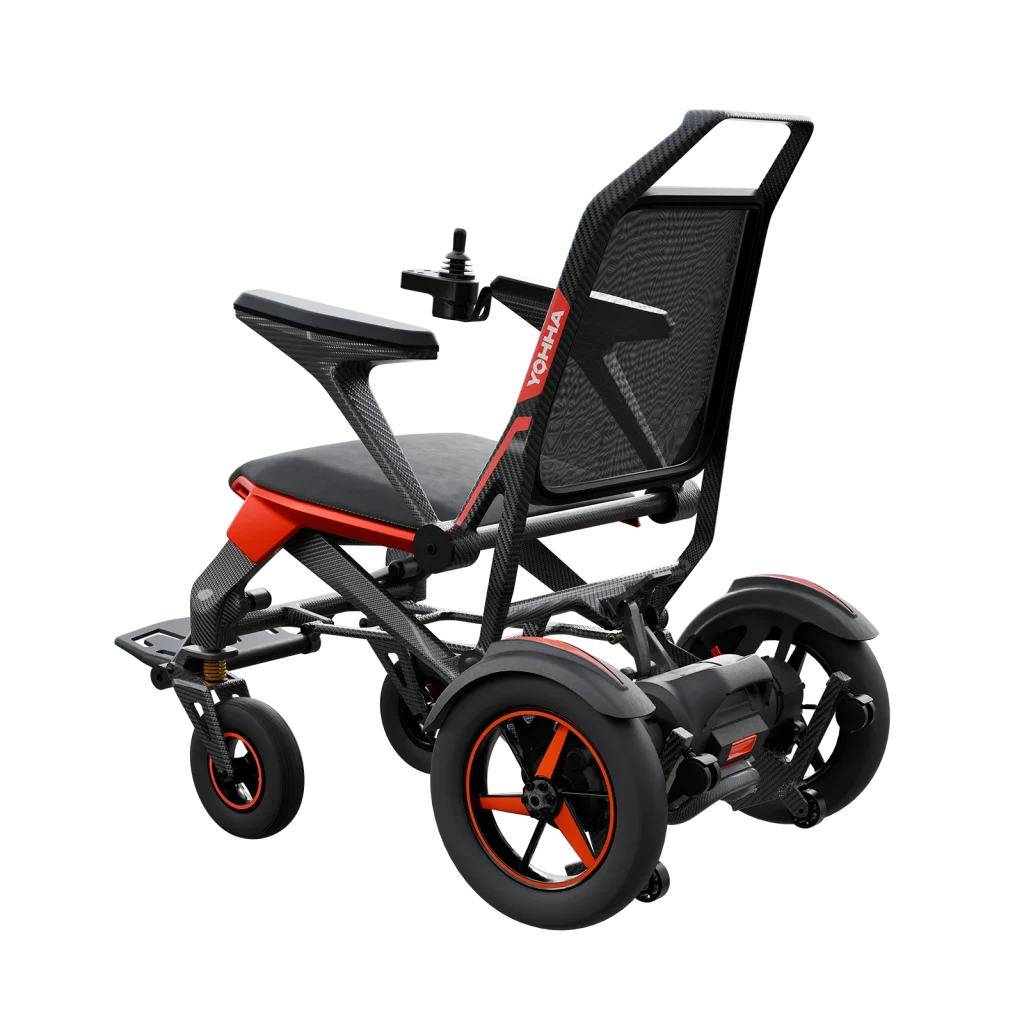
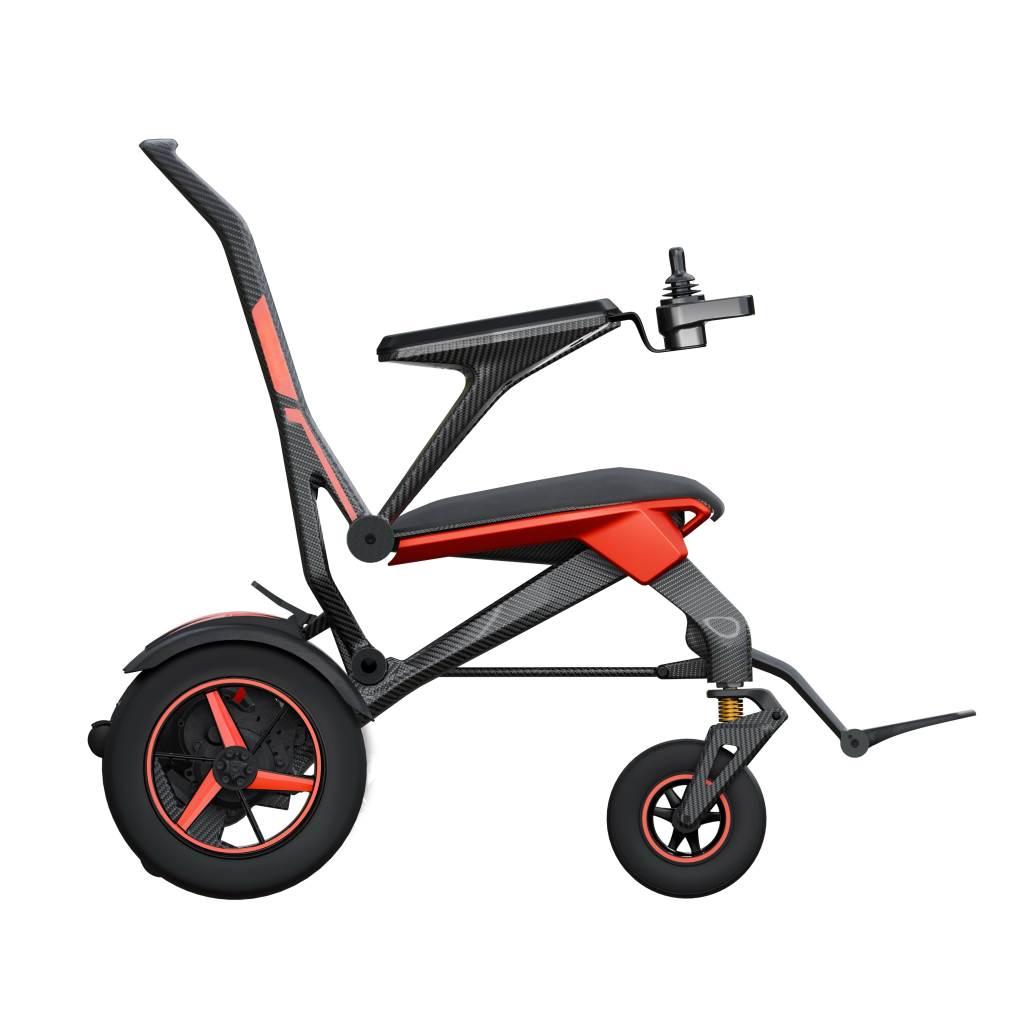
Carbon Fiber Used for Motor Wheelchair Frame
For electric wheelchairs, the material of the frame is more than just a construction detail. It significantly impacts propulsion efficiency, battery life, ride comfort, and long-term durability. Traditional materials like aluminum and steel have been widely used, but their heavier weight and susceptibility to corrosion limit performance and comfort. In contrast, carbon fiber has emerged as a game-changing material due to its superior physical properties and rising affordability.
What carbon fiber offers: strengths
Based on what’s known in mobility-device design:
| Feature | Advantage of Carbon Fiber |
|---|---|
| Weight & strength | Carbon fiber typically has a very high strength-to-weight ratio. It can be made much lighter than steel or aluminum while maintaining sufficient strength. |
| Stiffness & vibration damping | Carbon fiber can reduce vibration and absorb shocks better (less harsh feel) than rigid metals, which can make riding smoother and reduce fatigue, especially over uneven surfaces. |
| Corrosion resistance | It doesn’t rust. So in moist, humid, or outdoor environments, carbon fiber frames resist corrosion in ways that steel (and to a lesser extent aluminum) do not. |
| Thermal behavior | Carbon fiber does not heat up or cool down dramatically with ambient temperature (less thermal conduction) compared to metal, which can make it more comfortable in extreme weather. |
| Aesthetics / flexibility of shapes | Because composites can be molded, there’s potential for more refined or ergonomic designs, lighter profiles, different styling. |
These characteristics make carbon fiber especially valuable in electric wheelchairs where minimizing weight and maximizing performance are critical.
Who Should Consider a Carbon Fiber Electric Wheelchair?
- Active users who need a lightweight and responsive chair for daily use
- Elderly individuals seeking comfort and ease of operation
- Rehabilitation patients requiring reduced vibration and fatigue
- Athletes or active-lifestyle users participating in adaptive sports
- Long-distance users who prioritize extended battery life and maneuverability
What carbon fiber may lack: trade-offs and risks
No material is perfect, and carbon fiber has its downsides. Here are what to watch out for:
| Concern | Details |
|---|---|
| Cost | Carbon fiber is significantly more expensive to manufacture than steel or aluminum. Both the material itself and labor/fabrication are costlier. |
| Fragility under certain impacts | While strong in many ways, carbon fiber is more susceptible to cracking or catastrophic failure if subjected to sudden impact or stress beyond its design limits. Small damages (in resin or fiber) might not be obvious visually but can degrade performance or safety. |
| Repairability | Repairs are often more complex, specialized, and expensive. Welding is not an option; you need composite repair methods, which may require specialists. Some damage may be irreparable. |
| Availability & parts | Because it’s not as common, getting replacement parts or doing service might be harder or more expensive. |
| Weight capacity for heavy users | For persons who need higher weight capacity, steel (or sometimes very well designed aluminum or titanium) may still outperform carbon fiber, especially under loading, abuse, or rough terrain. |
| Long-term durability under harsh use | Although carbon fiber resists corrosion, fatigue under cyclical load or in harsh conditions (vibrations, knocks, etc.) can lead to micro-damage. If that damage is unnoticed, it could result in failure. |
What Matters for Carbon Fiber Electric Wheelchair
When buying a carbon fiber electric wheelchair, consider these key factors:
Frame Quality and Build
- Look for chairs made from aerospace-grade carbon fiber.
- Ensure the design passes fatigue and impact tests.
Weight and Portability
- Compare total weight with and without batteries.
- Consider folding or travel-friendly models.
Motor and Battery Specifications
- Opt for brushless motors for longevity.
- Check battery range; 15–25 miles is typical for quality models.
Seating and Ergonomics
- Adjustable backrests, armrests, and cushions enhance comfort.
- Look for pressure-relieving materials if used for long durations.
Customizability
- Some models allow color, control type, and wheel configuration personalization.
- Custom fit options can reduce long-term physical strain.
Certification and Safety
- Make sure it meets ISO13485:2016 and other national safety certifications.
- Confirm availability of local repair and service support.
 Read our buying guide for electric wheelchairs vs manual wheelchairs if you are interested.
Practical Benefits of Carbon Fiber Electric Wheelchair
Enhanced Maneuverability and Energy Efficiency
A lighter wheelchair frame reduces the load on the motor, resulting in better energy transfer and more responsive control. This improved efficiency helps reduce battery drain and enhances overall ride dynamics.
Better Range and Battery Life
Lighter frames mean less energy is needed to propel the chair, translating to a noticeable increase in battery life. Over time, this can result in fewer recharges and longer outings for users.
Superior Comfort
Carbon fiber’s vibration-absorbing properties significantly improve ride comfort, which is especially valuable for users with spinal injuries or joint pain. This contributes to reduced fatigue and strain during long-term use.
Advanced Aesthetics and Ergonomics
Due to the flexibility in carbon fiber molding, designers are able to create sleeker, more ergonomic frames that also look modern and minimalistic. This meets the growing demand for devices that are both functional and stylish.
Longevity, Wear, and Durability of Carbon Fiber Electric Wheelchair
How Long Do Carbon Fiber Frames Last?
On average, carbon fiber wheelchair frames last significantly longer than aluminum frames. With proper care, they can maintain integrity for 5–10 years, depending on usage conditions. Their resistance to warping, denting, and corrosion means less frequent replacement.
Does Carbon Fiber Wear Over Time?
Carbon fiber does not corrode like metal, but repeated heavy impacts can create microfractures over time. While these don’t affect short-term performance, long-term structural inspections are recommended, particularly for active or high-weight users.
Repairability
Unlike metal frames, carbon fiber is more difficult to repair. In most cases, damage requires replacement rather than patching. Therefore, high manufacturing quality and warranty coverage are important considerations.
Cost and Value Analysis
Are Carbon Fiber Electric Wheelchairs Expensive?
Yes, carbon fiber electric wheelchairs can cost 2–4 times more than traditional aluminum wheelchair options. However, the price premium is often justified by lower maintenance, improved performance, and longer lifespan.
Market Growth Data
The adult carbon fiber wheelchair market was valued at USD 500 million in 2022 and is expected to reach USD 1.2 billion by 2030, growing at a CAGR of 12.2% from 2024 to 2030. This growth reflects increasing demand for high-performance mobility aids that enhance independence and quality of life.
In the broader landscape, the global adult wheelchair market was valued at USD 4.5 billion in 2020 and is projected to grow at a 6% CAGR from 2021 to 2028. Within this context, carbon fiber’s share is accelerating due to its lightweight benefits and technological appeal.
Market Drivers and Challenges
Growth Factors
- Aging populations and chronic disease rates are increasing globally.
- Technological advancements make carbon fiber more accessible.
- Disposable incomes are rising in many regions.
- There is growing awareness of carbon fiber’s ergonomic benefits.
- Adaptive sports and active lifestyles are fueling demand for high-performance models.
- Focus on quality of life and independence among mobility-impaired individuals.
Constraints
- High upfront cost compared to aluminum alternatives.
- Limited availability of specialized repair services.
- Potential damage from high-impact use or misuse.
- Lack of global standardization in quality control.
Carbon fiber electric wheelchairs are not limited to personal use. In healthcare settings, hospitals and rehab centers are adopting them to enhance patient mobility. In sports and recreation, athletes prefer them for agility and speed. Government-supported accessibility initiatives are also creating a favorable environment for carbon fiber adoption.
Final Thoughts
Carbon fiber electric wheelchairs are more than just a premium upgrade—they represent the next evolution in mobility device design. While the cost may be higher, the benefits in range, comfort, and longevity make them a strong contender for anyone seeking to enhance mobility quality. As innovation and economies of scale continue to advance, carbon fiber will likely become a standard in mobility solutions, not just a luxury. Use this guide to compare options and select the right model based on your unique lifestyle, physical needs, and long-term goals.
FAQs for Carbon Fiber Wheelchair
Q1: What is the best material for a wheelchair?
A: The best material for a wheelchair depends on your needs. Aluminum is lightweight, durable, and resistant to rust, making it ideal for everyday use. Steel is stronger and more affordable but heavier, which can limit portability. Titanium offers a high strength-to-weight ratio, corrosion resistance, and shock absorption, but is expensive. Carbon fiber is extremely lightweight and strong, often used in performance or sports wheelchairs, but it comes at a premium cost.
Q2: How much does a carbon fiber wheelchair weigh?
A: Carbon fiber wheelchairs are among the lightest available. A manual carbon fiber wheelchair typically weighs around 9–12 kilograms (20–26 lbs), compared to aluminum models at 12–18 kg (26–40 lbs). The exact weight depends on the design, accessories, and customizations. Lightweight chairs are easier to transport and maneuver, which is ideal for active users.
Q3: What is the lifespan of an electric wheelchair?
A: The lifespan of an electric wheelchair varies based on usage, maintenance, and build quality. On average, a well-maintained electric wheelchair lasts 5–7 years. Proper battery care, regular motor and wheel maintenance, and avoiding overloading the chair can extend its lifespan. High-end models with quality components may last longer.
Which is Better Carbon Fiber or Aluminum Wheelchairs? How to Choose?
How to Extend the Battery Life of Your Electric Wheelchair: Maintenance Tips That Work


